
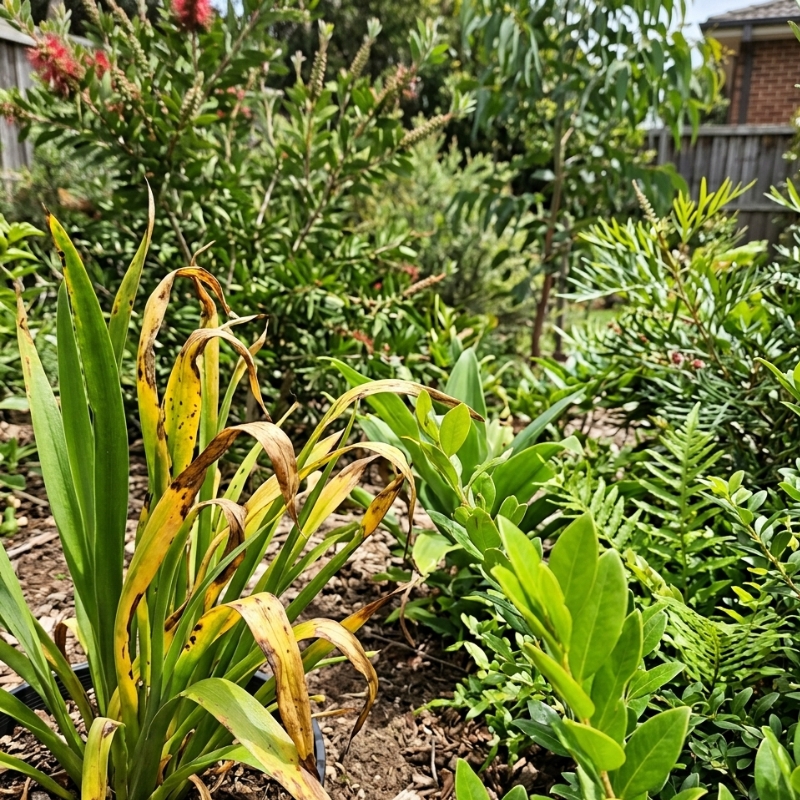
A thriving garden usually tells you everything is going well: lush foliage, steady new growth and soil that smells sweet and earthy. When things start to turn, the warning signs are just as visible—if you know where to look. Paying attention to these early gardening red flags can save Sydney homeowners hours of frustration, unnecessary re-planting and wasted water.It also helps you decide whether a quick home fix will do or if it is time for professional garden maintenance that tackles the deeper issue.
Below you will find 12 common but easily overlooked signals, why they appear in our local climate, and practical next steps you can take today.
1. Leaves Yellowing Between the Veins Rather Than at the Edge
When entire leaves turn pale, it is often age or seasonal change. If the veins stay dark while the tissue between them yellows, the plant may be struggling to absorb iron or magnesium. Sydney’s slightly acidic rain and patchy soil nutrition after heavy storms can trigger this.
What to try at home
• Check soil pH with a basic kit.
• Use a liquid feed that lists trace elements, not just N-P-K.
If new shoots still emerge chlorotic after two feeds a fortnight apart, lack of nutrients probably is not the only culprit. Compacted subsoil can block uptake, and you may need aeration or deeper soil amendment.
2. Persistent Wilting Even on Mild Days
Temporary droop on a hot afternoon is normal. Ongoing limp leaves when temperatures are below 28 °C or first thing in the morning suggest root damage, fungal disease or soil hydrophobicity (water running off instead of soaking in).
Sydney-specific clue
After a long dry spell then sudden rain, hydrophobic sandy pockets become common in coastal suburbs. Water forms beads on top instead of soaking down.
DIY first step
• Poke a finger or moisture probe 10 cm deep. If it feels dry just below the surface, wetting agents can help.
Persistent wilting after improved watering indicates possible root-rot fungi, which usually need expert attention.
3. Soil Smells Sour or Like Rotten Eggs
Healthy soil smells earthy. A sour, sulphur-like odour signals lack of oxygen. Over-watering, poor drainage or buried organic matter breaking down too fast are typical causes.
Why it matters
Anaerobic conditions favour pathogens that attack roots. Ornamental citrus, roses and many natives are especially sensitive.
Practical fix
• Fork the bed lightly to introduce air.
• Blend through well-aged compost rather than fresh grass clippings.
If the smell returns within two weeks, drainage or grading work is often required.
4. New Shoots Grow Small or Misshapen
Stunted, puckered or twisted leaves on the newest growth usually point to sap-sucking insects, viral infection or herbicide drift from a neighbour’s weed spray.
Inspection tip
Look under leaves for tiny aphids or whiteflies. Sticky residue (honeydew) is another giveaway. If none are present and distortion continues, a virus may be involved—hard to confirm without lab testing and usually best handled by a qualified horticulturist.
5. Leaf Margins Browning After Fertilising
Over-fertilisation burns tender roots, especially in winter when uptake is slower. Browning edges shortly after feeding mean salts pulled water out of leaf cells.
Safe remedy
• Flush soil thoroughly with water to dilute excess salts.
• Switch to controlled-release pellets or half-strength liquids.
If symptoms remain, the root zone could already be damaged. Professional remedial soil work may be more cost-effective than continuing trial and error.
6. Surface Crusting or Hard-Set Soil
When the top two centimetres set like concrete, water barely penetrates and seedling emergence drops. Clay and silt particles migrate upward in heavy rain then bake in the sun, a common Sydney cycle.
Quick DIY trial
Scarify lightly and add coarse organic mulch. If crusting reforms within a month, consider mechanical aeration or gypsum incorporation, both easier with pro equipment.
7. Mushrooms or Mould Ringing Plant Crowns
While many fungi decompose woody mulch harmlessly, clusters tight against stems or trunks may indicate overly wet conditions or buried organic debris.
Small area?
Shift mulch back 10 cm and improve airflow.
Whole bed affected or sap bleed appearing? Engage a specialist. Some crown-rot pathogens travel fast in warm, damp Sydney summers.
8. Pests Keep Returning Within a Fortnight
Seeing a few chewed leaves is normal. But if you hand-pick or spray soft soap only to find the same issue back twice weekly, the population is breeding uncontrollably or predator balance is off.
Underlying drivers
Excess fertiliser (soft, sappy growth) and lack of plant diversity both invite pests. A maintenance schedule that walks the line between feeding and pruning can restore balance.
Related reading: DIY vs professional garden maintenance breaks down task-sharing options if insects keep winning.
9. Bare Patches Forming in Lawn Despite Regular Water
Compaction from foot traffic or a thatch layer thicker than 2 cm can choke roots. Top-dressing and core aeration usually fix the issue, but they need timing and equipment most homeowners do not have on hand.
Comparison table below shows when simple raking is fine and when lawn surgery is smarter.
DIY vs Professional Response to Patchy Lawn
| Situation | Likely Cause | Quick DIY Step | When to Call in Help |
| Small bare spot under play equipment | Local compaction | Spike with garden fork, add sand-soil mix | If spot widens after two weeks |
| Random patches, soil feels spongy | Thick thatch | Power-rake in early spring | If you do not own machinery or if thatch >2 cm |
| Widening yellow patches after rain | Root disease | Reduce watering, apply fungicide | If spread continues or you are unsure which fungicide suits |
10. Branch Die-Back Starting at the Tips
On shrubs or small trees, crispy tips inching inward can signal borer attack, root stress or waterlogging. Pruning just behind dead tissue is fine once. If die-back recurs, the internal problem is unresolved.
Sydney note
Banksias and grevilleas are particularly prone when clay soil stays wet for 48 h. Sloping or French drain installation may be necessary.
11. White Powder on Soil or Pot Rim
A salt crust forms when tap water with dissolved minerals evaporates faster than it drains, common in pot plants left in saucers.
Test
Scrape a little into a damp fingertip—it feels gritty, not dusty like mildew.
Leach pots monthly or switch to rainwater where possible. Persistent crusts in garden beds hint at irrigation design flaws or poor drainage.
12. Growth Spurts That Suddenly Stall
Plants flush new shoots after fertilising then stop abruptly if root tips burn or if temperatures swing. Use half-strength feeds during heatwaves. If the stop-start pattern repeats across seasons, check root space. Tree roots invading raised beds is routine in established Sydney yards, and root barrier installation may be the only long-term fix.
Quick At-Home Inspection Checklist
Before blaming pests or splashing on more fertiliser, run through this 5-minute check:
- Feel soil moisture 10 cm down in three spots.
- Sniff soil for sour or rotten odours.
- Look under leaves with a torch for bugs.
- Scrape surface for salt or crust.
- Check the newest leaves: colour, size and shape.
Minor issues solved? Great. Still see red flags? Keep reading to see whether to persist with DIY or opt for a pro visit.
Minor Issues Versus Serious Warnings: Decision Guide
| Red Flag | Usually Minor If… | Warning It May Be Serious | Suggested Next Step |
| Yellow leaves | Only on oldest foliage, new growth fine | Appearing on new leaves or entire plant | Soil test, possible nutrient lock-up |
| Wilting | Recovers after evening | Remains limp overnight | Assess drainage, possible root rot |
| Leaf spots | Small, dry, not spreading | Spreading wet lesions, fuzzy edges | Likely fungal, consider expert ID |
| Lawn thinning | Localised, responds to light raking | Expanding circles | Core aeration, possible pathogen testing |
| Die-back tips | Once-off after heat wave | Progressive each month | Check for borers, structural root problems |
Why Acting Early Beats Emergency Fix-Ups
Once structural roots rot or systemic viruses take hold, saving the plant rarely costs less than replacing it—and surrounding vegetation may also suffer. Early professional assessment often means:
• Targeted treatment instead of blanket spraying.
• Less soil disturbance.
• Preserved habitat for beneficial insects.
The NSW Department of Primary Industries provides clear guidelines on recognising exotic pest or disease incursions; their plant health advice shows how rapid reporting reduces losses across suburbs.
When DIY May Do More Harm Than Good
• Guess-spraying fungicide can kill beneficial fungi and pollinators.
• Over-correcting soil pH without testing locks nutrients even further.
• Aggressive pruning during sap flow invites borers.
If you suspect any of the serious signs listed earlier, booking a garden health check is usually cheaper than replacing mature landscaping later.
Frequently Asked Questions
1. Can over-watering alone make leaves turn yellow?
Yes, waterlogged soil drives out oxygen and roots suffocate. In Sydney clay pockets that stay saturated after storms, yellowing often appears alongside limp stems. Improve drainage before adding fertiliser.
2. How often should I test my garden soil?
A comprehensive lab test every two to three years is plenty for established beds. Quick DIY pH and nutrient kits once a season help catch sudden imbalances early.
3. What is the safest way to deal with fungal spots on leaves?
Remove the worst-affected leaves with secateurs disinfected between cuts. Dispose of them in the red-lid bin, not the compost. If spots keep spreading, a targeted fungicide—matched to the pathogen—is safer than broad-spectrum products.
4. Why do my indoor plants develop salt crusts faster than outdoor pots?
Indoor pots dry out more slowly, so dissolved minerals rise to the surface and stay there. Flush pots until water runs freely and avoid letting them sit in saucers full of run-off.
5. Does pruning a dying branch save the whole plant?
Only if the underlying cause is removed. Pruning tidies appearance but, if disease or root issues stay active, new die-back usually follows. Investigate moisture levels, borers or pathogens before major cuts.
A Practical Next Step
Spotting these red flags early gives you a chance to fix simple problems and protect your weekend gardening time. If issues keep returning or you are unsure what is causing them, a tailored maintenance visit can pinpoint the root cause before more plants suffer.