
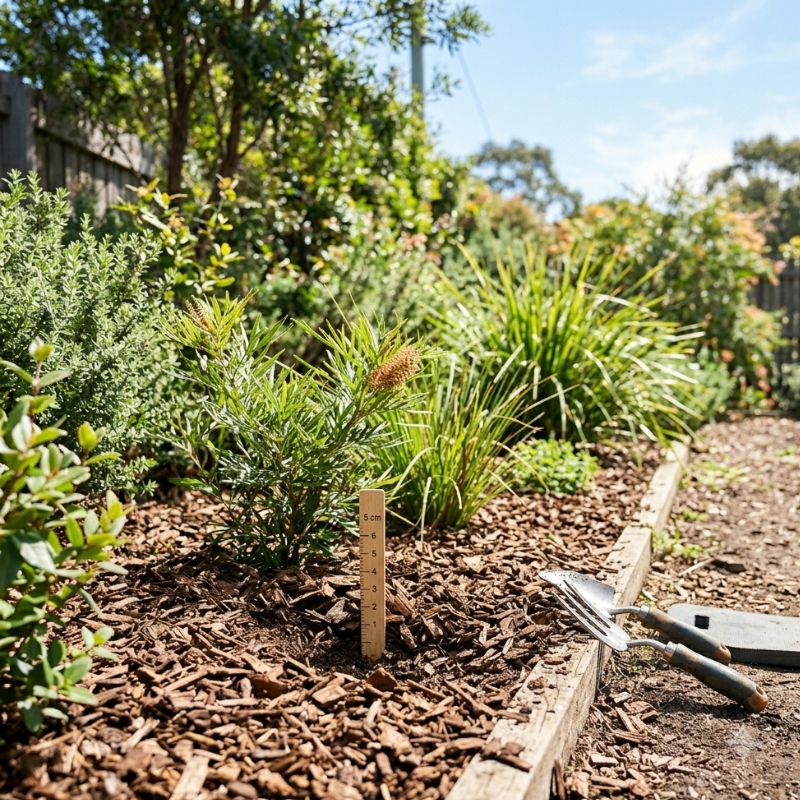
Mulch seems simple, yet even experienced gardeners stumble over the same few slip-ups. Put mulch down at the wrong time, pile it against trunks, or choose the wrong material and you create the very problems you hoped to solve. The good news is that each mistake is easy to prevent once you know what to watch for. This guide breaks down the five errors landscapers in Sydney still see week after week, why they matter in our local climate, and the straightforward fixes you can put in place today. If you would rather leave the heavy lifting to professionals, All Green Gardening & Landscaping offers mulching services in Sydney that follow the best-practice steps outlined below.
1. Spreading Mulch Too Thin (or Too Thick)
Sydney’s variable weather swings from heavy rainfall to drying nor’easterly winds, so mulch thickness makes a big difference.
Why It Matters
• Less than 5 cm lets sunlight reach weed seeds and speeds up evaporation.
• More than 8 cm can become waterlogged in our humid summers, suffocating roots and encouraging fungal growth.
How to Fix It
- Aim for a consistent 5–7 cm layer for coarse organic mulches such as wood chips or straw.
- Use a ruler or marked hand trowel to spot-check depth every square metre.
- Rake the surface level after storms, as water can wash mulch into piles that end up 10 cm deep without you noticing.
2. Mulching at the Wrong Time of Year
Many homeowners wait until their gardens already look stressed before topping up mulch, but timing affects moisture retention and plant health.
Sydney Timing Tips
• Early spring top-ups help trap soil warmth for new growth.
• Late summer applications lock moisture in before February heatwaves.
• Avoid fresh mulch just before extended wet periods, as persistent rain can leach nutrients and create a soggy mat.
Sydney Water’s Level 1 restrictions often encourage gardeners to water before 10 am and after 4 pm; mulch added just beforehand reduces rapid evaporation, an approach supported by the NSW Department of Primary Industries.
How to Fix It
Set calendar reminders for September and February. Those two windows align with the biggest temperature shifts in the Greater Sydney Basin and give mulch enough time to condition before peak heat or growth.
3. Choosing the Wrong Mulch for Soil Type and Plants
Not all mulches behave the same. A fine compost can seal clay soil like a lid, while chunky pine bark might pull nitrogen from sandy beds.
Common Sydney Scenarios
• Native beds packed with banksias prefer low-phosphorus mulch such as washed leaf litter or aged wood chips.
• Clay pockets in the Hills District benefit from coarse chips that let the soil breathe.
• Edible beds do well with straw or sugarcane that breaks down faster and feeds soil life.
For deeper material guidance, see our related post on water-smart mulching strategies.
How to Fix It
Match particle size to the soil’s drainage. Fast-draining sand calls for finer material that holds water, while dense clay needs coarse mulch to prevent compaction.
4. Piling Mulch Against Stems and Trunks
The “mulch volcano” is still alive and well in Sydney’s suburbs. When mulch touches woody stems it traps moisture, encouraging rot and insect damage.
Signs You Have a Problem
• Dark, damp bark or a sour odour near the base.
• Small bore holes from insects seeking the easy entry point.
• Unexplained dieback in lower branches.
How to Fix It
Pull mulch 5–10 cm back from trunks, creating a shallow moat. Water can still percolate down, yet air reaches the crown to keep it dry.
5. Forgetting to Prepare the Soil First
Mulch hides what lies beneath. If soil issues already exist—compact layers, nutrient imbalance, or active weed roots—mulch simply masks the symptoms.
Quick Preparation Checklist
- Remove existing weeds by the root.
- Loosen the top 10 cm of soil with a fork to improve infiltration.
- Add a thin layer of well-rotted compost before mulching to support microbes.
- Water the bed so mulch sits on damp soil, not dust.
Skipping these steps often leads gardeners to blame the mulch when the real issue lies below.
Comparison Table: Mistake vs Fix at a Glance
Below is a handy reference you can print or save to your phone when working in the yard.
| Common Mistake | Typical Result in Sydney Gardens | Simple Fix |
| Mulch too thin (< 5 cm) | Weeds break through, soil dries quickly | Add material to reach 5–7 cm, rake level |
| Mulch too thick (> 8 cm) | Waterlogging, fungal growth, poor aeration | Remove excess, redistribute evenly |
| Wrong timing | Poor moisture retention, nutrient loss | Apply early spring and late summer |
| Wrong material | Nutrient lock-up, poor drainage | Match particle size and pH to soil and plants |
| Mulch touching stems | Stem rot, pests, dieback | Keep a 5–10 cm buffer around trunks |
| No soil prep | Compaction, hidden weeds | Weed, loosen soil, add compost first |
A few minutes double-checking each column saves hours of remedial work later.
Inspection Checklist Before You Mulch
Tick these off and you will avoid 90 percent of problems:
• Soil is moist but not saturated.
• All visible weeds are removed.
• Bed edges are defined to stop mulch washing onto paths.
• Mulch depth markers are ready (old wooden chopsticks or plant labels work well).
• Materials are sorted—coarse for clay, fine or mixed for sand, low-phosphorus for natives.
FAQs
1. Does mulch attract termites to Sydney gardens?
Termites rarely feed on well-aged mulch because the lignin has already broken down. Keep mulch off walls and inspect timber edging regularly to minimise any risk.
2. How often should I top up mulch?
Organic mulches break down faster in Sydney’s warm, wet winters. Check depth every six months and top up if it has fallen below 5 cm.
3. Can I use fresh grass clippings as mulch?
Only in thin layers under trees, and let them dry for a day first. Thick, green clippings can mat, heat up and kill surface roots.
4. Is coloured wood chip safe for veggie beds?
Many modern dyes are water-based, yet not all suppliers meet Australian standards. Stick to naturally aged, undyed chips in edible gardens.
5. Will mulch change my soil’s pH?
Pine bark and eucalyptus can slightly acidify soil over time. If you grow pH-sensitive plants, test soil annually and apply garden lime if needed.
Final Thoughts
Mulch delivers powerful benefits—cooler soils, fewer weeds and healthier microbes—when applied the right way. By checking depth, timing, material, stem clearance and soil readiness, you sidestep the most common traps seen in Sydney backyards. If you notice ongoing issues, or if shifting a few cubic metres of mulch is more than a weekend job, professional help can make the process quicker and cleaner.