Native gums, angophoras, bottlebrushes and paperbarks give Sydney streets and backyards much of their trademark greenery. Yet even the toughest local species can suffer when insect numbers surge after humid summers or mild winters. Catching pest damage early protects tree health, property safety and the broader urban canopy, and it usually costs far less than waiting until limbs start failing.
If you are already seeing severe die-back, exit holes or large sap runs, a professional assessment may be wise. A professional tree services team can confirm whether the problem is cosmetic or needs urgent intervention.
Why Do Healthy Native Trees Still Suffer Pest Outbreaks in Sydney?
Australia’s native trees co-evolved with many of the insects that feed on them, but two modern conditions have changed the balance:
- Urban stress
• Compacted soil, reflected heat from hard surfaces and altered water run-off weaken root systems. - Climate variability
• Hotter summers and irregular rainfall allow multiple pest breeding cycles in a single year. - Limited natural predators
• In built-up suburbs, predator birds, parasitic wasps and micro-bats that would normally keep numbers in check may be missing.
A eucalypt that has survived decades of storms can suddenly decline if sap-sucking pests multiply unchecked. Understanding which insects are most common locally, what early signs to watch for and how quickly each pest can progress is the key to timely, cost-effective action.
The Main Native Tree Pests Found Around Greater Sydney
Sydney’s mix of sandstone soils, coastal humidity and summer storms encourages a predictable cast of tree pests. The table below summarises the most common culprits, typical symptoms and how soon you should act.
| Pest | Typical Host Trees | Early Signs to Watch | What Happens if Ignored | Suggested First Response |
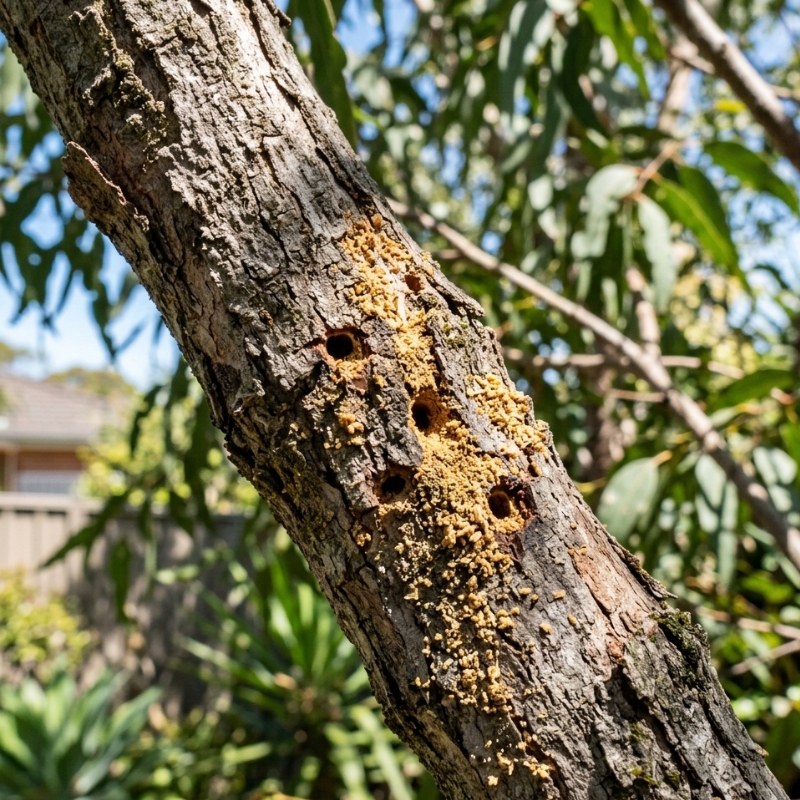
| Eucalyptus longhorned borer | Gums, peppermint, scribbly gum | Small round exit holes, pale sawdust around trunk base, minor canopy die-back | Rapid internal tunnelling, limb drop, potential trunk fracture | Strip loose bark, improve watering, monitor weekly |
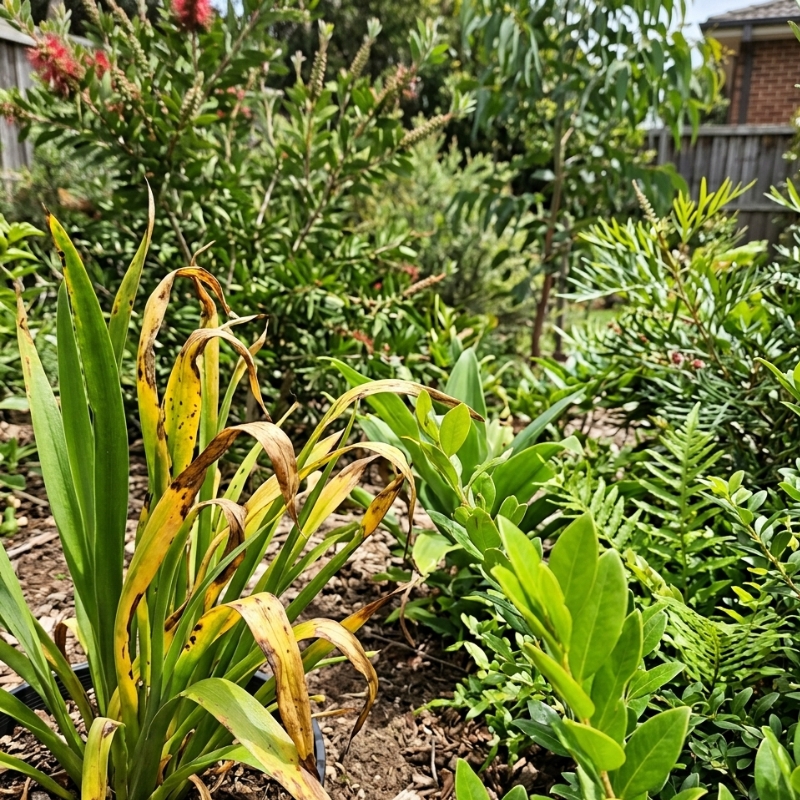
| Psyllids (lerps) | Lilly pillies, lemon-scented gums | Sticky honeydew, white or brown shell-like coverings on leaves | Leaf yellowing, premature drop, reduced photosynthesis | Prune affected shoots, hose leaves to reduce numbers |
| Leaf-chewing caterpillars | Bottlebrushes, wattles, melaleucas | Skeletonised leaves, fresh frass (droppings) on lower foliage | Defoliation, stress during hot weather, growth stunting | Remove clusters by hand where safe, encourage insect-eating birds |
| Fig leaf beetle | Moreton Bay figs, port Jackson figs | Scalloped leaf edges, bronze discolouration | Repeated seasonal attacks, significant canopy thinning | Rake fallen leaves to remove eggs, consider low-toxicity spray |
| Scale insects & sooty mould | Banksias, grevilleas | Black sooty film on leaves, ants farming scale for honeydew | Branch die-back, overall decline | Prune and dispose of badly infested limbs, horticultural oil |
| Termites (arboreal nests) | Dead limbs of various natives | Mud tunnels up trunk, hollow-sounding wood | Structural weakness, branch failure | Remove deadwood, professional inspection |
Even when signs appear minor, certain pests such as borers can escalate quickly because the damage occurs inside the trunk. If you notice multiple symptoms at once, or if the same tree hosts several pest species, the underlying stress may already be advanced.
Spotlight on Borers: Sydney’s Silent Tree Killers
Unlike leaf-feeding pests that leave visible chew marks, wood-boring beetles attack from within. Longhorned borers lay eggs in cracks or damaged bark; larvae then tunnel through sapwood, interrupting water flow.
Early detection tips:
• Look for fresh sawdust “frass” at the base after the wind.
• Tap suspect areas—hollow sounds can indicate internal galleries.
• Check canopy density from a distance; uneven thinning is a red flag.
Because borers can compromise structural integrity, trees near houses or driveways need prompt attention. Where exit holes exceed five millimetres or limb die-back reaches the upper canopy, an arborist report is often safer than DIY experimentation.
Early, Low-Impact Treatment Options Homeowners Can Try
Not every outbreak demands chemical sprays. Many Sydney councils encourage integrated pest management (IPM) that balances tree health with biodiversity.
- Remove the stress first
• Deep water infrequently but thoroughly—especially during prolonged dry spells.
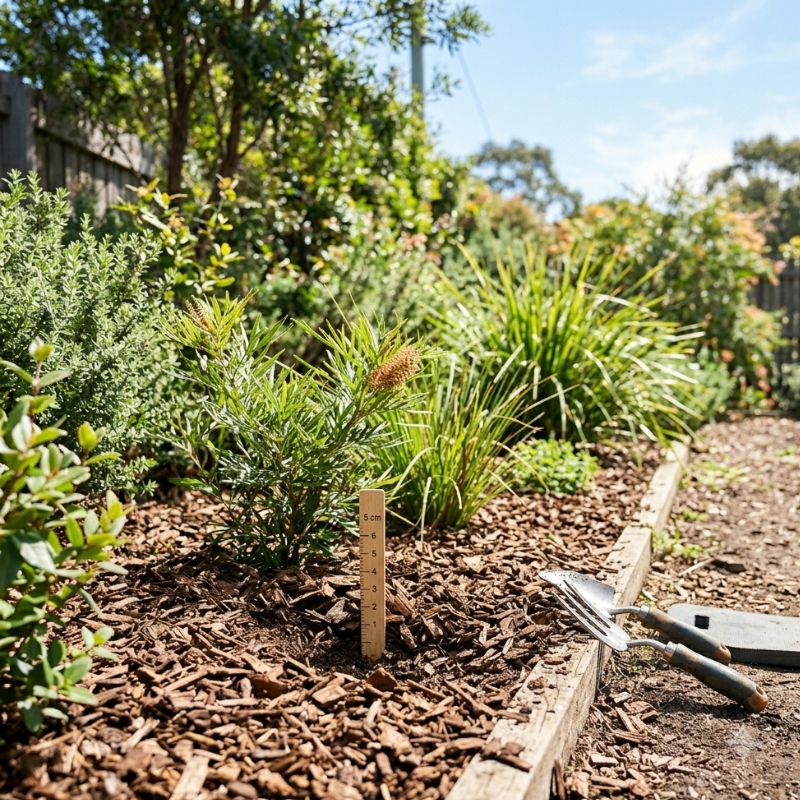
• Mulch with chunky, aged wood chips to moderate soil temperatures.
• Avoid soil compaction from parking cars beneath trees. - Physical or organic controls
• Blast small psyllid or scale colonies off foliage using a hose set to a firm mist.
• Hand-pick larger caterpillars early in the morning when they are sluggish.
• Apply horticultural oil to smother scale; repeat every 7–14 days if needed. - Encourage natural predators
• Install small bird-attracting plants such as callistemons near the affected tree to lure insectivores.
• Leave a small dish of water close to dense shrubs so micro-bats can drink at dusk. - Targeted, low-toxicity products
• Bacillus thuringiensis (Bt) sprays target caterpillars selectively but are safe for bees when applied at dusk.
• Eco-Neem or similar azadirachtin-based products can reduce sap-sucking insects without harming many beneficial species.
If you trial one of these methods, document dates, products and visible results. Accurate records help professional arborists diagnose persisting problems faster and avoid duplicating ineffective treatments.
Monitoring vs DIY Treatment vs Calling a Qualified Arborist
Many homeowners are unsure when observation is enough, when light touch interventions are prudent, and when industry expertise is essential. The comparison below provides a decision snapshot.
| Situation | DIY Monitoring | Light Treatment | Professional Arborist |
| A few chewed leaves after summer storms | Photograph, re-check at two-week intervals | Not usually required | Not required |
| Sticky honeydew covering patio furniture | Track for ant activity, wipe leaves | Hose foliage, apply horticultural oil | Consider if infestation persists after two rounds |
| Multiple borer exit holes plus canopy thinning | Not recommended | Bark removal may worsen damage | Urgent inspection, possible trunk injection or removal |
| Large fig with repeated beetle outbreaks shading driveway | Seasonal photo logs | Leaf litter hygiene, low-toxicity spray | Annual health check, canopy pruning |
| Tree overhanging neighbour’s boundary with termite mud tunnels | Monitor weekly for spread | Unsafe to treat without licence | Professional pest control and arborist coordination |
Regular monitoring does not mean inaction. Brief weekly checks—walking around the drip line, noting leaf colour and spotting any sawdust piles—often allow treatment well before the pest load peaks.
For trees near power lines, public footpaths or children’s play zones, a Level 5 AQF-qualified arborist is the safest default once structural pests (borers, termites) are suspected. Tree safety involves liability; ignoring advanced decay can expose owners to council fines or insurance complications.
When Council Rules Override Your Choice
Sydney councils classify most native trees over five metres as “protected vegetation”. Even removing a single borer-riddled limb can require a permit if the trunk diameter is above the local threshold. Check recent amendments on your council website or ring the duty tree officer. If paperwork feels murky, a consulting arborist can prepare the risk assessment and handle documentation.
For an overview of pest species affecting NSW urban trees, see the authoritative guidelines from the NSW Department of Primary Industries.
Common Mistakes That Worsen Pest Problems
- Using broad-spectrum insecticides at the first sign of chew marks
• These often kill predators and can spark larger outbreaks later. - Pruning large limbs in midsummer without sealing cuts
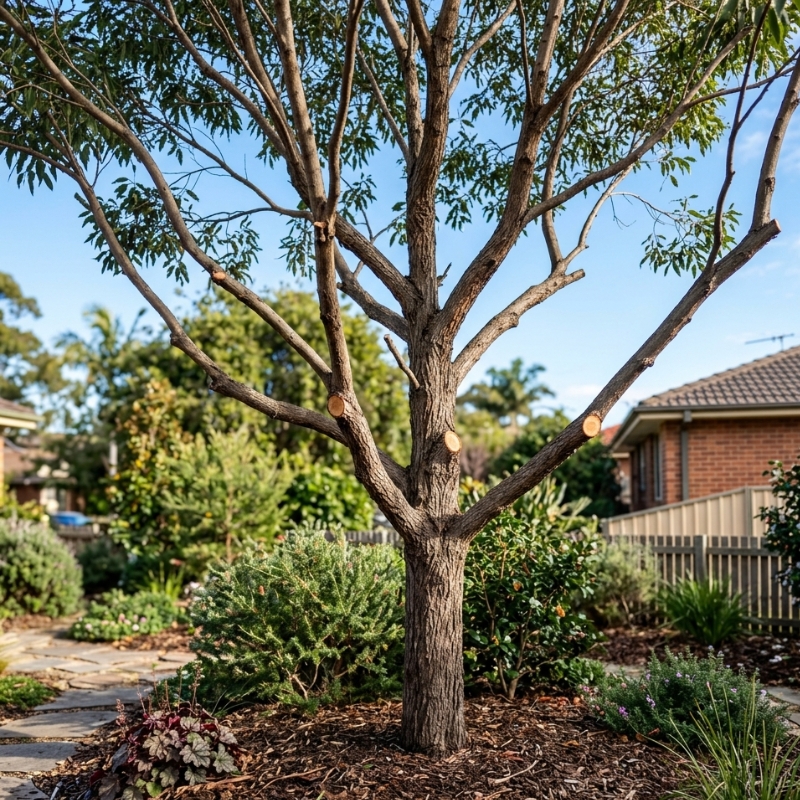
• Fresh, sap-rich wounds are magnets for borers and fungal spores. - Adding fertiliser when leaves yellow
• Excess nitrogen can attract sap-sucking pests and cause rank, weak growth. - Ignoring ants farming scale insects
• Ants protect scale from natural enemies; an ant barrier may break the cycle. - Stacking mulch against the trunk
• Constant damp around bark encourages decay fungi that invite borer entry.
Steering clear of these pitfalls keeps treatment timelines shorter and protects the tree’s natural resilience.
Questions to Help You Decide the Next Step
Before reaching for chemicals or the chainsaw, ask:
- Has the tree faced recent stress—root disturbance, drought, or construction?
- Is the pest damage localised to one area or spreading quickly?
- Does the tree overhang a structure, power line or neighbour’s yard?
- Are council permits needed for pruning or removal at its current size?
- Would calling an arborist now cost less than property repairs later?
If you answer “yes” to questions three, four or five, prioritise professional advice.
Related Reading for Risk Assessment Enthusiasts
Unsure whether pests or structural weaknesses pose the greater threat? Our detailed guide on signs a tree is dangerous explains crack patterns, canopy symmetry and root plate movement so you can combine visual safety checks with pest monitoring.
Frequently Asked Questions
1. How quickly can borers kill a healthy gum tree?
It depends on tree age, species and overall stress levels. In young or already weakened gums, extensive larval tunnelling can ring-bark internal tissues within one growing season. Mature, vigorous gums often compartmentalise damage for years, though limb drop risk still rises. Regular checks for fresh frass and canopy die-back are essential.
2. Are eco-friendly sprays really safe for native wildlife?
Products like horticultural oils or Bt are considered low-impact when used according to label directions. They target specific pest stages and break down quickly. Spray at dawn or dusk, avoid windy days and never exceed recommended rates to protect bees, beneficial wasps and local birdlife.
3. Do I need council approval to treat pests on a protected tree?
Treating pests rarely needs permission, but substantial pruning, lopping dead limbs or removing the tree often does. Every Sydney council sets its own diameter and height thresholds. Always check your Tree Preservation Order before major works to avoid fines.
4. Can mulching help reduce pest numbers?
Yes, a 7–10 cm layer of coarse mulch can stabilise soil moisture and temperature, indirectly boosting tree vigour and resistance. Just keep mulch away from the trunk flare to prevent rot that might attract borers or termites.
5. What qualifications should I look for in an arborist?
In NSW, seek a professional holding at least an AQF Level 3 for basic tree work or Level 5 for consulting and reporting. Membership of Arboriculture Australia or the Institute of Australian Consulting Arboriculturists also indicates adherence to industry standards.
Wrapping Up
Sydney’s native trees thrive when pest outbreaks are recognised early, underlying stresses are relieved and treatments respect the broader garden ecosystem. Routine visual checks, simple organic controls and improved growing conditions solve most minor issues. When signs point to internal borers, structural decay or permit-triggered pruning, engaging a qualified arborist protects both your trees and your peace of mind.