
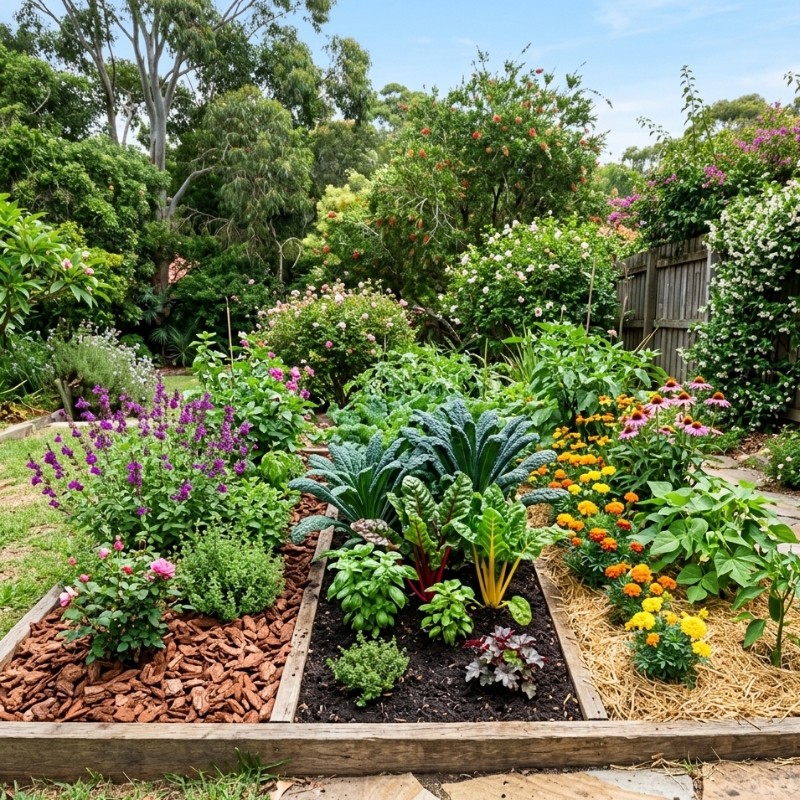
Sydney gardens are a bit of a mixed bag. One week you’re watering like mad through a warm, dry spell, and the next you’re watching a storm dump heavy rain that can flatten seedlings and wash lighter materials across the path. Add coastal winds, humid shade pockets, and clay-heavy soils in many suburbs, and it’s no wonder choosing the right approach to mulching your garden beds (and what to put on top of the soil) feels confusing.
A “top layer” (the protective material spread over soil) is one of the simplest ways to:
• reduce water loss from evaporation
• suppress weeds before they take over
• protect roots from temperature swings
• improve soil condition over time (depending on what you use)
But bark, compost and straw behave very differently in Sydney conditions. This guide breaks down what each one does best, where each one can cause headaches, and how to choose based on your plants, your soil, and your exposure to heat and heavy rain.
What a garden bed top layer actually does (and why it matters in Sydney)
A good top layer works like a buffer between your soil and the weather. In hot periods, it slows moisture loss; during downpours, it reduces soil splash (which can spread disease) and helps stop the surface sealing into a crust. Over time, certain materials also feed soil life, which supports a healthier structure and better water-holding capacity.
Sydney-specific factors to think about:
• Heat and hot winds: Western Sydney beds can dry out rapidly, especially if they’re north- or west-facing.
• Sudden heavy rain: Chunky materials tend to stay put better than light, fluffy ones.
• Humidity and shade: In damp areas, overly thick or fine layers can stay wet and encourage fungus, slugs, or gnats.
• Soil type: Clay can benefit from organic matter and protection from crusting; sandy soils often need help holding moisture and nutrients.
Bark, compost, and straw at a glance
Bark: best for longevity and stability
Bark (often sold as pine bark or decorative bark) is usually the longest-lasting of the three. It’s great when you want a tidy look, good weed suppression, and a layer that doesn’t disappear quickly.
Best for:
• ornamental beds
• shrubs and perennials
• paths between plants (not touching stems)
Watch-outs:
• can shed water if applied too thickly or if it’s very coarse and dry
• Fresh wood-based products can temporarily tie up nitrogen near the surface (more on that below)
• can create hiding spots for slugs if kept overly damp in shade
Compost: best for feeding the soil, not for long-term cover
Compost is more of a soil improver than a durable protective cover. It can help soil structure, biology and nutrient cycling, but on its own it’s not a great “stay-put, weed-proof” top layer in Sydney storms.
Best for:
• veggie beds (as a feeding layer)
• improving tired soil before planting
• boosting organic matter in clay or sandy beds
Watch-outs:
• breaks down quickly (you’ll top it up more often)
• can germinate weeds if it’s not well-made or gets contaminated
• may form a crust on the surface if it dries out hard, especially if applied thinly without another protective layer
If you want the soil benefits, it helps to understand the “why” behind organic matter and structure. NSW guidance on soil structure and building healthier soil is a solid reference point: NSW DPI soil structure and garden soils.
Straw: best for veg beds and quick seasonal protection
Straw is popular in edible gardens because it’s light, easy to spread, and can be refreshed quickly. It’s especially handy around seedlings and seasonal crops where you’re constantly replanting.
Best for:
• veggie patches
• around new plantings needing gentle protection
• short-term summer moisture buffering
Watch-outs:
• can blow away in exposed/coastal sites
• can shift or mat down in heavy rain
• can harbour slugs/snails if it stays damp
• may contain seeds (depending on quality and what you buy)
Choose based on your goal: weeds, water, soil health, or looks
If your main goal is weed suppression
Bark usually wins for weed suppression because it forms a more stable, longer-lasting barrier.
Tips:
• Apply at a consistent depth (see thickness section below).
• Remove or knock down existing weeds first. Covering active weeds often just creates a humid “greenhouse” for them.
• Edge your beds if storm runoff regularly drags material into paths.
Straw can suppress weeds in veg beds, but it often needs more frequent topping up. Compost alone can actually encourage weeds if seeds blow in and germinate easily.
If your main goal is to reduce watering
Bark and straw both help reduce evaporation. In full sun, straw can work surprisingly well because it shades the soil surface quickly. Bark is often better for ornamental beds because it stays in place longer.
Compost supports moisture retention by improving the soil underneath, but as a surface layer it doesn’t always prevent evaporation as effectively as a “fluffier” cover.
If your main goal is soil improvement
Compost is the standout because it feeds soil biology and increases organic matter. Bark and straw will also contribute over time, but more slowly (and bark much more slowly).
A common, practical approach for Sydney gardens is:
• compost as a feeding/top-up layer for the soil
• plus a more stable protective layer on top (often bark in ornamental beds, straw in veg beds)
How thick should you apply it in Sydney?
Getting thickness right matters more than most people realise. Too thin and you won’t get weed control or moisture buffering. Too thick and you can create water-shedding, sour spots, or stem/trunk issues.
A practical thickness guide:
• Bark: aim for a moderate, even layer. Thick enough to shade soil and suppress weeds, but not piled into mounds.
• Compost: a thinner feeding layer is usually enough, refreshed more often.
• Straw: a fluffy layer that still lets water through; avoid compacting it into a dense mat.
Two simple rules:
• Keep the layer pulled back from stems and the base of shrubs/trees to reduce rot and pest issues.
• After spreading, water it in. This settles the material and helps prevent blow-away and water-repelling patches.
Common Sydney problems and how to avoid them
“It washed away in the storm”
This is most common with straw or very fine compost on sloped beds or where downpipes discharge near garden edges.
Fixes:
• Use a heavier, chunkier top layer (bark tends to hold better).
• Reduce flow: redirect downpipes, add splash blocks, or create a shallow diversion swale.
• On slopes, consider stepping the bed or adding low edging to trap material.
“It went mouldy / smells sour”
This can happen when organic layers stay wet and airless, especially in shaded, humid spots.
Fixes:
• Reduce thickness, especially in shade.
• Choose a chunkier material that breathes better.
• Avoid burying crowns/stems.
• Improve airflow and drainage where possible.
“My plants look yellow after adding bark”
This can be tied to nitrogen drawdown near the surface when fresh woody products break down (it’s not always dramatic, but it can show up in hungry plants).
Fixes:
• Use composted/aged bark where possible.
• Feed plants appropriately (especially veg and flowering annuals).
• Keep bark as a surface layer rather than mixing it through the soil.
“Slugs and snails moved in”
Damp cover can create ideal habitat, especially under dense straw or in thick, shaded bark.
Fixes:
• Keep layers moderate and avoid constant wetness.
• Water in the morning (not late afternoon) so surfaces dry by evening.
• Reduce hiding places around vulnerable seedlings.
What to use where: simple Sydney scenarios
Veggie beds
Best starting point:
• compost for soil feeding
• straw for quick coverage around crops (easy to pull back when planting)
If your veg patch is exposed to wind:
• consider partially composting straw in place, or using a slightly heavier cover in the windiest sections
Native gardens
Many native beds prefer leaner conditions and good drainage.
Often works well:
• a stable bark layer that reduces weeds and watering
• avoid burying stems and avoid over-feeding unless plants show need
New plantings (shrubs, perennials, feature beds)
You want moisture buffering and temperature protection while roots establish.
Often works well:
• a compost layer to support the soil
• topped with bark for stability and weed suppression
Shady, damp areas
Go lighter and more breathable.
Often works well:
• thinner layers overall
• chunkier bark rather than fine compost
• avoid thick straw that mats down and stays wet
Q&A: the questions Sydney homeowners usually ask
Can I just use compost as the top layer everywhere?
You can, but you’ll usually be topping it up often, and it won’t always suppress weeds as well as a more stable cover. Compost shines as a soil-feeding layer. If weeds and watering are your biggest pain points, pairing compost with a longer-lasting cover often gives better results.
Is straw “messy” in Sydney?
It can be in exposed, windy gardens or during big rain events. If you’re near the coast or in a breezy spot, straw may need more frequent raking back into place. It’s still excellent for veggie beds because it’s easy to move aside when planting and harvesting.
What if I want the neatest look?
Bark generally gives the most consistent, tidy look over time, especially in ornamental beds and around shrubs. Just keep it off stems and avoid piling it too thickly.
Practical checklist: choose the right top layer in 60 seconds
Pick bark if:
• you want long-lasting weed suppression
• you want a neat, consistent look
• your beds get hammered by storms, and you need something that stays put
Pick compost if:
• your soil is tired, compacted, or low in organic matter
• you’re feeding veggies, flowers, or hungry plants
• you’re happy to refresh more often
Pick straw if:
• you’re growing seasonal edibles
• you want quick moisture protection around seedlings
• you don’t mind occasional topping up or tidying after storms
If you’d like a practical next step that explains the “why” behind moisture, temperature buffering and soil biology, you can also learn how mulching supports soil health.
How often should you refresh the layer?
Sydney’s warmth means organic materials break down steadily, and stormy periods can shift or thin out lighter layers. Instead of guessing, use a simple inspection routine:
• After heavy rain: check bare patches and re-spread where needed
• In peak summer: check whether the soil is drying quickly under the surface
• At the start of key growing seasons: refresh where weed pressure is about to spike
For a simple timing guide, you can follow through the year (and a few signs you’ve left it too long), see when to refresh the mulch layer.
Mistakes that cause most of the “it didn’t work” outcomes
Piling it against trunks and stems
This is one of the fastest ways to create rot, fungal problems, and pest shelter. Always leave breathing room around the base of plants.
Spreading over weeds and expecting miracles
A top layer helps prevent new weeds, but it won’t reliably stop established weeds from pushing through. Prep matters.
Choosing the wrong material for the site
A windy coastal courtyard and a sheltered inner-west backyard behave differently. If the site is exposed, favour heavier, chunkier materials or add edging and flow control.
Ignoring drainage issues
If beds are frequently waterlogged, adding thick organic layers can make problems worse. Fix the drainage first (or reduce thickness and use more breathable materials).
FAQ
What’s the best garden bed top layer for Sydney heatwaves?
In full sun, both bark and straw can reduce evaporation by shading the soil. Bark tends to stay put longer in storms, while straw is great for veg beds, you replant often. If your soil underneath is poor, compost helps improve water-holding over time.
Will compost attract pests?
Good compost is less likely to cause issues, but any organic material can attract insects if it stays constantly wet and anaerobic. Avoid over-thick layers in shady areas and keep the surface from staying soggy.
Is bark safe around all plants?
Generally, yes, as a surface layer, but keep it back from stems and trunks. If plants are heavy feeders, consider adding compost (or appropriate fertiliser) because woody materials can contribute to temporary nitrogen tie-up near the surface.
Does straw bring weeds?
Sometimes, depending on the quality. Straw can contain seeds, or it can catch wind-blown seeds. If weeds are a recurring issue, focus on thickness consistency and regular spot checks, especially after storms.
How do I stop the top layer from blowing away?
Water it in after spreading, avoid ultra-dry fluffy application, and consider edging. In very exposed areas, bark or a heavier product tends to behave better than straw.
What if I’m still not sure what suits my garden beds?
A quick assessment of sun, wind, slope, soil type, and what you’re planting usually makes the choice obvious. If you want a second set of eyes on what will work best for your plants and conditions, ask for help with choosing the right mulch.