
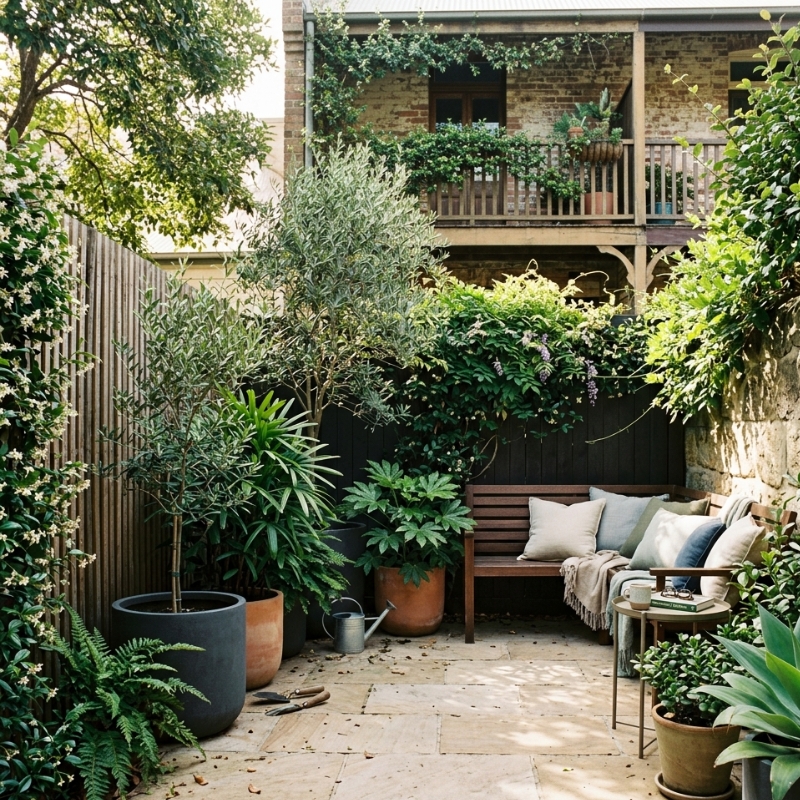
Sydney courtyards can be brilliant little outdoor rooms… or they can feel like a hot brick box, a gloomy tunnel, or a fishbowl overlooked by neighbours. The good news is you don’t need a huge yard to create calm, low-fuss courtyard landscaping that feels green and liveable year-round.
You do need a plan that suits Sydney’s realities:
• long, hot spells and reflected heat off brick and paving
• sudden downpours that test drainage
• humid shade that encourages mildew
• wind tunnels between walls and terraces
• tight access that makes “big changes” tricky
This guide walks you through a practical approach to three courtyard make-or-break factors:
• privacy (without blocking all your light and airflow)
• shade (working with what you have, not fighting it)
• low-mess planting (so your courtyard stays enjoyable, not constantly swept)
Start with a simple courtyard “map”
Before choosing plants, get clear on what your courtyard is doing across a normal day.
Step 1: Identify your courtyard type
Most Sydney courtyards fall into one of these:
• The shaded canyon: tall walls, limited sky view, damp corners
• The hot brick box: lots of hard surfaces, harsh afternoon sun, reflected heat
• The windy corridor: long and narrow, gusts funnel through
• The mixed light courtyard: patches of sun, patches of shade, shifting through seasons
• The pot-heavy courtyard: mostly paving with big planters, limited soil depth
Your “type” helps you choose the right privacy approach and the right plants.
Step 2: Do a quick sun and heat check
Over one sunny day, note:
• where you get morning sun (gentler, plant-friendly)
• where you get afternoon sun (harsher, heat stress)
• the hottest surface (brick walls, dark pavers)
• the coolest corner (often deep shade near a wall)
If you want a shortcut, stand outside at 9 am, 12 pm, and 3 pm and take one photo each time. That’s usually enough to reveal where you can place shade-loving plants versus sun lovers.
Step 3: Decide what “privacy” means for you
Privacy can mean different things:
• blocking direct sightlines from upstairs windows
• creating a “green wall” to soften fences
• reducing noise and exposure
• hiding messy utilitarian areas (bins, air con units, storage)
Write down your top two privacy pain points. You’ll design around those.
Privacy that works in Sydney courtyards
Courtyard privacy isn’t just about height. The best screens:
• break up sightlines
• let air move through (important in humid shade)
• don’t turn the space into a cave
• stay neat without constant pruning
Choose the right screen style for your space
1) Layered screening (best balance of privacy + light)
Think: a breathable screen plus plants.
• A slimline trellis, wire system, or batten screen
• A climber or tall pot plant to soften it
• Lower planting to fill gaps and add depth
Layering gives privacy without creating a solid wall. It also looks more “designed” and less like a quick fix.
2) Pot-based screening (best for paved courtyards)
If you’re mostly paved, large troughs and feature pots can create strong privacy zones. The keys are:
• pick pots big enough to buffer heat and drying
• position them to block the main sightline first
• avoid lining everything up in a single row (it looks stiff and can block airflow)
3) Climber screening (best for narrow courtyards)
Climbers are space-efficient. They can also be “low mess” if you choose carefully. A tidy climber on wires can create privacy without eating up floor space.
Q&A: What’s the fastest way to get privacy in a Sydney courtyard?
Fast privacy usually comes from structures first (slim screens, trellis, shade sail placement), then plants to soften and fill. Plants alone can take time to thicken, and in small courtyards, you don’t always have enough soil volume for instant results.
If you want a courtyard plan that stays low maintenance as it fills out, start with the layout and pot sizing first. That’s the foundation of planning a low-maintenance garden you’ll actually stick with.
Shade: the reality (and the opportunity)
Shade in a courtyard can be a blessing in Sydney summers — but it can also be the reason plants struggle. The trick is to work out what kind of shade you have.
The 3 types of shade that matter
1) Bright shade
You get plenty of ambient light, but little direct sun. Many courtyard plants love this.
2) Dappled shade
Filtered sun through a screen, slats, or overhead foliage. Great for leafy plants, and often the easiest condition to work with.
3) Deep shade
Minimal sky view, often cooler and damp. Plant options narrow here, and airflow becomes a bigger issue than sunlight.
The hidden problem: dry shade vs damp shade
Two shaded corners can be completely different:
• Dry shade: sheltered from rain, soil dries out, walls suck moisture away
• Damp shade: poor airflow, water sits, mildew appears
In Sydney, both happen. Dry shade is common under eaves and in tight side courtyards. Damp shade is common where water can’t escape, and air doesn’t move.
Low-mess planting: what it really means
“Low mess” doesn’t mean “no leaves ever.” It means choosing plants that won’t make you constantly:
• sweeping large leaves
• picking up sticky sap or heavy nectar drop
• cleaning fruit fall or messy seedpods
• pruning aggressive growth every few weeks
• dealing with brittle branches after wind
A practical low-mess filter for courtyard plants
When you’re deciding on a plant, ask:
• Does it drop lots of petals, pods, or fruit?
• Does it have sticky sap or attract heavy honeydew?
• Will it need frequent pruning to stay tidy?
• Will it shed big leaves that clog drains?
• Is it likely to become invasive or spread into neighbours’ spaces?
For the last point, it’s worth staying aware of NSW weed guidance so you don’t accidentally create a problem plant in a tight urban area. The NSW Department of Primary Industries has a helpful starting point on weeds and invasive plants.
Planting strategies that keep courtyards neat
Instead of chasing “perfect plants,” set up your courtyard so it’s easier to maintain.
Use structured plants, then soften
A tidy courtyard usually has:
• 1–3 “structure” plants (evergreen, reliable shape)
• smaller mid-layer plants for texture
• a groundcover or trailing plant to soften edges
• one feature element (pot, sculpture, seat, water bowl)
This reduces plant clutter (which often becomes a mess).
Choose mulch that behaves in courtyards
In small spaces, mulch matters more than people think.
• Chunky mulch tends to stay put and looks neat
• Very fine mulch can wash into drains in heavy rain
• Pebbles can be tidy but may increase heat and glare (depends on courtyard type)
If your courtyard has drains, avoid anything that will easily float and clog.
Q&A: How do I keep my courtyard cooler in summer without making it messy?
Start with surfaces and shade:
• add a breathable shade layer (slatted screen, overhead sail, or vine on wires)
• increase plant mass near heat-reflecting walls
• use larger pots (small pots overheat and dry too fast)
• water deeply in the early morning during heatwaves
• avoid plants that constantly drop petals or fruit onto hot pavers (it bakes on)
Cooling is often less about “more watering” and more about reducing the heat load in the first place.
Best practice for pots in Sydney courtyards
Pots are the backbone of many courtyards, especially terrace homes.
Pot sizing rules that prevent plant stress
A common courtyard issue is choosing pots that look right, not pots that work.
As a rough guide:
• tall screens need a generous soil volume to stay stable and hydrated
• if you want a plant to thrive through summer, go bigger than you think
• choose pots with drainage holes that won’t block easily
Soil and drainage in pots (the low-mess version)
To keep pots from becoming a soggy, smelly mess:
• use a quality potting mix suited to the plant type
• don’t “cap” drainage with rocks (it often doesn’t help)
• make sure excess water can actually exit freely
• keep leaf litter out of pot rims and drainage points
Q&A: Why do my courtyard plants look fine, then suddenly crash?
In Sydney courtyards, the usual culprits are:
• a heat spike plus reflected heat off brick or paving
• a pot that dries out fast, then gets overwatered (root stress)
• poor drainage after heavy rain
• too little light in a deep shade corner
• wind stress (plants transpire faster and dry out)
A small reset—changing pot size, moving plants 30–50 cm, or adjusting watering—often fixes what looks like a “mystery problem.”
If you’re troubleshooting a courtyard that’s declined over time, it can help to step back and focus on how to refresh a tired courtyard garden using a simple diagnose-and-adjust approach.)
Privacy + shade layouts that work in real Sydney courtyards
Here are three scenario templates you can adapt.
Scenario 1: The overlooked courtyard (privacy first, light second)
Goal: block sightlines while keeping it bright.
• place a slim screen where the main sightline hits (often one corner)
• use tall pot plants to create a “green edge” rather than a solid wall
• keep the centre open for light and airflow
• add a feature pot or seat to create a destination (so the courtyard feels like a room)
Low-mess focus:
• choose evergreen plants with finer leaves and controlled growth
• avoid anything that drops heavy fruit onto paving
Scenario 2: The dark courtyard (light and airflow first)
Goal: stop it from feeling damp and closed in.
• avoid dense hedging along every boundary
• use lighter, airier foliage
• introduce reflectors: pale pots, light gravel accents, lighter wall colours
• reduce clutter — fewer plants, bigger pots
Low-mess focus:
• avoid plants that encourage mildew or need constant cleanup
• keep pot bases and drains clear
Scenario 3: The hot courtyard (cooling and shade first)
Goal: reduce heat stress and glare.
• add overhead shade in a breathable way
• cluster plants near the hottest wall to buffer radiant heat
• add a small tree or tall screening in a large pot to create a cooler “canopy” feel
• use mulch that won’t blow around or clog drains
Low-mess focus:
• avoid plants that shed brittle branches after wind
• avoid heavy petal drop onto hot pavers
A low-mess courtyard plant shortlist for Sydney conditions
Instead of a massive list, here’s a practical shortlist of plant “roles” to consider. Your best picks will depend on your exact sun/shade and wind exposure.
Structure plants for pots
Look for:
• evergreen shape
• not overly thirsty
• tolerates pot life
• doesn’t shed constantly
Screening plants that don’t become a pruning nightmare
Look for:
• controlled growth habit
• responds well to occasional trimming (not weekly haircuts)
• not notorious for littering
Shade-friendly texture plants
Look for:
• plants that hold their leaves well
• foliage that doesn’t turn to mush in humid shade
• good airflow around the base
Trailers and softeners (edge plants)
Look for:
• tidy trailing growth
• not aggressive spreaders
• easy to pull back if they wander
Q&A: Should I use bamboo for courtyard privacy in Sydney?
It depends on the type and the setup. Some bamboo varieties can be managed in containers, but they can also become high-maintenance, thirsty, and messy with leaf drop in tight spaces. If you’re aiming for “low-mess,” consider whether you’re happy to sweep fine leaf litter regularly and whether the pot size can realistically support it through summer.
Maintenance routines that keep courtyards looking “done”
Courtyards look best with small, consistent maintenance rather than big occasional overhauls.
Weekly (10 minutes)
• pick up leaf litter before it blows into drains
• check pot moisture (especially near hot walls)
• quick visual check for pests and mildew
Monthly
• trim for shape (don’t scalp)
• top up mulch if it’s thinning
• flush pots occasionally if salts build up (common in pot-heavy courtyards)
Seasonal (Sydney timing)
• late spring: prep for heat (mulch, pot checks, irrigation adjustments)
• mid-summer: protect from heat spikes (shade tweaks, deeper watering)
• early autumn: reset and replant in cooler conditions
• winter: tidy, reduce watering, improve light where possible
If you’re the kind of household that prefers clear routines, having a simple set of garden maintenance tips for Sydney homes can make your courtyard neat year-round.
Final FAQ
What’s the best way to get privacy without losing light?
Use layered screening: a slim structure (battens, trellis, wire) plus plants to soften. Avoid turning the whole boundary into a solid hedge wall, especially in already shaded courtyards.
What plants work best in deep shade courtyards in Sydney?
Deep shade needs plants that tolerate low light and still look clean. Focus on fewer, larger plants, keep airflow in mind, and avoid cramming in lots of smaller plants that can become mildewy and messy.
How do I stop pots drying out so fast in summer?
Go bigger on pot size, protect pots from direct afternoon heat, mulch the surface, and water deeply early in the day during hot spells. Small pots near brick walls are the most likely to fail.
What makes a plant “messy” in a courtyard?
The biggest offenders are heavy petal drop, fruit drop, sticky sap, and plants that need constant pruning. In courtyards, mess is amplified because there’s less soil to absorb it and more hard surface to show it.
How do I prevent drains from clogging in a courtyard garden?
Choose mulch that stays put, keep leaf litter under control, and avoid very fine materials that wash into drains during storms. If puddling persists, drainage may need a proper fix rather than a surface tweak.
Should I worry about invasive plants in a small courtyard?
Yes—small spaces don’t prevent plants from spreading via seed, runners, or dumping garden waste. If you’re unsure about a plant’s status, check NSW guidance on weeds and invasives before committing.