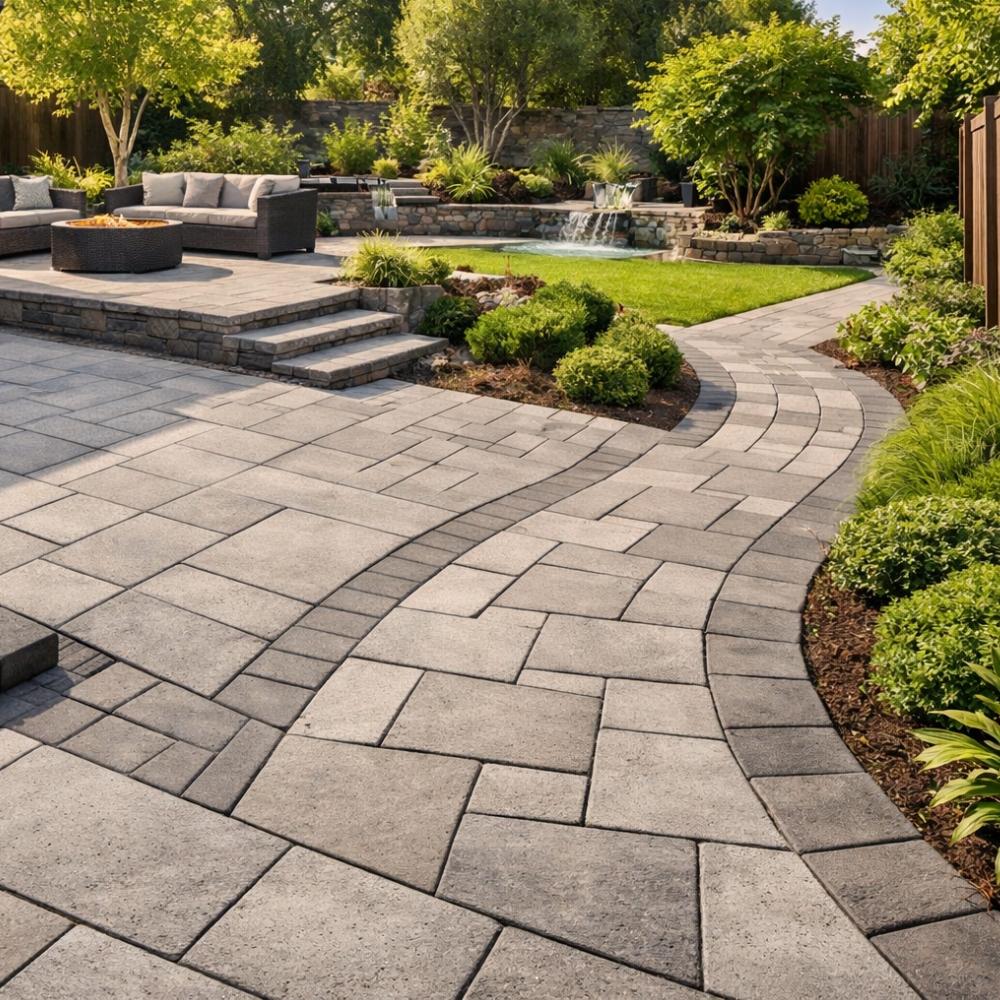
Sydney is a brilliant place for outdoor living… and a surprisingly tough place for paving.
Between hot Western Sydney summers, sudden downpours, humid shady corners that love algae, and (for some suburbs) salty coastal air, the “best” paver isn’t a single product. It’s the one that fits your specific micro-climate and how you actually use the space.
This guide walks you through a practical decision framework you can use before you buy anything — so you end up with pavers that feel comfortable underfoot, look good longer, and are safer when wet.
What Sydney conditions matter most when choosing pavers?
Heat and sun exposure (especially in Western Sydney)
If your area gets full sun for most of the day, surface temperature becomes a comfort and safety issue. Dark colours and some dense finishes can heat up enough to feel unpleasant barefoot.
A few things that typically increase “too-hot” risk:
• Very dark colours in full sun
• Dense, smooth finishes that absorb and hold heat
• Large unshaded areas (courtyards, pool surrounds, wide paths)
A few things that can help:
• Lighter colours and mid-tones (not pure white, which can show grime)
• Textured finishes that can feel more forgiving underfoot
• Shade planning (trees, pergolas, umbrellas) around high-use zones
Wet weather, storms, and drainage
Sydney’s rain isn’t always gentle. When paving is flat or falls toward the house, water can pool fast — and pooled water can turn into slip risk, staining, moss/algae, and joint issues.
The key point: your paver choice and your drainage plan go together. A “great” paver will still underperform if water sits on it.
Humidity, shade, and algae
Shaded courtyards (think Inner West terraces, areas between buildings, or under dense trees) can stay damp for long stretches. This is where algae and mould can build up and create slippery patches — especially on smoother finishes.
Coastal air and salt exposure (for some suburbs)
If you’re closer to the coast, salt-laden air can contribute to surface grime and can accelerate corrosion on nearby metal elements (like certain edging, fixings, or drainage grates). Your paver itself may be fine, but the surrounding materials and maintenance plan matter more.
How do you choose pavers by “use area” instead of just by style?
A practical way to narrow options is to start with where the pavers will go. It’s also the easiest way to avoid buyer’s remorse, because a paver that’s perfect for a sunny courtyard can be the wrong call for steps, steep blocks, or wet pool zones.
Courtyards and entertaining areas
Priorities usually are:
• Comfort (not scorching hot)
• Easy cleaning after BBQs and spills
• Safe grip when wet (especially around outdoor dining)
Good matches often include:
• Quality concrete pavers with an appropriate texture
• Natural stone with a finish chosen for wet grip
• Outdoor-rated porcelain with a slip-resistant rating and suitable for installation
Watch-outs:
• Very smooth finishes in shaded areas (algae + slip risk)
• Very light colours under trees that drop tannins, sap, or berries
If you’re stuck between two finishes or materials, it helps to think in terms of “how you live” rather than “how it looks on a sample board”. For example, barefoot traffic, kids running in and out from the lawn, or drinks and food around an outdoor table all change the priorities. If you want a practical second opinion tailored to how a space will be used, start with this overview of paving advice for outdoor areas.
Paths and high-traffic walkways
Priorities usually are:
• Trip resistance (stable, even, good edge detail)
• Wet grip
• Lower maintenance (paths get dirty faster than patios)
Watch-outs:
• Highly textured surfaces that trap dirt and leaf litter
• Slick surfaces under tree canopy where algae forms
A simple habit that helps: choose a surface that’s easy to keep clean, because the cleanest paving is usually the safest paving.
Steps, ramps, and sloped blocks
This is where slip resistance matters most. The “right” paver might be different from the one you’d pick for a flat courtyard.
Practical pointers:
• Choose a finish intended for pedestrian grip in wet conditions
• Be cautious with sealers that can change the surface feel
• Prioritise consistent edges and clear step design, so there are fewer trip points
For general safety context on slip and trip risks (which applies to home spaces too), SafeWork NSW has helpful guidance here: SafeWork NSW — Slips, trips and falls.
Driveways
Driveways aren’t just “bigger patios”. They need:
• Adequate thickness and strength for vehicles
• A stable system that resists movement
• A surface that doesn’t become slick under rain + tyre residue
Watch-outs:
• Products designed mainly for pedestrian areas
• Smooth finishes that show tyre marks or oil more easily
• Choosing purely on appearance without checking suitability for vehicle loads
If your project includes both a courtyard zone and a driveway (common in Sydney homes where everything needs to work together visually), it’s worth picking a range that performs well across both. A good starting point is to look at options commonly used for paving for courtyards and driveways, then narrow based on your sunlight, slope, and maintenance tolerance.
Concrete vs natural stone vs porcelain: what’s best for Sydney?
There’s no universal winner. Here’s a grounded comparison through a Sydney lens.
Concrete pavers
Why people like them:
• Huge range of colours, sizes, and textures
• Generally cost-effective compared to premium stone
• Easy to match with modern outdoor styles
Sydney-relevant considerations:
• Dark colours can run hot in full sun
• Some products can show efflorescence (a white, chalky bloom) — often cosmetic, sometimes temporary, but worth understanding
• Fading can happen over time in exposed areas (quality and pigmentation matter)
Best for:
• Courtyards and paths where you want variety and straightforward maintenance
• Driveways (when you choose an appropriate thickness and the system is built correctly)
Natural stone pavers (sandstone, granite, bluestone, limestone, etc.)
Why people like them:
• Natural variation and “high-end” feel
• Some stones stay cooler underfoot than expected
• Can suit heritage homes, coastal looks, and modern designs, depending on the stone and finish
Sydney-relevant considerations:
• Finish selection is critical for wet grip
• Some stones are more porous and can stain if unsealed (think oils, red wine, BBQ grease)
• Coastal grime can cling differently depending on porosity and texture
Best for:
• Entertaining areas where you want a premium look and don’t mind some maintenance planning
• Pool surrounds (with the right slip-focused finish and setup)
Outdoor porcelain pavers
Why people like them:
• Very low porosity (often excellent stain resistance)
• Consistent colour and modern look
• Can be great around dining areas and BBQ zones
Sydney-relevant considerations:
• Choose a version intended for outdoors with appropriate slip resistance
• Installation method matters a lot — porcelain behaves differently to stone and concrete
• Chips and edge damage can be an issue if the base and edges aren’t right
Best for:
• Modern courtyards and entertaining areas where stain resistance is a priority
• Some pool surrounds (when slip rating and installation are correct)
How do you choose the right finish and texture for wet grip?
This is one of the most important decisions — and one of the easiest to get wrong if you focus only on colour.
In plain terms:
• Smooth finishes can be easier to hose down, but can be more slippery in algae-prone shade or around water
• Textured finishes can improve grip, but may hold dirt and need a bit more cleaning effort
A practical Sydney approach:
• For pool areas, steps, and shady courtyards: lean toward finishes designed for wet traction
• For sunny, open patios: you may have more flexibility, but still consider rain + footwear
Do “slip-resistant” pavers always feel rough?
Not necessarily. Some products achieve better wet grip through micro-texture rather than obvious roughness. The goal isn’t “uncomfortable underfoot” — it’s reliable traction when wet.
Can sealing make pavers slippery?
Some sealers can change the surface feel, especially if they leave a film. If you plan to seal, choose a product that suits the paver type and the area’s slip risk (and be extra cautious on steps and slopes).
How do you choose colour in Sydney without regretting it?
Colour isn’t just aesthetic here — it affects comfort, maintenance, and how quickly your paving shows marks.
Lighter colours
Pros:
• Often feel cooler underfoot
• Can brighten small courtyards and shaded areas
Cons:
• Can show grime, tannin stains, and tyre marks more readily
Mid-tones
Pros:
• Often the best balance for Sydney
• Hide everyday dust and light staining better than very light colours
• Usually less heat-prone than very dark tones
Cons:
• Still need a plan for spills and organic debris
Dark colours
Pros:
• Strong modern look
• Can hide some stains
Cons:
• Often hotter in full sun
• Can show salt residue or dust in certain conditions
A simple sample test before you buy
If possible, get a few sample pavers and test them where they’ll be used:
• Put them in midday sun for 30–60 minutes and touch-test (barefoot if it’s safe)
• Wet them and check traction with typical footwear
• Drop a small amount of water + a tiny bit of cooking oil (then clean) to see how staining behaves
• View in morning shade and afternoon sun — colour can shift a lot
What about staining, efflorescence, and “white marks”?
Stains (BBQ grease, wine, leaf tannins)
Your risk is higher if:
• The area is used for cooking/dining
• You have overhanging trees
• The material is more porous and unsealed
Reducing stain headaches:
• Choose lower-porosity options for dining zones
• Clean spills early (especially oils)
• Consider a sealing plan where appropriate (matching paver type and slip needs)
Efflorescence (white powdery haze)
This can show up on concrete and masonry products. It’s often caused by salts moving to the surface with moisture. It’s usually cosmetic and can diminish over time, but it can look alarming if you don’t expect it.
If you see it:
• Avoid harsh acids without proper guidance (they can damage some surfaces)
• Focus on gentle cleaning methods suited to your paver type
• Address water sitting on the surface or chronic dampness where possible
Are some pavers “efflorescence-proof”?
No product is truly immune. Some are less prone due to manufacturing and material qualities, but moisture management and time are big factors.
How do you match paver thickness and format to the job?
Even if you’re not doing the work yourself, it helps to understand why some pavers are recommended for some areas and not others.
General principles:
• Driveways need products and systems designed for vehicle loads
• Larger formats can look stunning, but may highlight unevenness if the base isn’t right
• Small-format pavers can adapt better to curves and subtle grade changes
Are bigger pavers always better for a modern look?
They can be, but they’re less forgiving. If you have a block with movement history, tree roots, or drainage challenges, smaller formats sometimes behave better over time.
What maintenance should you expect in Sydney?
Your maintenance load depends on:
• Shade (more shade usually means more algae/mould risk)
• Trees (more organic debris and tannins)
• Finish texture (more texture can hold dirt)
• Use (BBQ areas need more attention)
A sensible baseline routine:
• Sweep regularly to reduce organic build-up
• Rinse after heavy storms if debris collects
• Spot-clean spills early
• Check joints periodically and top up jointing sand when it’s clearly depleted
If your paving is in a high-risk spot (shady, damp, near a pool, or on steps), keeping it clean isn’t just about looks — it’s about reducing slip risk.
When is it worth getting a professional opinion on paver selection?
You don’t need to overcomplicate paving. But it’s worth seeking advice when:
• The area slopes toward the house, or you’ve had pooling issues
• You’re paving around a pool, steps, or a steep block
• You need vehicle-rated paving (especially if you’re unsure about thickness/system)
• You’re close to the coast and want a durable, low-fuss setup
• You’re trying to match new paving to existing materials without it looking “patched”
If you’d rather talk it through with someone local who understands Sydney blocks, drainage and material performance, exploring paving services in Sydney can help you narrow down the best option before you commit.”
Quick decision checklist for choosing pavers in Sydney
Use this as a final filter before you commit:
• Where is the paving going? (pool/steps/driveway / courtyard/path)
• How much sun does it get in summer? (full sun / partial/shaded)
• Does water currently pool there? (yes / no / unsure)
• Is slip resistance a priority? (kids, older family, steep block, pool nearby)
• How messy is the area? (trees, BBQ use, pets)
• Do you want low-maintenance or are you okay with regular care?
• Have you tested samples in the sun and when wet?
FAQs
Which pavers stay coolest in Sydney summer?
Often, lighter colours and some natural stones feel cooler than dark, dense products in full sun. But shade and airflow make a big difference. Testing samples in your actual space is the most reliable method.
What are the safest pavers around a pool?
Look for outdoor-rated products with strong wet-grip performance and choose a finish designed for traction. Also, remember: drainage and regular cleaning matter as much as the paver itself.
Are porcelain pavers too slippery when wet?
Outdoor porcelain can be suitable if it’s made for external use and has appropriate slip resistance. The product choice and installation method both matter.
Do concrete pavers fade in Sydney’s sun?
They can, over time, particularly in very exposed areas. Quality, pigmentation, and colour choice affect how noticeable it will be.
Do you need to seal pavers in Sydney?
Not always. Sealing is more common where stain resistance is important (BBQ/dining areas) or where the material is porous. Sealer choice should suit the paver type and the slip-risk profile of the area.
Why do pavers go green or black in shady areas?
That’s usually algae or mould growth, common in humid, shaded corners. Regular sweeping, occasional targeted cleaning, and reducing chronic dampness can help.
What’s the biggest mistake people make when choosing pavers?
Choosing purely on appearance without considering wet grip, heat, drainage, and how the space is used day-to-day.