
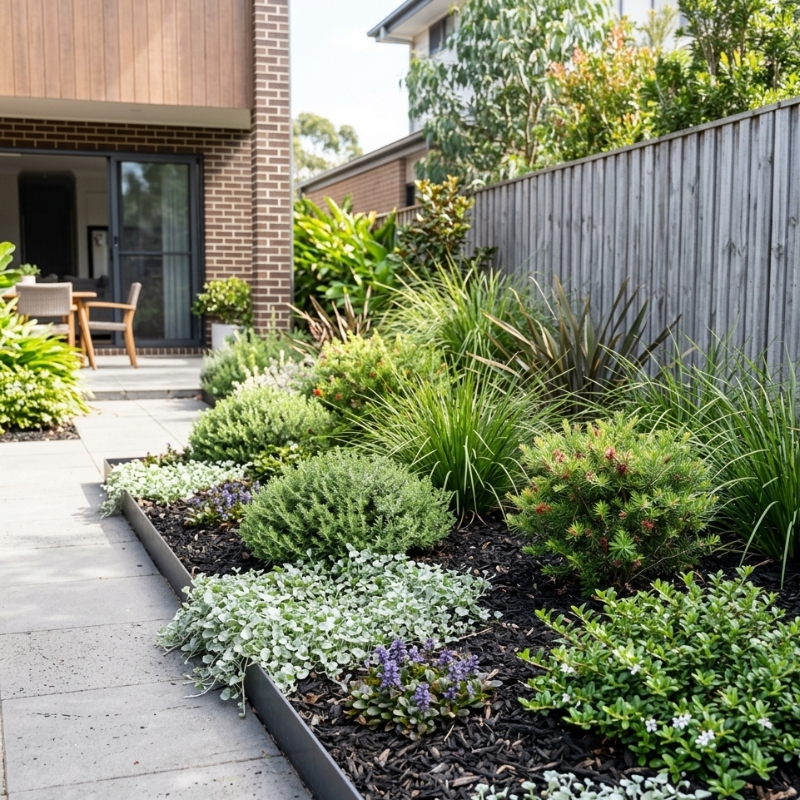
“Low-maintenance” gardening means different things depending on the yard you’ve got in Sydney.
If you’ve got blazing western sun, the wrong plants can turn into crispy sticks by late summer. If you’re gardening in a shaded courtyard, you can end up with leggy growth, mildew, and constant sweeping. And if you’ve got typical Sydney clay, anything that hates wet feet will sulk until it gives up.
The good news is there are plant choices that genuinely stay tidy through Sydney’s seasons. Not “never touch them again” plants (they don’t exist), but plants that:
• hold their shape
• don’t demand weekly pruning
• don’t drop mountains of petals, pods or berries
• bounce back after heat, humidity and dry spells
• look good with a simple, repeatable upkeep rhythm
This guide focuses on “stays tidy” plants and the small setup steps that make the difference between a garden you enjoy and a garden that nags at you every weekend.
What “low-maintenance” actually looks like in Sydney
In a Sydney context, a low-maintenance garden usually means:
• Watering: deep watering during establishment, then occasional top-ups in extended dry spells (instead of frequent shallow watering)
• Feeding: light feeding 1–2 times a year (or slow-release once) rather than constant fussing
• Pruning: 1–3 tidy-ups a year (not monthly haircuts)
• Weeding: minimal because groundcovers and mulch do the heavy lifting
• Replacement: very little replanting because plants are matched to the conditions
Quick reality check: the first 8–12 weeks matter most
Even drought-tolerant plants need time to establish a deeper root system. If you want “low maintenance later”, you’ll still do a bit more in the first few months: correct planting depth, mulching, and consistent deep watering. That “establishment investment” is a big theme in water-wise gardening guidance.
Q: What’s the number-one trait of a plant that “stays tidy”?
A: Growth habit. Compact, naturally mounding or clumping plants stay neat with minimal input. Fast growers can still be low-maintenance, but only if they don’t need constant shaping to stop them from swallowing paths, windows, and garden beds.
The “stays tidy” checklist for choosing plants
Before you fall in love with flowers at the nursery, use this quick filter:
• Does it naturally grow in a tidy shape (mound, clump, upright tuft)?
• Will it outgrow the space in 12–24 months? (Most “high maintenance” gardens start with plants that are simply too big for the spot.)
• Does it self-seed everywhere? (Great in bushland, annoying in small suburban yards.)
• Is it messy? (Heavy petal drop, fruit drop, prickly debris, sticky sap, lots of leaf litter.)
• Does it tolerate your specific conditions: summer heat, humidity, shade, clay, coastal wind?
If you’re aiming for truly low effort, prioritise foliage, form, and structure first. Flowers are a bonus, not the foundation.
Choose plants by the spot, not by the label
Sydney gardens are full of microclimates. A “full sun” plant in a protected inner-west courtyard behaves differently to the same plant on a windy Northern Beaches block.
Use these common Sydney yard zones to choose plants that stay tidy.
Zone 1: Full sun + reflected heat (hot, bright, often dry)
This is the “front strip, driveway edge, west wall” zone. Tidy plants here need heat tolerance and a growth habit that doesn’t flop.
Tidy winners for sun
• Lomandra (clumping grasses): looks sharp with a once-or-twice yearly trim of old tips
• Dianella (flax lily): strap leaves, neat clumps, handles heat better once established
• Westringia (coastal rosemary): naturally mounded, great for low hedges without obsessive pruning
• Dwarf Callistemon (compact bottlebrush varieties): flowers without turning into a giant screen overnight
• Grevillea groundcovers (compact forms): spread to cover soil, reduce weeds, and handle sun well
Keep it tidy with one simple rule
In full sun, avoid plants that “need” constant summer watering to look acceptable. If a plant only looks good with a sprinkler schedule, it’s not low-maintenance in Sydney.
Q: Are succulents the easiest option in Sydney’s sun?
A: Sometimes—but only if your soil drains well and you’re not in a humid, sheltered pocket where fungal issues pop up. Succulents can also look sparse if planted too far apart. They work best when grouped and mulched appropriately, not scattered like ornaments.
Zone 2: Dry shade (under trees, side passages, south-facing walls)
Dry shade is where a lot of Sydney yards struggle. The goal here is tidy foliage that doesn’t demand perfect sun or constant watering.
Tidy winners for dry shade
• Liriope: tough, clumping, stays neat; ideal along paths and under light canopy
• Clivia: glossy leaves, dependable structure, minimal fuss once settled
• Aspidistra (cast iron plant): slow-growing, tidy, excellent “leave me alone” foliage
• Native violet (Viola hederacea): gentle groundcover that fills in without constant intervention
A common mistake in dry shade
People often plant “shade plants” that actually want moist shade. In dry shade, they’ll limp along and look ratty unless you baby them. If you want low maintenance, pick plants that tolerate dryness as well as low light.
Zone 3: Moist shade (downpipes, low spots, shaded courtyards)
Moist shade can look lush and calm—until mildew, fungal spotting, and constant sogginess make it feel messy. The tidiest approach is to select plants that handle humidity and avoid overcrowding.
Tidy winners for moist shade
• Lomandra and dianella (again): surprisingly versatile if there’s some light
• Certain ferns (in protected spots): tidy texture, but give them airflow
• Liriope: handles moisture better than many “pretty” shade plants
Q: How do I stop a shaded courtyard from looking “unkempt”?
A: Reduce visual clutter. Use fewer plant types, repeat the same plants in groups, and choose plants with consistent foliage. In tight spaces, a simple palette looks tidier than a collection of one-off “interesting” plants.
Zone 4: Clay soil (common across Sydney)
Clay isn’t bad. It just needs a different approach. Clay holds water longer, compacts easily, and can suffocate plants that hate wet feet.
What makes clay gardens feel high-maintenance
• Plants that rot if the soil stays wet
• Beds that compact and puddle
• Edges that crumble and become weedy
Tidy winners for clay-prone areas
• Westringia (good tolerance once established)
• Lomandra (excellent in many soils)
• Many native shrubs with the right drainage and planting method
• Groundcovers that protect soil from baking and cracking
One setup tweak that lowers maintenance fast
Plant slightly proud (a little higher than the surrounding soil) and mulch properly. This helps water move away from crowns and reduces rot risk.
Zone 5: Coastal wind and salt exposure (especially eastern suburbs and beaches)
If you’re coastal, “low-maintenance” means salt and wind tolerance. Otherwise, you’ll be constantly replacing fried foliage.
Tidy winners for coastal conditions
• Westringia (a classic for a reason)
• Coastal rosemary-type shrubs (structured, resilient)
• Tough groundcovers that knit the soil and reduce sand drift
If you’re unsure, do a simple test: are nearby street plantings thriving? The plants that succeed on nature strips and coastal verges often do well in a home garden with a bit of care early on.
The low-maintenance planting method that keeps everything tidier
Low-maintenance isn’t just plant selection. It’s also how you plant and finish the bed.
1) Plant in groups (repeat, don’t sprinkle)
A garden looks tidier when the same plant repeats in 3s, 5s, or drifts. You also learn one plant’s needs instead of juggling 18 different care schedules.
2) Mulch like you mean it
Mulch helps suppress weeds, protects soil from heat, and reduces watering frequency. It also instantly makes a bed look “finished”.
Aim for a generous, even layer (not piled against stems). Keep mulch a little back from the base of plants to reduce rot and pest hiding spots.
3) Water deeply, less often
Shallow watering creates shallow roots, which creates high maintenance. Water-wise guidance commonly emphasises matching watering to plant needs and supporting establishment so plants can cope better later.
4) Add a groundcover layer
A low-maintenance bed usually has:
• structural shrubs (the “bones”)
• clumping grasses or strappy plants (texture)
• groundcovers (weed suppression)
This layering reduces bare soil, which reduces weeds, which reduces weekend chores.
If you want help turning these ideas into a repeatable routine, link your upkeep plan back to low-maintenance garden care so you’re not reinventing the wheel each season.
What “stays tidy” looks like across Sydney’s seasons
Sydney doesn’t have harsh frosts like some regions, but it does have:
• hot spells and heatwaves
• humidity and sudden storms
• fast growth bursts in warm, wet periods
• slower growth in winter
Here’s the seasonal reality of tidy gardens:
Spring
• Fast growth begins
• Weeds surge
• The best “tidy” move: refresh mulch and do a light shape tidy before growth gets away from you
Summer
• Heat + humidity stress plants differently
• The best “tidy” move: deep watering during dry spells, avoiding heavy pruning in extreme heat, and keeping airflow around foliage
Autumn
• Plants recover and set new growth
• The best “tidy” move: one deliberate prune (not constant snipping), plus a clean edge on beds
Winter
• Slower growth makes it easier to reset shape
• The best “tidy” move: remove dead material from grasses/strappy plants, and do structural pruning where appropriate
Q: How often should I prune “low-maintenance” shrubs?
A: Typically 1–3 times a year, depending on growth speed and the look you want. If you’re pruning monthly to keep it in bounds, the plant is probably the wrong size for the space—or it’s planted too close to paths, windows, or fences.
For readers who want a simple framework for keeping a garden tidy year-round, think “seasonal reset” rather than “weekly tinkering”.
The biggest “low-maintenance” traps in Sydney yards
Trap 1: Planting too close together for an instant look
It looks full on day one, then turns into a jungle by month six. Airflow drops, pests increase, and suddenly you’re pruning constantly. Space plants for their mature width, not their pot size.
Trap 2: Choosing plants for flowers instead of habit
Some beautiful plants are naturally messy: lots of petal drop, constant deadheading needs, or fruit that stains paving. If “tidy” is the goal, prioritise foliage and form.
Trap 3: Underestimating the impact of edges
Crisp bed edges make even a simple garden look tidy. Soft, crumbling edges make a good garden look scruffy, even if the plants are fine.
Trap 4: Ignoring the first 8–12 weeks
If a plant struggles early, it often never becomes the low-maintenance version you hoped for. Establishment watering and mulching are the bridge to “easy later”.
A simple “tidy through the seasons” plant palette (mix-and-match)
Instead of giving you a random list, here’s a practical palette approach you can adapt to most Sydney yards.
The structure layer (bones)
• Westringia (mounds / low hedges)
• Compact native shrubs suited to your light and soil
The texture layer (reliable clumps)
• Lomandra
• Dianella
• Liriope (especially for shade edges)
The groundcover layer (weed control)
• Native violet (shade)
• Grevillea groundcover types (sun)
• Other low, spreading plants suited to your microclimate
This combo tends to look “intentional” even when you haven’t touched it for a few weeks.
If you want a consistent rhythm to keep that intentional look without the weekend grind, a set-and-forget approach to garden maintenance support can help you stay ahead of the big seasonal surges (spring weeds, summer stress, autumn reshaping).
FAQs: Low-maintenance plants for Sydney yards
What are the easiest low-maintenance plants for Sydney gardens?
Look for naturally tidy growth habits (mounding shrubs, clumping grasses, reliable groundcovers) and match them to your yard’s light, soil, and exposure. In many Sydney yards, clumping grasses (like lomandra), mounding shrubs (like westringia), and appropriate groundcovers do the most work for the least effort.
What plants stay neat without constant pruning?
Plants that hold their shape naturally: compact shrubs, clumping grasses, and strappy plants. If a plant needs monthly pruning to stay in bounds, it’s usually the wrong size for the spot.
What’s best for dry shade in Sydney?
Dry shade calls for tough foliage plants and groundcovers that tolerate low light and lower moisture. Options like liriope, clivia, aspidistra, and native violet are often more reliable than “lush shade” plants that actually need damp soil.
How do I make a garden look tidy fast without replacing everything?
Do three things:
• group and repeat existing plants (reduce the “sprinkled” look)
• refresh mulch evenly (instant visual tidy + weed suppression)
• clean up bed edges (the quickest way to make a garden look finished)
How long until “drought-tolerant” plants become low-maintenance?
Usually, after they establish—often around the first season or two, depending on plant type, weather, and soil. Water-wise guidance commonly highlights establishment and matching plant water needs as key to long-term resilience.
Should I plant natives if I want low maintenance?
Natives can be excellent for lower upkeep when they’re chosen for the right spot and given the right start. “Native” doesn’t automatically mean “no care”, but many are well-suited to Sydney conditions and can be very forgiving once established.