
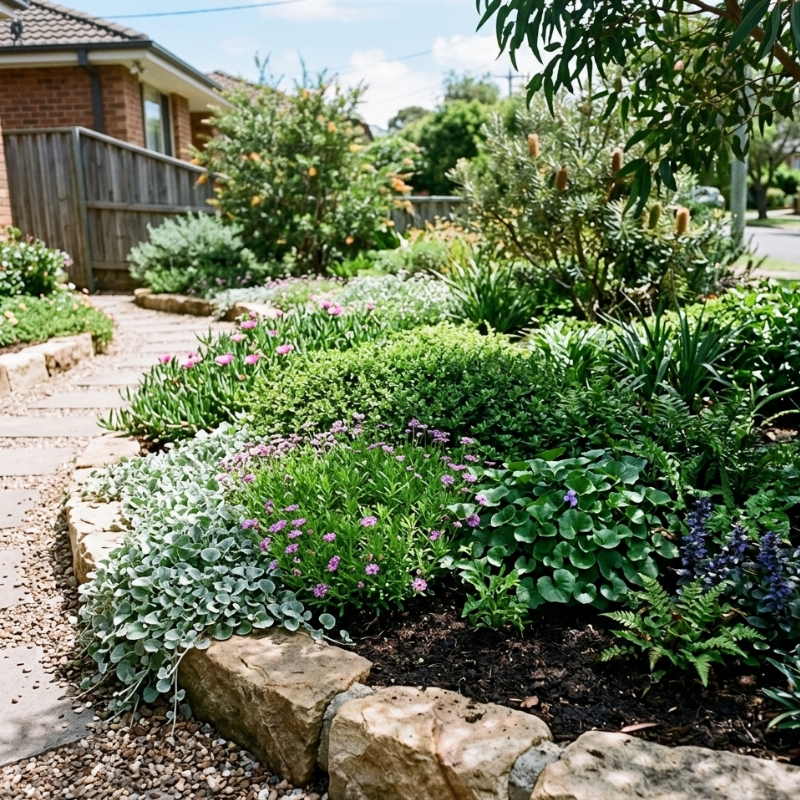
If you’ve ever spent a weekend pulling weeds only to see them bounce back two weeks later, you’re not alone. In Sydney, warm spells, sudden downpours, and long bright days can make weeds feel like they’re on a paid contract—especially if mulching isn’t keeping bare soil covered.
That’s where ground covers earn their keep. The right ground cover plant creates a living “blanket” over the soil surface, shading out weed seedlings, reducing bare patches, and helping your garden beds look finished without constant maintenance.
But there’s a catch: not all ground covers actually suppress weeds well, and not every “spreading” plant suits every Sydney yard. Coastal winds, western heat, clay soils, sandstone soils, shade under trees, and slope run-off can all change what works.
This guide helps you choose ground covers that match Sydney conditions, avoid common mistakes, and get stronger weed suppression with less effort.
What ground covers do (and don’t) do for weed suppression
Ground covers suppress weeds best when they form a dense canopy quickly and leave very little light reaching the soil.
They help by:
• Shading weed seeds so they struggle to germinate
• Reducing open soil patches where weeds take hold
• Slowing splash-back during storms (which can spread weed seeds)
• Protecting the soil surface so it’s less likely to crust, crack, or erode
They don’t help much when:
• They’re planted too far apart and stay “spotty” for months
• Weeds are already established (especially runners, bulbs, or tubers)
• They’re struggling in the wrong conditions (wrong light, wrong drainage, too much competition from tree roots)
Quick answer
For strong weed suppression in Sydney, pick a ground cover that:
• Matches your site conditions first (sun/shade, drainage, coastal exposure)
• Grows densely (mat-forming or tightly clumping)
• Can be planted at a spacing that closes gaps within a season
• Gets a clean “weed reset” before planting, so weeds aren’t already winning
Start with your Sydney “site type”
Before you choose plants, identify which of these looks most like your garden bed. This one step saves the most money, time, and disappointment.
Site type 1: Full sun + heat + reflected light
Common in: north- and west-facing beds, around paving, along driveways, in many western suburbs.
Look for:
• Heat tolerance
• Drought tolerance once established
• A growth habit that doesn’t scorch or thin out in summer
Avoid:
• Soft-leaf ground covers that collapse in heatwaves
• Anything that needs consistently moist soil in full sun
Site type 2: Shade or “dry shade” under trees
Common in: under lilly pilly hedges, large eucalypts, jacarandas, and dense canopy areas.
Look for:
• Shade tolerance
• Roots that can compete without constant watering
• Plants that don’t mind leaf litter (or can grow through it)
Avoid:
• Sun-loving spreaders that go leggy and open up (weeds love those gaps)
Site type 3: Coastal exposure
Common in: eastern suburbs, bayside pockets, and headland-adjacent gardens.
Look for:
• Wind tolerance
• Salt tolerance
• Tough foliage and flexible stems
Avoid:
• Tender, thirsty options that get shredded or dry out too fast
Site type 4: Slopes and run-off zones
Common in: terraced blocks, retaining-wall edges, and any bed where water runs downhill during storms.
Look for:
• Strong root systems that hold soil
• Plants that knit together rather than sit as isolated clumps
• Options that can handle both wet bursts and dry spells
Avoid:
• Plants that rot when water collects in pockets
Best low-maintenance ground covers for Sydney (by scenario)
Instead of one giant list, here are reliable options grouped by where they work best. Always check the plant tag for mature spread, sun requirements, and frost sensitivity (Sydney microclimates vary a lot).
For full sun and low watering once established
• Myoporum parvifolium (Creeping Boobialla)
A hardy Australian favourite that forms a dense mat and handles heat well once established. Great for banks and sunny beds. Some forms spread quickly, so give it room and edge it if you want clean boundaries.
• Carpobrotus (Pigface)
Excellent for hot, exposed spots and coastal gardens. It’s thick, succulent, and tough—ideal where other ground covers burn. Bonus: bright flowers and very low fuss.
• Grevillea ‘Royal Mantle’ (prostrate grevillea)
More shrub-like than a carpet, but extremely useful for slopes and sunny beds. It’s pollinator-friendly and can outcompete weeds once it fills in, especially when planted in drifts.
Q: Will these stop all weeds on their own?
A: They’ll dramatically reduce weed seedlings once established, but they won’t “erase” tough weeds already rooted in the bed. That’s why the pre-plant weed reset matters.
For shade and dry shade (the trickiest Sydney condition)
• Dichondra repens (Kidney Weed)
A soft, low-growing native that can work beautifully in part shade and some dry shade, especially where you can support it through establishment. It’s a great “green carpet” look, but it may thin out in harsh, root-competitive spots unless watered occasionally.
• Viola hederacea (Native Violet)
A solid choice for shaded, protected areas. It spreads gently, copes with humidity, and looks lush when conditions suit. In very dry shade, it may need extra help early on.
• Lomandra (dwarf varieties used as mass planting)
Not a classic “carpet,” but in tough shade-adjacent beds, a dense, low lomandra planting can reduce weeds by eliminating open soil and handling neglect. It’s ideal where mats struggle.
Q: What if my shade is “dry shade” under big trees?
A: The best move is to reduce competition and protect the soil surface. Improve the bed structure, water deeply but less often while plants establish, and aim to shield soil from temperature swings with a stable surface cover that doesn’t constantly dry and crack. Use the right plant for the light level, then focus on establishment.
For coastal Sydney and windy gardens
• Pigface (again, because it’s that good coastal)
It’s one of the most reliable options for salty wind exposure.
• Westringia (low-growing forms) used as a “ground cover shrub”
Tough, coastal-friendly, and works well where you want a neat, low, resilient planting that doesn’t collapse in wind.
• Myoporum parvifolium (again, strong performer)
Great for coastal conditions and sandy soils when established.
Q: My coastal soil is sandy and dries fast—how do I stop everything from crisping?
A: Start by building the soil’s ability to hold moisture, then select plants that won’t panic in a dry week. A key strategy is to improve soil moisture retention so roots don’t swing from “flood” to “dust” every month. (That’s often the hidden reason ground covers don’t knit together.)
For slopes, erosion control, and “stormwater rush” zones
• Myoporum parvifolium
Dense mat + good soil-holding roots makes it a go-to on banks.
• Prostrate grevilleas
Great for holding soil and adding habitat value. They’re not the tightest carpet, so combine with smart spacing and edging so weeds don’t sneak through early.
• Native grasses and strap-leaf plants in mass plantings (as a low-maintenance alternative)
In steep or difficult slopes, a dense planting of tough low growers can outperform delicate carpets long-term.
Q: What’s the biggest mistake on slopes?
A: Planting too sparsely. Weeds love the gaps, and rain events wash seeds into every open pocket. Tight spacing and a good border edge matter more on slopes than on flat beds.
For between pavers and stepping stones
This is a special category: it’s hot, dry, and compacted.
Options that are commonly used:
• Dichondra repens (in part shade or with some watering support)
• Native violet (in shaded, protected paved courtyards)
• Tough “step-on” ground covers suited to your sun level
Important reality check:
• “Between pavers” plants often look great in photos, but the site is harsher than it looks. Expect some patch repair over time.
How to plant ground covers so they actually suppress weeds
The difference between “pretty ground cover” and “weed-suppressing ground cover” is mostly in the setup.
Step 1: Do a proper weed reset
Before planting:
• Remove existing weeds thoroughly (roots and runners)
• Target persistent offenders (nutgrass, oxalis, couch, kikuyu runners) with a plan—these can punch through almost anything
• Rake out old debris that’s full of weed seed
• Level the soil so water doesn’t pool in pockets
If the bed is already a weed jungle, the fastest path to “low maintenance” is to reset properly once, rather than battle forever.
Step 2: Fix drainage and soil structure first
Sydney gardens can be heavy clay in some areas and sandy/rocky in others.
Aim for:
• Soil that drains but still holds some moisture
• A bed surface that doesn’t crust hard after rain
• Consistent soil depth where roots can spread
If you want the bed to stay cooler and more stable through the year, it also helps to add a protective layer to garden beds that reduces evaporation and buffers the soil surface—especially in full sun areas.
Step 3: Plant spacing that closes the canopy
Spacing is everything.
General guidance:
• If you want fast weed suppression, plant closer than “minimum spacing” on the label
• Dense mat-formers can often be spaced tighter to close gaps within a season
• Clumping ground cover alternatives need enough density that bare soil isn’t left between plants
If you plant too far apart to “save money,” you often pay for it in weeds and replacements.
Step 4: Water for establishment, then taper
Most ground covers fail because they never establish deep roots.
A practical approach:
• Water deeply after planting
• Keep moisture consistent for the first 6–10 weeks
• Taper watering as you see new growth and runners/spread
• Adjust for heat waves (Sydney can jump quickly)
Step 5: Edge and maintain boundaries
Many of the best weed suppressors spread. That’s the point.
To keep things tidy:
• Install a clean edge line (spade edge, edging strip, or a defined border)
• Trim runners back before they invade paths or lawns
• Do a quick “gap check” every few weeks, early on, and replant small bare patches before weeds move in
Q&A: Common Sydney ground cover problems (and fixes)
Why are weeds still popping up through my new ground covers?
In most cases:
• The bed wasn’t weed-reset properly (roots remained)
• Plant spacing left too many gaps
• The ground cover is stressed (wrong light, wrong moisture) and thinning out
• Wind or birds are bringing in new weed seed (especially after storms)
Fix:
• Spot-weed promptly early on (this is temporary maintenance that pays off)
• Fill gaps with extra plants or cuttings
• Improve the growing conditions rather than blaming the plant
How long until ground covers “fill in”?
It depends on:
• Growth habit (mat-formers fill faster than clumpers)
• Sun and warmth (many spread faster in warm months)
• Watering consistency during establishment
• Plant spacing
A realistic expectation:
• Some will look connected in a few months
• Many take a full growing season to become a true weed-suppressing carpet
Are native ground covers always better in Sydney?
Not automatically.
Natives can be brilliant because they’re adapted to local conditions, but:
• Some still need the right site (sun vs shade matters)
• Some look sparse if planted too far apart
• Some struggle in heavily amended soils or constant irrigation
The best ground cover is the one that suits your exact site and forms density.
When it’s worth calling in professional help
Ground covers are low-maintenance once established, but some sites are genuinely difficult.
Consider extra help if:
• You have a steep slope and soil movement after storms
• There’s persistent invasive grass or bulb weeds throughout the bed
• Tree-root competition is extreme (plants keep failing)
• Drainage is poor, and plants rot
• You want a neat, long-lasting finish with minimal trial-and-error
FAQ
What’s the best ground cover for weed suppression in Sydney?
The best option depends on your conditions. For full sun and toughness, mat-forming natives like creeping boobialla can perform well. For coastal exposure, pigface is often extremely reliable. For shade, native violet or dichondra may work if moisture is adequate. The key is matching plant to site and planting densely enough to close gaps.
Can ground covers replace all weeding?
They can massively reduce weeding once established, but you’ll still need occasional spot weeding—especially early on and after big rain periods when weed seeds germinate.
What ground covers work in dry shade under trees?
Dry shade is challenging. Look for shade-tolerant options that can handle root competition, and focus on establishment care. In some spots, a dense mass planting of tough low growers can outperform delicate “carpet” plants long-term.
Will ground covers stop nutgrass or oxalis?
Not reliably on their own. These weeds can push through dense plantings. They’re best controlled with a targeted plan before you plant, then monitored so they don’t re-establish.
How do I choose if I’m worried about water restrictions?
Choose plants that match your site and can handle tapering water once established. It’s also smart to follow local water guidance and rules for your area. See the NSW Government information on local water rules and restrictions for practical context and compliance. NSW Government guidance on water rules and restrictions