“What does paving cost per square metre?” is usually the first thing homeowners want to know when they are planning a driveway, patio or path. It is a reasonable starting point, but on its own the per metre figure can be misleading, because the pavers themselves are only one part of the price. This guide explains what really drives the cost of paving in Sydney, so you can read a quote properly and understand why two prices for the same area can differ so much. All Green Gardening and Landscaping has been laying paving across Sydney for more than eleven years, and the factors below are the ones that shape every job we quote.
| Quick answer: Paving cost per square metre in Sydney depends far more on the base preparation, paver type and site conditions than on the pavers alone. Concrete, brick, sandstone and porcelain sit at different price points, and proper excavation, compaction and drainage add cost but prevent sinking and cracking later. For an accurate figure, a paver measures the area and site access and gives a fixed-price quote. |
Why ‘per square metre’ only tells half the story
A per metre rate makes paving sound simple, as if you just multiply a number by your area and you have your price. In reality, the paver sitting on top is only one layer of the job. What goes underneath- the excavation, the base and the bedding- matters just as much, and often more. Edging holds the whole thing together and stops pavers from creeping over time. Site access decides how easily materials and machinery reach the work area. Falls and drainage protect the finished surface from pooling and movement. When a quote looks cheaper than the rest, the difference is almost always in these hidden layers rather than the pavers, and that is exactly where corners get cut. A good per metre figure only means something once you know what is included beneath it.
Paver types and what they suit
Your choice of paver has a real effect on both price and performance, and each type suits Sydney conditions a little differently. Here is how the common options compare:
| Paver type | Best suited to | Notes for Sydney conditions |
| Concrete | Driveways, patios, paths | Versatile and hard-wearing, with a wide range of looks and price points |
| Clay brick | Paths, courtyards, character homes | Colour holds well over time and suits traditional styles |
| Sandstone and natural stone | Feature patios, pool surrounds, premium areas | Handsome and cooler underfoot, sits at a higher price point |
| Porcelain | Modern patios and alfresco areas | Low maintenance and stain resistant, needs precise laying |
There is no single best paver, only the right one for how you use the space, the look you are after and your budget. Coastal exposure, full sun and heavy wet weather all play into which option holds up best.
The hidden cost drivers: base, drainage and access
The part of a paving job you never see is the part that decides whether it lasts. A proper base means excavating to the right depth, laying and compacting road base, adding bedding sand and building in the correct falls so water runs away rather than sitting. Skimp on any of that and the result is predictable: pavers that sink, lift, crack or hold puddles within a season or two. Compaction in particular is where cheaper jobs cut corners, and it is the leading cause of failure. If you want the full picture on why this matters so much, our guide on preventing sinking pavers walks through exactly how base preparation protects a Sydney paving job. Access adds cost too, since a tight side gate or a long carry from the street slows everything down.
Driveway vs patio vs path
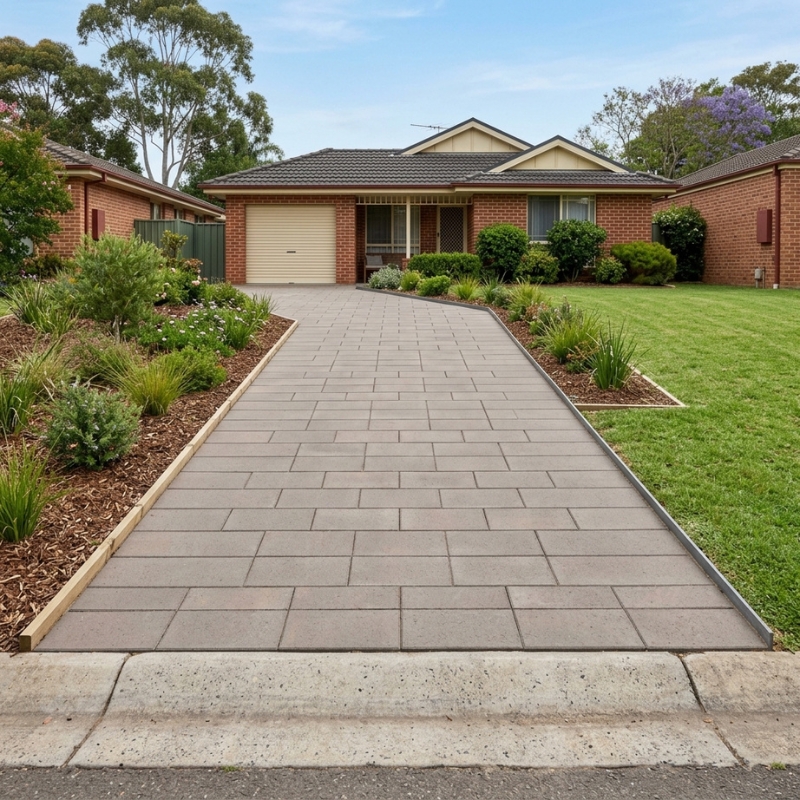
Not all paving is built the same, because what the surface has to carry changes the whole job underneath. A driveway takes the weight of vehicles, so it needs a deeper, stronger base and often thicker pavers, which pushes the cost up compared with a patio of the same size. A patio or alfresco area carries foot traffic and furniture, so the build can be lighter, though drainage and levels still matter for comfort and safety. A path is lighter again, but edging and a stable base still keep it from wandering or lifting. Matching the build to the use is what stops you either overpaying for an over-engineered path or underbuilding a driveway that then fails early.
Getting an accurate paving quote
The most reliable price comes from a site visit and a fixed-price quote, not a rate off a website. Standing on site lets a paver measure the real area, check access, assess the ground and drainage, and price the actual job rather than an assumed one. To make the most of a quote, have an idea of the area, your preferred paver look, and how you will use the space. From there, you get a firm number with no guesswork. When you are ready, our team of paving contractors in Sydney can visit, measure up and give you a fixed price for the work.
Frequently Asked Questions
How much does paving cost per square metre in Sydney?
There is no single reliable per metre figure, because paver type, base preparation, drainage and access all change the price significantly. A simple concrete path and a sandstone pool surround are very different jobs. The most accurate way to know your cost is a fixed-price quote after a paver has seen the site.
Is sandstone more expensive than concrete paving?
Generally yes. Sandstone and natural stone usually sit at a higher price point than concrete, both for the material and the careful laying they need. Many homeowners use stone for feature areas like pool surrounds and concrete for larger or higher traffic areas, balancing the look they want against the budget.
Does driveway paving cost more than a patio?
Usually, for the same area, yes. A driveway carries vehicle weight, so it needs a deeper, stronger base and often thicker pavers, all of which add to the cost. A patio takes lighter loads, so the build beneath can be less heavy-duty, though good drainage and levels still matter.
Why do some quotes seem much cheaper?
Cheaper quotes almost always come down to what is happening below the surface. Thinner or skipped base layers, less compaction and no proper drainage bring the price down, but they are the very things that cause sinking, cracking and pooling later. It is worth checking exactly what a quote includes underneath the pavers.
Paving that lasts, priced properly
Paving cost per square metre in Sydney is driven far more by base preparation, paver choice and site conditions than by the pavers alone, which is why a headline rate rarely tells the true story. Get the base and drainage right, and your paving stays flat and sound for years. The best way to know your real cost is to have a paver look at the space and quote the job in front of you. Book a free, fixed-price site visit with All Green Gardening and Landscaping, a licensed Sydney team with more than eleven years of experience and a 4.9-star rating from 52 reviews, and we will give you a firm price you can rely on.