
You know the summer problem already. The beds dry out within a week of a good soak, standing there with the hose takes forty minutes you do not have, and half the plants cark it anyway. There is a better way to water a Sydney garden than a nightly wrestle with the hose, and it comes down to three options: dripline, spray, or hand watering. The useful thing to understand up front is that these are not better and worse, they suit different gardens. All Green looks after garden beds across Sydney, and this article gives you a clear read on which of the three actually suits your beds, so you stop losing plants every January.
The three options for Sydney garden beds are dripline, spray and hand watering. Dripline puts water at the root zone with almost no evaporation and suits established beds. Spray covers ground quickly and suits new plantings and open areas. Hand watering is fine for small or mixed beds where you want control. The soil, not the system, decides how often you run it.
Dripline: what is it and where does it work?
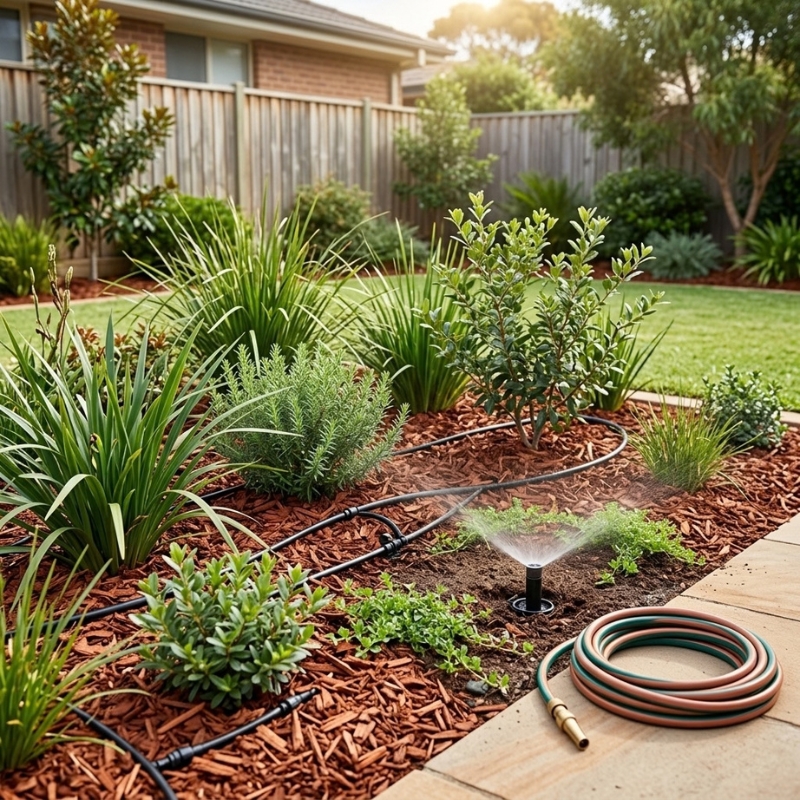
Dripline is the quiet workhorse of garden watering, and it is simpler than it sounds. It is a flexible tube with emitters built in at set spacings, laid along the soil surface under your mulch and run at low pressure, so water seeps out slowly right where the plants need it.
That design is why it is the default for established beds. The water goes straight to the root zone, so almost nothing is lost to evaporation or blown away on a windy day. The foliage stays dry, which cuts down the fungal problems that come from wet leaves overnight. And because the water is delivered at the plants rather than across the whole bed, the weed seed in the open soil between them gets far less of it.
It is not perfect, and it is worth knowing the limits. Dripline blocks up if the water is not filtered, since fine sediment clogs the emitters over time. It is easy to put a spade or a fork through when you are working the bed, so it needs a bit of care. And it waters exactly where you laid it, which means it does not suit a bed you dig up and replant often, because every replant disturbs the line.
Spray: when is it the right choice?
Spray systems, the pop-up and micro-spray heads you will recognise, earn their place when you need to wet a whole surface fast. They cover ground quickly, which makes them well suited to new plantings and seedlings where the entire bed surface needs moisture, not just the spots where established roots sit. They are also simple to adjust as the garden changes.
The honest costs show up in a Sydney summer. A good amount of spray is lost to evaporation and wind drift before it ever reaches the soil, especially in the heat of the day. The water lands on the foliage and can sit there overnight, which plants do not love. And overspray onto paths, fences and the neighbour’s side is water you paid for doing nothing. Where spray genuinely wins is large open beds, groundcover plantings, and any situation where you are establishing plants evenly across a whole area rather than watering a set of individual established shrubs.
Hand watering, and why is it not the wrong answer?
There is a quiet assumption that a hose is the amateur option, and it is not. For a small courtyard, a cluster of pots, or a mixed bed that you are forever changing, a hose and a watering wand is genuinely the right tool, because you can see what is dry and water it accordingly rather than running a fixed system over the lot.
The technique is where most people go wrong, though. Water deeply and less often, giving the bed a proper soak that reaches down into the soil, rather than a light sprinkle every day. A daily splash only ever wets the top, which keeps the roots up near the surface where they bake in the heat, while a deep soak draws the roots down to where the soil stays damp longer. The one thing hand watering cannot do, of course, is run while you are away, which is the single reason most people eventually move to a system for at least part of the garden.
What actually decides how often you water?
Here is the part that matters more than which system you choose: the soil and the mulch decide how often you water, not the pipes. You can install the best dripline money can buy and still get it wrong if you ignore what is underneath.
Sydney has two common extremes. Sandy soil, which you find through the east and along the coast, drains fast and holds very little, so it wants more frequent but shorter runs to keep the root zone damp without the water simply draining straight through. Heavy clay, common out west, holds water and drains slowly, so it wants the opposite: less frequent watering but a longer, deeper soak each time. The practical check for either is the finger test. Push a finger into the soil near the roots, and if it is damp a knuckle down, it does not need watering yet, whatever the calendar says. And a 75 millimetre layer of coarse mulch cuts your watering demand more than any system upgrade will, by shading the soil and slowing evaporation right down. Putting dripline under that mulch is what combines both: efficient delivery and reduced loss in one go.
What does installation involve, and what should you check first?
If you do decide a system is worth it, there are a few practical pieces to sort out. Where the water comes from is the first, usually an outdoor tap, and from there whether you run a simple tap timer or a proper controller to manage the stations. Backflow prevention matters so garden water cannot draw back into the supply, filtering keeps the emitters from clogging, and the line runs under the mulch rather than over it so it is protected and out of the sun.
Before anyone digs, two checks are worth making. The first is where the services run, so a trench does not find a pipe or a cable. The second, and this saves real money, is whether an existing system is simply blocked or has a split line rather than needing full replacement, because a clogged dripline often just needs flushing and a new filter. All Green looks at the beds and the soil before recommending anything, and in plenty of Sydney gardens the honest answer turns out to be better mulch rather than a whole new system.
Frequently Asked Questions
Is dripline better than spray?
Not better, different. Dripline is more efficient for established beds because the water goes straight to the root zone with little waste. Spray suits new plantings and open areas where you need the whole surface wet. Many Sydney gardens end up running both, on separate stations.
How often should I run a system in a Sydney summer?
Less often than most people think, and for longer each time. Deep, infrequent watering pushes roots down where the soil stays damp, while a short run every day keeps them at the surface where they cook. Check the soil with your finger before adding another cycle.
Will mulch stop the water getting through?
Not at the right depth. Around 75 millimetres of coarse mulch lets water through while cutting evaporation sharply. The problems start when mulch is laid too thick, or too fine, where it can mat together and shed water off the surface instead of absorbing it into the bed.
Matching the water to your garden
The right system is simply the one that matches your soil and your planting. Dripline for established beds, spray for new plantings and open ground, a hose for the small and the changeable, and in a surprising number of Sydney gardens, better mulch does more good than a new controller ever would. If your beds are drying out faster than you can keep up with, book a site visit and we will look at the soil, the mulch and the planting before recommending anything, garden maintenance services in Sydney. That way you spend money on what your garden actually needs, rather than on a system that was never the real fix.