
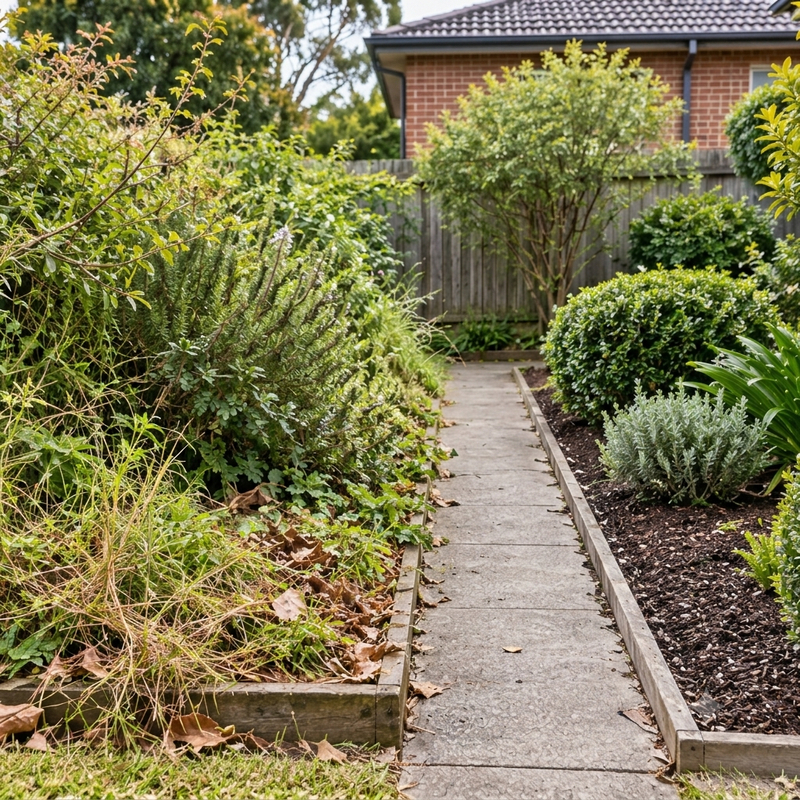
The cost of garden maintenance follows five things: the state the garden is in now, how much green waste leaves the site, how easy the property is to get into and out of, how often the work is done, and exactly what is in scope.
Two gardeners walk the same back yard and come back with two different numbers, and the owner is left wondering which one is trying it on. Usually neither is. The quotes differ because each one priced a slightly different piece of work, and the difference sits in the detail rather than in the margin.
We provide garden maintenance and clean-up work across Sydney, so what follows is a breakdown of each factor that moves a quote, in the order it tends to matter. You will not find a price in this article, and that is deliberate. The honest answer depends on the site, and a figure invented for an article would be useless to you the moment someone stands in your garden.
A reset costs differently from upkeep
Garden work takes two shapes, and they are not priced the same way. The first is a reset: a garden that has been left to itself for a season or several, brought back to a state someone can maintain. The second is upkeep: keeping a garden that is already in reasonable condition from drifting back.
A reset is one piece of work with a defined start and finish. It carries the weight of everything that accumulated while nobody was attending to it, which is usually far more material than the garden appears to hold from the back step. Beds that have closed over, self-seeded growth through the middle of plantings, prunings that should have happened two seasons ago, and the volume of waste that all of that generates once it is cut and on the ground.
Upkeep is a rhythm. Each visit deals with what has grown since the last one, which is a known and fairly small quantity, so the work is predictable and the waste volume per visit is modest.
This is why a first visit on a neglected garden is not priced like a maintenance visit, and why it should not be. Quoting the reset at the upkeep rate means either the work does not get finished or someone absorbs the difference. The sensible arrangement on an overgrown property is usually a reset quoted on its own, with the ongoing rhythm priced separately once the garden is back to a baseline.
The five things that move the number
How overgrown it is now
Clearing takes disproportionately longer than keeping, and the gap widens the longer a garden has been left. Growth that has knitted together has to be separated before it can be cut, and roots that have run into each other have to be worked out rather than pulled. A bed that would take minutes to tidy on a regular visit can take an afternoon once it has closed over, which is the single biggest reason a first quote surprises people.
How much leaves the site
Green waste volume moves a quote more than almost anything else, and more than most people expect. Disposal is a real cost with a real gate fee attached, charged by weight or volume at the facility, and it is not a line item contractors invented. A full trailer load has to be loaded, driven, unloaded and paid for, and that time and expense sits in the quote whether it is itemised or absorbed. Two gardens that look similar can generate very different volumes depending on what is being cut back and how wet the material is.
Access
How material gets from the garden to the vehicle matters. A narrow side gate means barrowing in smaller loads. Stairs mean carrying. A steep block means everything moves uphill. No street frontage, a shared driveway or strata parking some distance from the unit all add handling time to the same volume of work. Access is the factor most often missed in a phone quote and most often corrected after the first visit.
How often you want it done
A regular rhythm usually prices better per visit than sporadic calls, for the straightforward reason that each visit deals with less. A garden on a settled schedule never gets far enough ahead of itself to need clearing, so the work stays in the upkeep shape rather than tipping back into reset. Sporadic calls tend to arrive once the garden has already gone past that point.
What is actually in scope
Scope is where two quotes most often differ without either party realising. Garden beds, weeding, pruning, hedge trimming, mulching and green waste removal are each a decision, not a given. All Green does not offer lawn mowing, so if an ongoing mowing round is part of what you need, that sits with a separate provider and should be priced separately rather than assumed into a garden quote.
Where mulching sits in the price
Mulch is priced differently from the rest of the work, because it is a supplied material plus the labour to spread it rather than time alone. That means a mulching quote has two moving parts, and understanding both makes the number far easier to read.
The quantity follows the area of the beds and the depth it is laid at. A larger bed takes proportionally more, and a layer laid properly takes more than a thin scatter that disappears into the soil within weeks. Depth matters because mulch is doing a job: holding moisture in the soil and keeping light off weed seed. Too thin and it does neither, which is why skimping on quantity tends to cost more over a year than laying it properly once.
The other thing worth knowing is that topping up over an unweeded bed is false economy. Mulch laid over established weeds suppresses very little, because the weeds are already through and will simply push up into the new layer. The bed then needs doing again sooner. Weeding first and mulching onto a clean bed costs more on the day and less across the season, which is usually the right trade when you are weighing two quotes where one includes preparation and the other does not.
Fixed quote or hourly: how to tell what you are being offered
The two pricing models put the risk in different places, and it is worth knowing which one you have been handed. A fixed quote prices a defined piece of work. If it takes longer than expected, that sits with the contractor. An hourly arrangement prices time, so if the job runs long, that sits with you. Neither is dishonest, but they are not comparable, and a reader weighing two quotes side by side is often comparing one of each without noticing.
The practical difference shows up on exactly the sort of job this article is about. A reset on an overgrown garden is hard to estimate from the back step, which is why some contractors prefer to charge for time on it. The trade-off is that you do not know the final figure until it is finished.
Our own position is fixed quotes by scope for garden maintenance across Sydney and for clean-ups, with any change of scope confirmed with you before it goes ahead rather than appearing on the invoice afterwards. That means the number you approve is the number you pay unless you agree to something different.
How to compare two quotes properly
A quote is only comparable when the scope is. Five checks are enough to tell whether you are looking at the same job twice or two different jobs.
- Is the scope the same? List what each quote actually covers. Weeding, pruning, hedge trimming, mulching and bed work are separate decisions, and a cheaper quote often turns out to be a smaller job.
- Is green waste removal included? This is the most common difference between two otherwise similar numbers. If the waste is staying on site, somebody still has to deal with it, and that cost has simply moved to you.
- How many visits does the number cover? A per-visit figure and a quote for a full season are not the same thing, and neither is a reset quoted alongside ongoing upkeep.
- Who supplies the materials? Mulch especially. A quote that excludes the material is going to grow once the material is added.
- What happens if the scope grows? Ask how a change is handled. A contractor who confirms a change with you before proceeding is offering something quite different from one who simply adds it to the invoice.
Frequently Asked Questions
What affects the cost of garden maintenance in Sydney?
Five things move the number: how overgrown the garden is now, how much green waste leaves the site, how easy the property is to access, how often the work is done, and exactly what sits in scope. Two gardens that look alike can price very differently on access and waste volume alone.
Is a one-off clean-up more expensive than regular visits?
A single clean-up usually costs more than one maintenance visit, because it carries everything that accumulated while the garden was unattended. Regular visits each deal with a much smaller amount of growth. The sensible approach on a neglected garden is a reset first, then an ongoing rhythm priced separately.
Does green waste removal cost extra?
It depends on the quote, which is exactly why it is worth asking. Disposal carries a genuine gate fee plus the time to load, transport and unload. Where a quote excludes removal, the material stays on site and the cost has moved to you rather than disappeared.
How often should a gardener visit?
It depends on growth rate, how densely planted the garden is, and the season. Many gardens in this climate suit fortnightly or monthly visits, with closer attention during peak growth and a lighter touch when things slow down. A settled rhythm keeps the work in upkeep rather than reset.
Compare scope, then compare price
A quote is only comparable when the scope is. Once you know what each one covers, whether the waste is going, how many visits are in the number and who is supplying the mulch, the comparison becomes straightforward and the cheaper quote is either genuinely better value or a smaller job wearing the same name. Almost every surprise on a garden invoice traces back to a scope that was never written down properly in the first place.
So settle the scope before you settle on a number. If you want the work written down before any figure is attached to it, All Green Gardening & Landscaping starts with a site visit, puts the scope in writing, and prices that.