
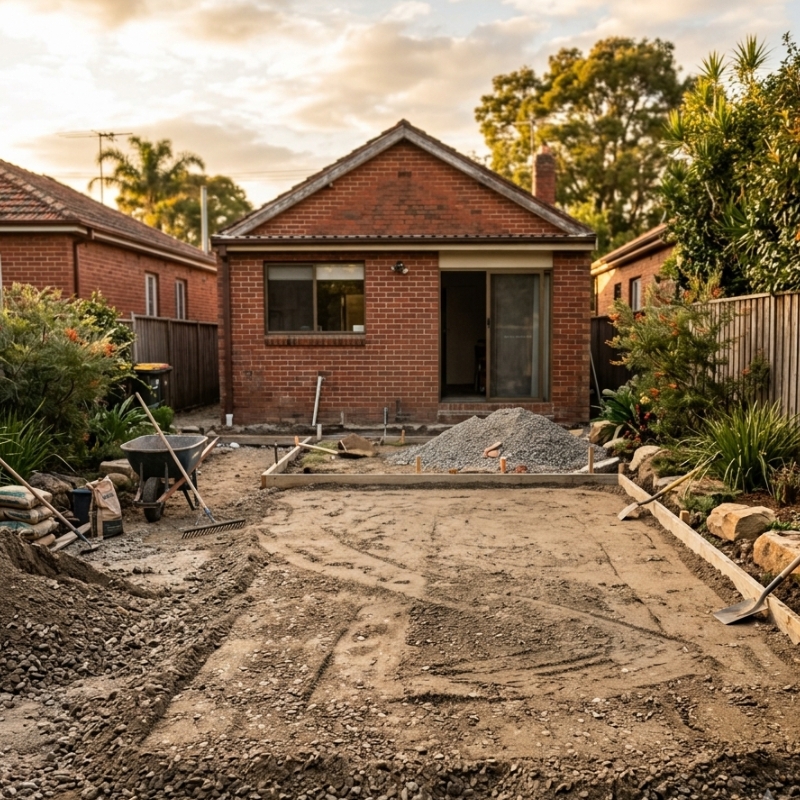
A freshly paved patio or driveway should feel as solid as a concrete slab. Yet many Sydney homeowners notice rocking pavers, uneven steps or dangerous trip hazards only a season or two after installation. Nine times out of ten, the culprit sits beneath the surface. The way the base is excavated, levelled and compacted will decide whether your new paved area stays picture-perfect or slowly turns into a wobbly mosaic.
Before we cover the typical mistakes and must-do steps, remember that no single guide can replace on-site assessment. Soil type, site drainage and load expectations vary across Greater Sydney. If you’re still in planning mode, use the insights below to discuss a tailored plan with your chosen installer. And if you’re after a professional crew that handles everything from excavation to final sealing, our team can walk you through the process of proper paving preparation in plain language.
1. What “Base Preparation” Actually Means
Many people assume the base is just “some road-base” under the pavers, but the term covers a multi-layer system:
- Excavation to remove organic soil and reach a stable sub-grade.
- Sub-base stabilisation or geo-fabric in clay or sandy pockets.
- Compacted road-base or crushed rock to the correct depth.
- Bedding sand screeded to final levels and falls.
- Jointing sand and, where specified, edge restraints.
Digging Deeper Than the Spade Test
Sydney’s topsoil can hide reactive clay, sand lenses or tree roots. Excavating only “a shovel depth” leaves soft material that compresses once cars, outdoor furniture or heavy rain apply load. Industry guidelines often recommend 100–150 mm of compacted road-base for a footpath and up to 200 mm for driveways, but the real indicator is site-specific stability.
Why Sequence Matters
Skipping the stabilisation layer on clay soil invites heave and shrinkage with each wet-dry cycle. Leaving out edge restraints means the compacted base can creep sideways, letting pavers migrate apart. These installation shortcuts are among the common causes why pavers sink or move, saving minutes during construction but potentially shaving years off the paved area’s lifespan.
2. The Five Most Common Base-Prep Mistakes We See Around Sydney
Sydney’s mix of sandstone outcrops, clay flats and coastal sands produces a colourful list of rookie errors. Below are the mistakes that turn a flawless patio into a series of rocking chairs:
| Common Mistake | What It Causes | Safer Alternative |
| Digging only 50 mm into the topsoil | Soft sub-grade compresses; pavers sink | Excavate to firm ground and remove organic matter |
| Skipping geo-fabric on sandy sites | Base material migrates downward; voids form | Install geo-fabric or stabilised sand layer |
| Under-compacting road-base | Base settles unevenly under load | Compact in 50 mm lifts with plate compactor |
| Adding bedding sand too thick (>40 mm) | Sand compacts irregularly; lipping occurs | Keep bedding layer 20–30 mm thick and screeded level |
| No edge restraints | Lateral creep: joints open up | Concrete haunching or steel/aluminium edging |
Over half the paving repairs we handle involve at least two of the issues above. Addressing them at the start costs far less than relaying pavers later.
3. How Sydney’s Climate and Soil Types Influence Base Design
Greater Sydney spans everything from the heavy clay of Western Sydney to the free-draining sands of the Northern Beaches. Each soil demands different handling:
Clay-Rich Suburbs (e.g. Penrith, Campbelltown)
• Soil swells when wet and shrinks during heatwaves, creating movement.
• A thicker road-base with added lime stabilisation or geo-grid reduces flex.
• Drainage falls are critical to shed water quickly.
Sandstone Ridges (e.g. Castle Hill, Hornsby)
• Shallow bedrock offers excellent bearing capacity but poor rainfall absorption.
• Incorporate surface runoff pathways to prevent pooling against house footings.
Coastal Sands (e.g. Manly, Cronulla)
• Free-draining yet prone to washing out if not stabilised.
• Geo-fabric or cement-stabilised sand keeps the road-base intact.
Building codes do not dictate one “Sydney standard”, so understanding your site conditions or obtaining soil advice is the first defence against future movement.
4. Deciding on Road-Base Depth: A Practical Framework
Homeowners often ask, “How deep should the base be?” The answer depends on load, soil and usage. The table below offers a rule-of-thumb starting point:
| Intended Use | Typical Road-Base Depth | Key Considerations |
| Garden path or stepping stones | 75–100 mm | Light foot traffic; watch for tree root zones |
| Entertaining patio | 100–150 mm | Furniture load, frequent foot traffic |
| Residential driveway | 150–200 mm | Vehicle weight, turning radius |
| Caravan/boat hard-stand | 200 mm + | Point loads, extended stationary weight |
Depth alone won’t save a poorly compacted base, but undershooting depth almost guarantees patchwork corrections later.
5. Drainage: The Silent Partner in Long-Lasting Paving
A solid base still fails if water pools beneath or beside it. NSW regulators highlight the importance of directing stormwater away from structures to reduce subsidence. According to NSW Environment and Heritage, poorly managed runoff accelerates soil erosion and structural movement. In paved areas, that translates into sinking edges and uneven joints.
Practical Tips for Homeowners
• Design a minimum 1:60 fall (about 16 mm per metre) away from the house.
• Install aggregate-filled strip drains where patios butt against retaining walls.
• Avoid directing downpipes onto paved surfaces without grated pits.
6. DIY vs Professional Installation: Weighing the Pros and Cons
| Aspect | DIY Advantage | DIY Risk | Professional Advantage |
| Cost Control | Savings on labour | Hidden costs if rework is needed | Fixed quote, warranty on workmanship |
| Equipment | Basic tools usable | Plate compactor hire adds cost | Heavy-duty compactors, laser levelling |
| Soil Diagnosis | N/A | Misreading soil stability | On-site assessment, soil amendments |
| Compliance | May overlook drainage codes | Possible council issues | Knowledge of local guidelines |
A confident DIYer can handle small pathways, but larger patios or driveways benefit from an experienced crew, especially where drainage and soil complexities exist.
7. Warning Signs Your Pavers Are About to Sink (And What to Do)
- Hairline opening joints near edges.
- Small puddles linger longer than in other sections.
- Feel of “give” when stepping on a paver.
- First course near the house is starting to drop below the damp-course level.
If these show up, early action involves cleaning out joints, topping with kiln-dried sand and monitoring. Recurring or worsening signs typically mean the base has failed in one or more spots and sections need lifting, re-compacting and relaying.
8. Questions That Help You Evaluate a Paving Proposal
• What road-base depth do you recommend for my soil and intended use?
• How will you verify compaction—by area passes or density test?
• Where will stormwater flow and how is that managed on site?
• Will edge restraints be concrete haunching or metal strips?
• What warranty covers movement or subsidence?
The answers should reference site specifics, not generic figures. A contractor who explains the “why” behind each layer is less likely to cut corners.
9. Frequently Asked Questions
1. How long should a properly installed paved area stay level?
A well-prepared base, correct drainage and quality materials can keep pavers stable for 20 years or more. Movement tends to appear early when mistakes are made during excavation, compaction or drainage design.
2. Is crushed rock better than recycled road-base?
Both can work if the grading meets industry specs and they’re compacted correctly. Recycled materials must be free of organics and oversized chunks.
3. Can I lay pavers directly on concrete?
Yes, but you’ll need a drainage layer or fall so water doesn’t get trapped. Flexible paving on an aggregate base tolerates small ground movement better than rigid mortar-set pavers on a slab.
4. Do I need council approval for a backyard patio in Sydney?
Small ground-level patios often fall under exempt development, but size, coverage limits and heritage overlays can change requirements. Always confirm with your local council before starting.
5. What maintenance keeps the base solid long-term?
Regularly top-up joint sand, direct downpipes away and pressure-clean grime that encourages weed roots. Most settling issues originate from water penetration rather than surface wear.
Final Thoughts
A paved area that lasts decades starts with layers you’ll never see once the job is done. Sydney’s variable soils and unpredictable weather place extra stress on any shortcuts beneath the pavers. Whether you hire a professional crew or tackle a small DIY path, invest time in soil assessment, correct excavation depth, thorough compaction and drainage planning. If movement signs keep cropping up despite good surface care, it’s wise to have the base inspected before the problem spreads.