Sydney backyards have a few “quirks” that can make an outdoor surface either a dream… or an ongoing annoyance. One week you’re hosting outside in full sun, and everything feels hotter than it should. Next, a sudden downpour reveals where water really wants to go (and where it shouldn’t). Add shaded corners that stay damp, kids and pets racing around, and the reality that most people don’t want to spend every second weekend scrubbing, sealing, or pulling weeds around outdoor paving and other surfaces.
This guide will help you choose an outdoor flooring option that suits:
• Your site (sun, shade, slope, drainage, soil movement)
• How you use the space (entertaining, pool, side access, kids/pets)
• Your maintenance tolerance (low, medium, high)
• What tends to last best in Sydney conditions
Along the way, you’ll also see “when to call a pro” moments—because long-lasting outdoor surfaces are less about the product and more about the groundwork, water management, and the right build for the site.
Start here: a 5-minute backyard check before you compare materials
Before you fall in love with a look on Pinterest, do a quick reality check. These five factors will narrow your options fast.
1) Sun exposure and summer heat
Sydney sun can make some surfaces uncomfortable underfoot in summer (especially darker, dense materials). If your backyard gets strong afternoon sun, prioritise:
• lighter colours
• textured finishes that don’t become slick when wet
• shading strategies (trees, pergolas, sails)
• materials that don’t store heat as aggressively
A practical starting point is the NSW Government guidance around choosing “cooler” materials and reducing heat build-up outdoors. It’s not about one magic product—it’s about reflectivity, shading, and design choices that make spaces more comfortable.
2) Drainage and where water goes in a downpour
Sydney storms often hit fast. Two questions matter:
• Does water pool anywhere now?
• After rain, how quickly does your yard dry?
If you already have pooling, choosing a surface without addressing drainage can lock the problem in (or make it worse).
3) Shade, dampness, and algae risk
That side path that “never sees sun” can become the slipperiest zone in the whole yard. In shaded, damp spots, prioritise:
• grippier textures
• easier cleaning
• layouts that avoid trapping leaves and moisture
• smarter water flow away from the area
4) Usage patterns
Different zones need different performance:
• Entertaining area: comfort, looks, cleanability
• Paths/side access: stability, mud reduction, drainage
• Pool surrounds: slip resistance, heat, bare-foot comfort
• Steps/slopes: traction, consistent levels, safe edges
5) Maintenance tolerance (be honest)
A surface that looks incredible but requires frequent sealing, deep cleaning, or weed control isn’t “bad”—it’s just wrong for a lot of busy households.
Outdoor flooring options for Sydney backyards (pros, cons, and where each works best)
Below is a practical comparison of the most common outdoor surface types used in Sydney backyards—what people love, what fails, and what tends to last best.
1) Concrete (plain, exposed aggregate, coloured, stamped)
Concrete is popular because it’s versatile, relatively cost-efficient, and can suit modern or classic homes depending on the finish.
Pros
• clean, continuous surface (no joints to weed)
• works well for entertaining areas and large patios
• exposed aggregate finishes can add texture and grip
• can suit contemporary designs easily
Cons
• can get hot in summer, especially darker colours
• cracking can occur (movement, poor joints, poor base)
• can become slippery if finished too smooth or if algae builds up
• coloured finishes can fade over time in full sun
What lasts best in Sydney
• light-to-mid tones to reduce heat
• textured finishes for wet safety
• proper control joints and drainage design
Good for
• patios, courtyards, entertaining zones
• connecting indoor-outdoor areas
Watch-outs
• If your yard has known movement or drainage issues, the base and water handling become non-negotiable.
2) Natural stone (sandstone, granite, bluestone, etc.)
Natural stone can look spectacular and can lift the whole outdoor feel—but it’s not “set and forget.”
Pros
• premium look and great curb appeal
• lots of texture options (good for grip if chosen well)
• can suit everything from coastal to heritage to modern
Cons
• sealing needs vary by stone type and finish
• some stones can stain or discolour if not maintained
• can be pricey and labour-intensive
• inconsistent thickness can complicate installs if the base isn’t perfect
What lasts best in Sydney
• selecting stone suitable for your exposure (full sun vs damp shade)
• choosing finishes that balance grip and cleanability
• planning cleaning and resealing as part of ownership
Good for
• feature patios, high-visibility entertaining areas, courtyards
Watch-outs
• In shaded areas, stone can encourage algae build-up if water and leaves sit on it.
3) Brick-style surfaces (classic look, warm feel)
Brick-style outdoor surfaces suit older homes and gardens beautifully and can be surprisingly forgiving visually.
Pros
• classic Sydney look, especially for heritage homes
• small-format units can cope better with minor movement than big slabs
• repairs can be more localised (swap sections rather than redo all)
Cons
• joints can invite weeds if not managed
• can shift if the base is weak or water undermines it
• damp shade zones can go green and slippery without cleaning
What lasts best in Sydney
• good edge restraints
• smart drainage so water doesn’t undermine the base
• a jointing approach that reduces weed establishment
Good for
• paths, courtyards, garden-adjacent areas
Watch-outs
• If you hate weeding, you need a plan (and the right joint treatment).
4) Composite decking
Composite decking is a go-to for people who love a warm, timber-like look but don’t want the same level of ongoing timber upkeep.
Pros
• generally lower maintenance than natural timber
• comfortable underfoot
• good for entertaining zones
• many products resist fading better than traditional timber
Cons
• can still get hot in full sun (varies by colour/product)
• needs good airflow and drainage underneath
• can feel “plasticky” depending on product choice
• staining can still happen (oil/BBQ splatter)
What lasts best in Sydney
• lighter colours for heat management
• correct substructure and ventilation
• keeping leaf litter out of gaps to reduce mould
Good for
• raised areas, entertaining decks, transitions from indoor spaces
Watch-outs
• Decking solves mud, but not poor drainage. Water needs a pathway away.
5) Natural timber decking
Timber is beautiful and timeless, especially when it complements the home and garden style.
Pros
• warm, natural look
• comfortable underfoot
• can be great around pools if selected and maintained properly
Cons
• requires ongoing maintenance (oiling/sealing, cleaning)
• can weather, splinter, or cup if neglected
• shaded/damp zones can encourage mould and slippery biofilm
• termites and timber condition require attention over time
What lasts best in Sydney
• choosing a suitable species for exposure
• consistent maintenance rhythm (clean, protect, inspect)
• good drainage and ventilation underneath
Good for
• entertaining zones, pool-adjacent spaces, elevated sites
Watch-outs
• If you want “low maintenance,” timber isn’t usually it—unless you truly enjoy upkeep.
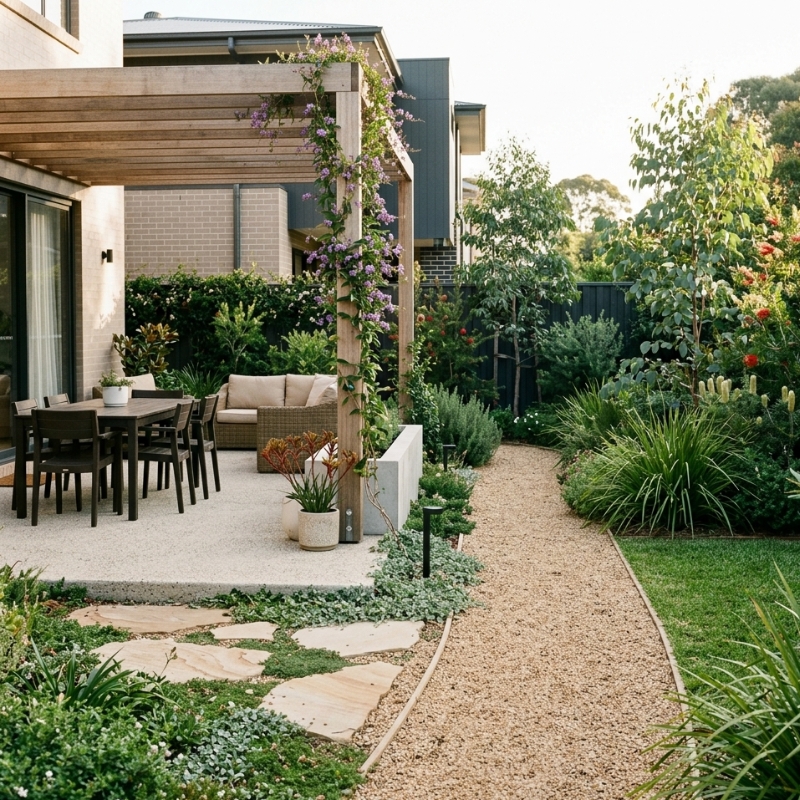
6) Loose gravel (and stabilised gravel systems)
Gravel is underrated when it’s designed properly. It can drain well and look fantastic in the right garden style.
Pros
• excellent drainage when designed correctly
• tends to stay cooler than dense hard surfaces
• suits coastal, native, and contemporary gardens
• easy to adjust and repair
Cons
• can migrate (into lawns, into the house)
• can feel unstable underfoot without stabilisation
• not ideal for high heels, prams, or some mobility needs
• weeds can appear without correct underlayers and maintenance
What lasts best in Sydney
• stabilised gravel grids for paths and patios
• edging that keeps gravel where it belongs
• correct base layers to prevent sinking
Good for
• side access paths, garden paths, low-traffic courtyards
Watch-outs
• If you’ve got heavy foot traffic, you’ll likely want stabilisation.
7) Outdoor tiles (porcelain and similar)
Outdoor-rated tiles can deliver a sharp, modern finish and are popular for sleek courtyards.
Pros
• clean, modern look
• many options for texture and slip rating
• consistent sizes make patterns easy
Cons
• substrate and waterproofing matter a lot
• poor prep leads to cracking, hollow spots, and failures
• grout needs care; staining can happen
• can be slippery if the wrong finish is chosen
What lasts best in Sydney
• choosing outdoor-rated tiles with appropriate slip resistance
• correct substrate and drainage planning
• avoiding ultra-smooth finishes outdoors
Good for
• courtyards, alfresco zones, outdoor dining areas
Watch-outs
• If the area is shaded and damp, tile selection and cleaning become more important.
Choose a backyard scenario (what to pick depending on how you live)
Sometimes a material comparison isn’t enough. Here’s a more human way to decide.
If your backyard gets brutally hot in summer
Prioritise: lighter colours, shade, and surfaces that don’t bake.
Better fits often include:
• lighter-toned concrete/exposed aggregate
• lighter natural stone (depending on type/finish)
• gravel (especially in garden-forward designs)
• decking in lighter tones (with shade)
Also: add shade early. A well-placed tree or shade sail can change the whole “comfort equation,” and NSW guidance on cooler places is a useful reference point for overall strategy.NSW Planning cool materials
If you have pooling water or a soggy zone after rain
Prioritise: drainage design first, then permeability where it makes sense.
Better fits often include:
• permeable-friendly designs (like gravel or permeable surface systems)
• options that won’t trap water against the home
• layouts that direct water where it should go
If you’re weighing up structured hard-surface options, it can help to skim what’s involved in paving designs for backyards so you can better understand how levels and water flow are typically managed.
If you have kids/pets and want fewer slips
Prioritise: traction when wet, easy cleaning, fewer algae hotspots.
Better fits often include:
• textured concrete/exposed aggregate
• stones with naturally grippy finishes
• surfaces with predictable, even levels
Avoid: ultra-smooth finishes in shaded wet areas, and anything you know you won’t clean regularly.
If you want the lowest ongoing maintenance
Prioritise: fewer joints, easy wash-down, and stable edges.
Better fits often include:
• well-finished concrete
• outdoor-rated tiles with the right finish (and correct substrate)
• composite decking (with good drainage and ventilation)
If you love the look of smaller-format surfaces, remember: joints need a plan. Maintenance isn’t “bad,” it just needs to match your lifestyle.
If you’re building a side access path to reduce mud
Prioritise: stability, drainage, and edge restraint.
Better fits often include:
• stabilised gravel systems
• brick-style surfaces where edging and base are done properly
• textured concrete in narrow corridors (with proper falls)
If your side access gets heavy water flow off the roof, treat drainage as part of the path design, not an afterthought.
What usually fails first (and how to avoid it)
Sydney backyards rarely “fail” because the material is inherently terrible. They fail because the site conditions were ignored.
1) The base wasn’t designed for the conditions
Unevenness, sinking, and movement are almost always water-related. If you’re planning a surface that needs to stay level long-term (especially on a block that’s shifted before), it’s worth taking a moment to explore more about outdoor living ideas rather than relying on guesswork.
2) Water had nowhere sensible to go
Water will pick the easiest route, and it will undermine things over time. Good builds manage:
• falls (subtle slopes)
• runoff direction
• drainage points where needed
• avoiding pushing water toward the house
3) Shade zones weren’t planned for
Shady corners and side paths often need:
• grippier textures
• easier cleaning access
• fewer leaf traps
• routine maintenance (quick wash-down beats deep cleans)
4) The wrong finish was chosen for the job
A gorgeous smooth finish might be fine under cover, but risky near a pool or on a slope. Choose finishes for safety and comfort first, aesthetics second.
Q&A: the questions Sydney homeowners ask before choosing an outdoor surface
What’s the best outdoor flooring for a Sydney backyard overall?
There isn’t one best option. For many homes, a textured concrete finish or a well-chosen stone provides a strong balance of durability, cleanability, and looks. But the “best” choice changes if you have pooling water, heavy shade, coastal exposure, or a high-slip-risk area.
Which option stays cooler underfoot?
Lighter colours generally absorb less heat, and shaded areas are more comfortable regardless of surface. Gravel and lighter-toned hard surfaces often feel less punishing than dark, dense materials in direct sun.
What’s the most slip-resistant option?
Slip resistance depends on the finish and the conditions (wet, shaded, algae). Textured finishes tend to perform better than smooth finishes. For pool surrounds and steps, choose materials and finishes designed for wet traction and keep shaded areas clean to reduce algae slickness.
Do I need to seal my outdoor surface?
Sometimes. Many stones benefit from sealing to reduce staining and weathering. Some concrete finishes may be sealed for protection and easier cleaning. Sealing is not “forever”—it’s maintenance, and Sydney sun/rain cycles can shorten intervals depending on exposure.
Can I mix different outdoor flooring types in one backyard?
Yes—and it often looks better and functions better. For example:
• a stable hard surface for entertaining
• a permeable path or gravel area for drainage-friendly garden zones
• decking for transitions or raised areas
The key is making transitions safe and levels consistent.
When it’s worth calling a professional early
If any of these are true, you’ll usually save money (and stress) by getting the design and prep right before committing to a surface:
• you already have pooling water
• the site is sloped or uneven
• you’ve had movement/sinking before
• you want a surface near the house and need correct runoff control
• you’re joining new work to existing surfaces
• you’re building steps, landings, or anything with fall risk
If you’re considering a structured hard surface and want it designed to suit your block from the start, getting across what’s involved in professional paving installation can clarify what drives stability, drainage performance, and long-term results.
A simple checklist before you choose (screenshot this)
• What zones are full sun vs mostly shade?
• Where does water flow during a storm?
• Do you need permeability to reduce runoff, or stability to reduce movement?
• Is this a barefoot zone (pool/patio) or a shoes-on zone (side path)?
• What’s your real maintenance tolerance?
• Have you prioritised slip resistance for wet areas and steps?
• Is the design pushing water away from the house?
• Are edges restrained so things don’t migrate or shift?
FAQ
What outdoor flooring is best for small Sydney courtyards?
Courtyards often have more shade and dampness, so prioritise grip and cleanability. Textured hard surfaces and outdoor-rated tiles with appropriate finishes are common choices. Also, plan easy hose access and keep leaf litter under control.
What should I use for a side path that turns to mud?
Stabilised gravel systems can work well when edged properly, and textured hard surfaces can also suit narrow corridors if drainage is designed correctly. If roof runoff hits that area, address drainage first.
Is gravel messy in a family backyard?
It can be if it isn’t edged and stabilised. With the right edging and stabilisation, gravel can be neat and functional—especially for paths and garden-forward areas.
How do I stop algae from making my outdoor surface slippery?
Reduce dampness where possible (improve sun exposure, airflow, and drainage), clean regularly before algae establishes, and choose grippier finishes in shaded zones. Slipperiness is often a maintenance-and-site-condition issue, not just a material issue.
How long should an outdoor surface last in Sydney?
With correct preparation, drainage, and appropriate maintenance, many outdoor surfaces can last decades. Failures tend to come from poor base preparation, unmanaged water flow, or mismatched finishes for the conditions.