
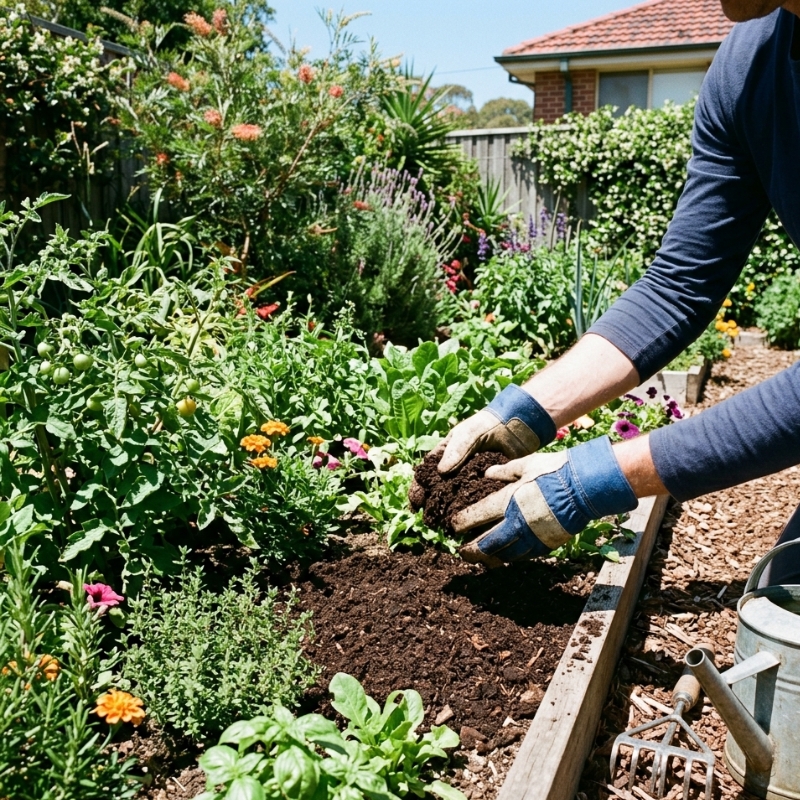
If your Sydney garden dries out too fast, turns rock-hard after rain, or just never seems to “take off” no matter what you plant, there’s a good chance the real issue is under your feet: low organic matter—and the right compost and mulching routine can help rebuild it.
Organic matter is the living (and once-living) stuff in soil—mulch, leaf litter, aged manures, chopped straw, and similar materials. It’s what helps soil hold moisture without becoming boggy, feeds beneficial microbes, and improves structure so roots can breathe.
The trick isn’t only what you add. Timing matters—especially in Sydney, where we bounce between hot, drying spells and sudden downpours.
What “organic matter” actually does in Sydney soils
Sydney gardens commonly deal with some mix of:
• sandy/coastal soils that drain quickly and become water-repellent when dry
• heavier clay soils (or clay subsoils) that can compact, waterlog, then crack when they dry
• built-up or disturbed soils from construction, where topsoil is thin, and biology is low
Organic matter helps all of these, but it works differently depending on what you’re starting with:
• In sand, it acts like a sponge and a pantry—holding water and nutrients longer so plants aren’t constantly stressed.
• In clay, it helps bind fine particles into crumbs, improving drainage, airflow, and root movement.
• In disturbed soils, it reintroduces biology and buffering capacity so the soil becomes more resilient over time.
NSW DPI puts it plainly: organic matter improves structure, holds moisture, and supports worms and microorganisms that build fertility. (See: NSW DPI guidance on garden soil and organic matter.)
The short seasonal answer for Sydney
In most Sydney gardens, the best results come from working to this rhythm:
• Late autumn to early winter: the “build the base” window
• Late winter to early spring: the “get ready to plant” window
• Warm months (late spring through summer): “top-ups only”, and only if you can keep moisture consistent
That said, your best timing depends on what you’re doing next—planting straight away, renovating beds, or maintaining established plants.
Late autumn to early winter is the best all-round time
If you can only pick one time of year to add organic matter, choose late autumn into early winter.
Why autumn works so well in Sydney
By late autumn:
• The harshest heat has usually eased, so new compost or soil improvers are less likely to dry out into a crust
• The soil stays moist longer, which helps soil biology get established
• You’re not rushing to plant immediately, so the organic matter has time to integrate before spring growth
Think of autumn as “prepping the pantry”. You’re setting up moisture-holding and nutrient cycling so plants have support when spring arrives.
Best organic matter choices for autumn
Autumn is ideal for:
• finished compost
• well-aged manures (never fresh)
• leaf mould (partially decomposed leaves)
• chopped leaves or fine mulch as a surface layer (especially under trees and shrubs)
If you’re improving a brand-new bed, autumn is also a good time to add volume (not just a sprinkle) so the soil’s structure changes noticeably by spring.
Q&A: Do I have to dig it in?
If you’re starting a new bed, light incorporation can help. But for established beds, top dressing is often safer.
A practical Sydney rule:
• New beds / empty beds: incorporate lightly into the top 10–15 cm
• Established plantings: top dress and let worms + rain do the mixing
Over-digging can break soil structure and disturb beneficial life, especially in clay. A steady, repeated approach usually beats a once-off “big dig”.
Late winter to early spring is best if you’re planting soon
If your goal is to plant spring vegies, refresh tired garden beds, or get ornamentals thriving, late winter into early spring is your second-best window.
Why spring timing can be powerful (and when it isn’t)
Spring is great when:
• you want faster, visible results before peak growth
• you can water consistently (new organic matter needs moisture to be “activated”)
• you’re not about to get hit with weeks of drying winds and no follow-up watering
Spring can be less ideal when:
• you’re heading straight into a busy period and won’t be able to water
• you’re applying very rich materials close to young roots
• you’re tempted to overdo it “for a quick fix”
Q&A: Can I add organic matter right before planting?
Yes—if you keep it gentle.
For vegie beds:
• Mix compost into the top layer lightly (don’t create a sharp “layer” that roots struggle to cross)
• Water thoroughly after planting
• Add a surface cover to reduce evaporation and temperature swings
For ornamentals and natives:
• Use smaller amounts, and keep it on the surface rather than in the planting hole
• Avoid making the planting hole overly rich compared to the surrounding soil (roots can circle)
If you’re planting into challenging soil, pairing soil improvement with sensible surface protection is often the difference between “it survives” and “it thrives”.
Summer is for light top-ups only (unless you’re committed to watering)
Sydney summers can be brutal on newly amended soil if it’s left exposed.
What can go wrong in summer
• Compost dries out on top and forms a hydrophobic crust
• Rich amendments heat up and stress shallow roots
• You water, it dries, you water again—plants swing between extremes
When summer additions do make sense
Summer is fine for:
• a thin compost top dress under established shrubs and trees
• improving soil in shaded areas where moisture holds
• topping up after a big storm has washed soil away (followed by a protective layer)
If you do add mulch in summer, treat moisture like a “non-negotiable”. Water it in properly, then protect it from baking.
This is also where a smart surface layer becomes your best friend. If you’re dealing with rapid drying, consider linking your soil-improvement plan with mulching to retain moisture in garden beds. That approach helps stabilise soil temperature and slows evaporation so your organic matter can actually do its job.
What to do in a Sydney wet spell
Sydney can get sudden heavy rain events that leave beds soggy, especially in clay or compacted ground.
The wet-spell approach
When soil is wet:
• Avoid digging—wet clay smears and compacts easily
• Top dress lightly, then wait for a better working day
• Focus on drainage fixes (surface shaping, clearing blocked outlets) rather than forcing amendments in
Q&A: Should I add organic matter to fix waterlogging?
Organic matter helps over time, but persistent waterlogging usually needs more than compost.
If your garden holds water for days, consider:
• whether downpipes are dumping into beds
• whether the soil is compacted from foot traffic or machinery
• whether there’s a clay pan or a hard layer stopping drainage
Organic matter is part of the solution, but you may also need aeration, soil profiling, or garden bed reshaping.
How to choose the right method: top dressing vs mixing in
The method is just as important as the season.
Top dressing (recommended for most established gardens)
Top dressing means spreading mulch or soil improver on the surface and letting nature incorporate it.
Best for:
• established garden beds
• around trees and shrubs
• anyone who wants low disturbance and steady improvement
How to do it:
• Spread 2–5 cm of finished compost across the bed (less around sensitive plants)
• Keep compost a few centimetres away from trunks and stems
• Water it in
• Protect it with a surface layer so it doesn’t dry out
Light incorporation (best for empty beds or full renovations)
Best for:
• empty veggie beds between seasons
• new garden beds you’re building from scratch
• compacted soil where the top layer is hard and lifeless
How to do it:
• Spread mulch across the bed
• Mix lightly into the top 10–15 cm (avoid deep digging unless you’re rebuilding the entire profile)
• Water thoroughly and allow settling time before planting
Q&A: How much organic matter is too much?
Too much of a good thing can cause problems.
Avoid:
• burying thick layers in one go (can create anaerobic pockets)
• applying very rich amendments repeatedly without balance (can lead to nutrient excess)
• piling mulch against stems/trunks (encourages rot and pests)
A steady seasonal routine usually wins:
• a bigger “base build” in autumn
• a smaller refresh in late winter/early spring
• micro top-ups as needed
Soil type matters in Sydney: sandy vs clay (and what timing changes)
If you have sandy or coastal soil
Sandy soil benefits from repeated additions. One application helps, but multiple seasons are where you notice the real change.
Best timing:
• autumn for your biggest addition
• spring for a smaller top-up if you’re planting hungry crops
Practical strategy:
• top dress compost
• protect it from drying out
• repeat seasonally
In sandy soil, organic matter breaks down faster—so consistency beats “one big dump”.
If you have heavy clay
With clay, the key is to avoid working it wet and to focus on structure.
Best timing:
• late autumn, when soil moisture is more stable
• late winter/early spring on a dry working day
Practical strategy:
• improve gradually
• use top dressing for established beds
• incorporate lightly only when conditions are right
ABC Gardening Australia notes that adding organic matter (like compost and aged manures) is important for all soils, and clay and sand behave very differently, so your approach should match what you’ve actually got.
Common mistakes Sydneysiders make (and how to avoid them)
Using unfinished compost
Unfinished compost can:
• tie up nitrogen (plants yellow and stall)
• smell unpleasant
• attract pests
If it still looks like recognisable food scraps or fresh mulch and heats up, it’s not finished.
Applying fresh manure
Fresh manure can burn plants and introduce weeds or pathogens. Only use well-aged, well-composted manures—and even then, be conservative near young plants.
Smothering stems and trunks
Organic matter should feed the soil, not suffocate plants. Always leave a small gap around stems and trunks.
Leaving the soil bare after improving it
This is a big one in Sydney. Bare soil bakes, crusts, erodes, and dries out—undoing much of the benefit you’ve added.
That’s where surface protection matters. If weeds are your main frustration, pair soil building with how to use mulch to stop weeds in your garden, so weed seeds get less light, and your soil stays more stable.
A simple Sydney soil calendar you can repeat every year
Here’s a realistic routine that suits many Sydney home gardens:
Autumn (main event)
• Add your largest amount of compost/organic matter
• Improve the structure in beds you’ll plant in spring
• Water in and protect the surface
Winter (maintenance)
• Light top-ups where you’re rebuilding poor patches
• Avoid digging wet clay
• Keep beds covered and protected
Early spring (planting prep)
• Smaller compost refresh where you’re planting
• Focus on consistency—water, then protect
Late spring and summer (stability mode)
• Only top-up if you can keep moisture consistent
• Focus on shading soil and reducing evaporation
If you want the soil improvement you’ve paid for (in time, effort, and materials) to actually last through a Sydney summer, think in systems—not single actions. Soil building plus mulching services in Sydney is often the combination that makes the biggest difference in water use, weed pressure, and plant stress.
Mini Q&A blocks for common “right now” scenarios
I’ve got a tired veggie patch. What should I do this weekend?
• Top dress with finished compost
• Water it in
• Cover the surface so it doesn’t dry out
• Plant, then keep moisture consistent for the first couple of weeks
My soil is sandy and dries out fast
• Add compost in autumn, then again lightly in spring
• Avoid leaving soil bare
• Use a protective surface layer so moisture stays put
My clay soil turns to concrete
• Don’t dig when wet
• Top dress regularly and improve gradually
• Work on drainage and compaction (foot traffic, hardpan layers)
I’m planting new shrubs and want to “boost” the hole
• Don’t over-enrich the planting hole
• Improve the broader bed area instead
• Use small top dressings and build over seasons
FAQ
When is the best time to add organic matter to a garden in Sydney?
Late autumn to early winter is the best all-around time because it lets organic matter integrate before spring growth and avoids the harshest heat.
Is it better to add compost in autumn or spring in NSW?
Autumn is best for building long-term soil health. Spring is excellent if you’re planting soon—just keep moisture consistent and avoid overdoing rich amendments.
How often should I add organic matter?
For most Sydney gardens:
• a bigger addition once a year in autumn
• a smaller refresh in late winter/early spring
• extra top-ups only where soil is struggling
Should I dig compost in or leave it on top?
Top dressing is often safest for established gardens. Light incorporation is helpful for empty beds or full renovations, but avoid deep digging and never dig wet clay.
What’s the difference between compost and aged manure?
Compost is a decomposed mixed organic material. Aged manure is animal manure that has been composted or aged long enough to be stable and less likely to burn plants. Both can help, but fresh manure is risky.
Can I add organic matter in summer?
Yes, but stick to thin top-ups and only if you can keep it moist. Summer additions that dry out can crust and become less effective.
How do I know if my soil needs organic matter?
Common signs include:
• water runs off or soaks in unevenly
• soil dries out quickly or becomes water-repellent
• plants struggle despite regular watering
• soil is hard, compacted, or lacks earthworms
What’s the fastest way to improve soil without ripping the garden up?
Top dress compost, water it in, and protect the surface. Repeat seasonally—small, consistent changes compound quickly.