

Modern paving designs have come a long way from bland grey slabs. You want something that lifts street appeal, suits your climate, and feels safe underfoot. Yet choosing feels tricky because today’s options—porcelain, concrete, natural stone, brick, resin-bound, and permeable systems—each promise different benefits. In this guide, you’ll cut through the noise and match styles to function, from driveway paving ideas to courtyards and pool zones.
Crucially, the right surface must handle local weather, bushfire considerations, and our love of outdoor entertaining. You’ll see how colour, format, and laying pattern change the vibe, and how sustainable selections can boost performance without cramping style. Because even small choices—like joint sand, sealers, or sub-base depth—decide whether your space looks schmick for years or turns into a dog’s breakfast. By the end, you’ll back your choice with practical tips that respect budget, maintenance, and longevity while keeping your Aussie outdoor lifestyle front and centre.
Why do homeowners struggle to choose the right paving styles?
Narrowing down modern paving designs for gardens is harder than it looks. So many SKUs, finishes, and slip ratings can twist your melon. Moreover, images on social media often hide the construction layers that keep pavers stable, draining, and safe. Add soil movement, tree roots, and pool splash zones, and it’s easy to pick a pretty finish that doesn’t suit the job. Here are the key factors to weigh:
- Conflicting needs: curb appeal vs wheel-load performance vs barefoot comfort.
- Climate realities: UV, heat gain, and wet-season drainage.
- Hidden costs: excavation, base depth, edge restraints, and sealing.
- Lifestyle fit: low maintenance vs bespoke features like inlays or steps.
If you’re weighing DIY over a pro, you’ll want skills mapped to standards. For foundational learning pathways, basic paving training fits the bill. This helps you understand competencies around bedding, cutting, compaction, and drainage—handy even when you’re hiring, so you can spot quality. Here are the quick decision moves that help:
- Decision traps to avoid: chasing the cheapest tile, skipping drainage, and undercooking the base.
- Shortlist smarter: set a functional brief, then style within those limits.
- Test samples in sun and shade: wet them to see colour shift and slip feel.
What are the common drawbacks of outdated paving materials?
Old-school choices can date your space and lift maintenance. Additionally, some legacy products struggle with modern expectations like slip resistance near pools or driveway loads for SUVs.Here are the pitfalls of old-school paving choices:
- Smooth ceramic or polished stone can be slippery when wet in pools or entry areas.
- Faded concrete colours from early pigment tech look tired and patchy.
- Thin pavers on inadequate bases rock and crack; grout washes out.
- Non-permeable slabs add runoff, causing puddles and erosion.
Eco-friendly paving is now mainstream, and for good reason. For homeowners exploring modern paving designs, permeable systems reduce stormwater load; recycled aggregates lower embodied carbon; and lighter colours reduce heat-island effects. If your current paving traps water or radiates heat like a barbecue plate, it’s time for a rethink. Here are the gains with modern, eco-friendly paving:
- Performance uplift: modern sealers resist stains and UV better.
- Safer surfaces: textured or honed-with-grip finishes balance feel and traction.
- Easier refresh: modular formats let you replace damaged units neatly.
How does poor paving affect property value and outdoor safety?
Even the smartest modern paving designs fail if the build is poor. A wobbly path or cracked driveway isn’t just ugly—it’s risky. Trip edges, ponding water, and oil-slick stains can spook buyers, while kerb appeal stalls at first glance. Furthermore, an underbuilt base collapses under vehicle loads, especially across tree-root zones and service trenches. Here are the base and drainage problems to avoid:
- Subgrade and base errors magnify under cars; ruts telegraph to the surface.
- Bad falls hold water; algae grows; slip risk spikes.
- Weak edges migrate, scissoring joints and opening trip points.
If you’re planning structural upgrades or weighing DIY paving against professional installation, foundation knowledge pays off. Ground your approach in essential paving base preparation tips to keep the project on the straight and narrow. A well-prepared base supports the best paving for driveway outcomes—think consistent compaction, correct falls, and geotextiles where needed. Here are the practical prep tips for a stronger finish:
- Safety cues buyers notice: flush thresholds, continuous hand-friendly edges.
- Value signals: pattern alignment with façades and garden axes.
- Smart drainage: permeable bands near downpipes curb puddles.
Which contemporary paving ideas improve outdoor appeal?
Now for the fun part—modern paving designs that sharpen form and function. Start with purpose: driveway, alfresco, poolside, side paths, and firepit zones all behave differently. Then thread a single material palette across spaces so your modern paving designs read as one coherent story. Here are the driveway design pointers to get right:
- Large-format porcelain looks sleek, resists stains, and stays colour-true.
- Sawn natural stone elevates texture—stone paving ideas for timeless appeal shine in heritage or coastal homes.
- Resin-bound paths deliver a seamless, heat-reflective surface and great accessibility.
- Mix permeable strips through driveways for drainage and style rhythm.
For driveways, durability and clean lines carry weight. Mid-greys hide dirt; herringbone and 45° angles resist vehicle shear. To dive deeper into fit-for-purpose choices, explore safe and durable paving solutions. Use this as a springboard to match formats, edges, and cuts to loading and turning circles. Here are the outdoor living and pool paving essentials:
- “Outdoor living and pool paving solutions” call for slip-rated finishes and cool-touch colours.
- Steppers cut through the lawn for casual routes; gravel joints add permeability.
- Firepit surrounds love split-stone textures that mask ash.
How do paving colours and patterns shape modern designs?
In modern paving designs, colour controls mood and heat, while pattern anchors movement. In practice, a pattern is also structural: it spreads load, hides cuts, and frames features. Meanwhile, contrast bands around planting beds make greenery pop. Here are the colour, contrast, and pattern cues:
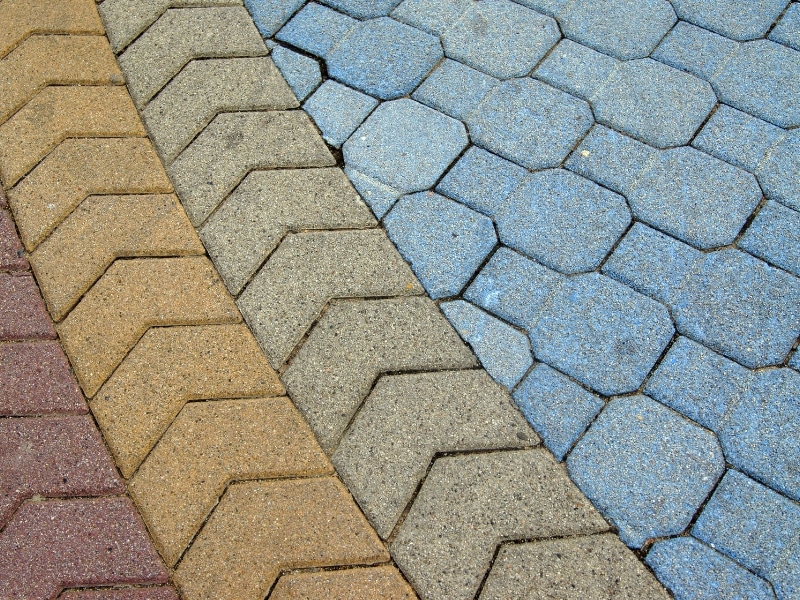
- Cool neutrals read contemporary; warm beiges soften brick façades.
- Charcoal borders sharpen edges; light fields enlarge small courtyards.
- High-contrast inlays guide sightlines to doors, water features, and views.
- Herringbone excels under cars; basketweave relaxes alfresco zones.
Paving patterns also negotiate tricky geometry. Where paths meet driveways, use soldier-course borders to catch cuts and tidy transitions. For visual harmony, align joints to door thresholds and garden axes—combining paving with landscaping for harmony is a small detail that makes the whole place feel sorted. Here are the go-to pattern picks and detailing moves:
- Pattern picks: 45° herringbone for driveways; stack bond for modern minimalism.
- Border logic: double border at garage apron for crisp vehicle entry.
For a deeper technical refresher on formats, jointing, and sequencing, it would be great to have a complete guide to concrete paver installation and design, which could be a helpful reference when coordinating colours and grout widths across spaces.
Quick reference: pattern selection by zone
| Zone | Recommended pattern | Why it works | Notes |
| Driveway | 45° herringbone | Excellent interlock under wheel shear | Edge restraints essential |
| Alfresco/entertaining | Basketweave/stack | Calm visual field for furniture | Consider sealed grout |
| Pool surround | Stretcher bond | Linear drainage and simple falls | Choose P5/P4 slip rating |
| Side path | Stretcher with band | Guides movement, hides inevitable cuts | Narrow formats reduce waste |
| Garden steppers | Random stepping | Casual look, easy to reroute around roots | Use compacted gravel or turf infill |
- Read your architecture: minimal homes suit large-format stack bonds.
- Use colour temperatures to tune mood; coastal homes love pale greys.
- Keep grout contrast modest to avoid busy visuals.
Can sustainable paving choices enhance durability and style?
In modern paving designs, sustainable options aren’t all mulch and good intentions. They can be high-performance and handsome to boot. Permeable pavers, recycled-content concrete, and locally sourced stone reduce the footprint while improving drainage and thermal comfort—smart choices that keep modern paving designs looking good longer.
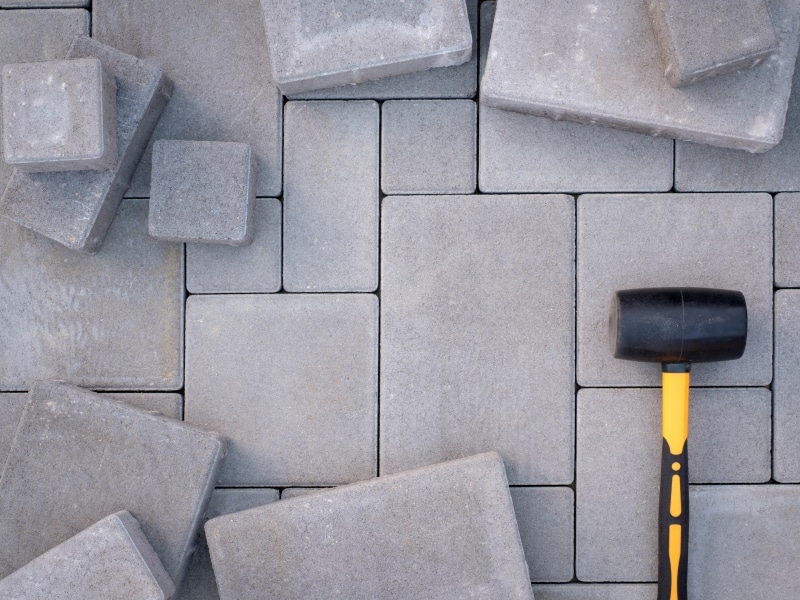
- Permeable interlock captures stormwater; sub-bases double as tanks.
- Recycled glass/slag aggregates cut virgin material demand.
- Light colours lower surface temps; barefoot comfort improves.
- Local stone reduces transport and supports regional character.
Here’s a simple matrix to weigh eco choices:
| Material/system | Sustainability edge | Key benefit | Watch-out |
| Permeable concrete pavers | On-site infiltration & water reuse | Drainage + cooling | Needs vacuuming to clear fines |
| Recycled-content concrete | Lower embodied carbon | Cost-effective upgrade | prone to fading without sealer |
| Locally quarried sandstone | Low transport emissions | Natural variation, classic | Seal to resist salt near pools |
| Resin-bound aggregate | Thin, flexible overlay options | Smooth mobility surface | costlier upfront than basic |
| Porcelain (durable grade) | Long lifespan, minimal sealing | Stain resistance | Cut edges need quality finishing |
If the goal is durability with light environmental footprints, blend systems. For instance, pair porcelain alfresco zones with permeable bands at downpipes. Where driveways meet gardens, use permeable strips as expansion joints. This hybrid approach looks sharp and manages water like a charm.
- Maintenance matters: routine sweeping and timely sealing extend life.
- Texture where it counts: grip at slopes and steps trumps raw looks.
- Budget smarter: spend on base and drainage; surfaces then follow suit.
For pool surrounds and shaded courtyards, prioritise cool-touch finishes and slip ratings. You’ll keep bare feet comfy and reduce algae risk—especially through the wet. That way, even in steamy summers, the area doesn’t feel like a frying pan or moss patch.
Final thoughts on modern paving designs for stylish outdoor living
Fresh, well-planned modern paving designs can transform how you use your place—morning coffees, backyard cricket, sundowners around the barbecue. Still, it pays to nail the base, drainage, and slip rating before falling for a pretty tile. Choose formats and colours that echo your façade and planting, then place borders to tidy cuts and direct movement. If you’re on the fence about DIY, get quotes and factor in warranty, timeline, and risk. No worries if you stage works over seasons; align materials from the start so your modern paving designs read as one cohesive scheme.
- Start with a function per zone; layer style on top.
- Align joints to architecture; carry borders through.
- Stage works: driveway first, then alfresco and paths.
- Keep maintenance in the plan, such as sealed joints and annual checks.
When you’re ready, guidance from All Gardening & Landscaping can nudge things along without the hard sell.