
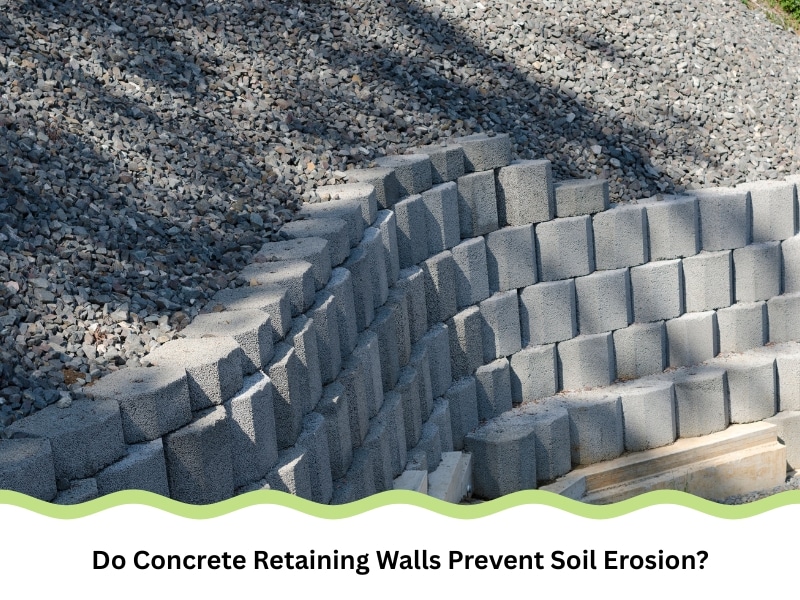
Soil erosion sneaks up on gardens and yards, loosening topsoil and shifting slopes until things stop working as they should. You notice patchy lawns, slumping edges, and muddy paths after rain. Left to itself, the problem grows and begins to cost time and money. Concrete retaining walls give you structure, control water, and keep soil where it belongs. This article explores whether concrete retaining walls prevent soil erosion effectively and how they support long-term landscape stability.
What causes soil erosion in residential landscapes?
Erosion starts when soil loses cover or strength and water or wind takes advantage. On home blocks, small grade changes and compacted paths can be enough to set it off. Once the surface breaks, runoff carves channels and the whole area becomes more fragile. Here are the main factors behind erosion in backyards and gardens:
- Heavy downpours strip unprotected slopes, scouring fine particles first, then eating into larger aggregates and exposing roots.
- Wind whips away loose topsoil on bare patches, leaving a crust that sheds water and accelerates further surface loss.
- Foot traffic, mowers, and small machinery compress soil, reducing pore space and causing faster sheet flow during storms.
- Sparse planting, steep transitions, and hard edges without breaks let runoff build speed and energy across the yard.
When you look closely, thin topsoil can fail without warning, especially after a wet week followed by a hot, drying spell. Small gaps become rills, and rills become gullies before you know it.
How does soil erosion affect gardens and outdoor spaces?
Erosion not only changes the look of a garden; it affects the way the space functions. As soil moves, plants struggle, hardscapes shift, and drainage gets messy. Maintenance grows harder and outcomes less predictable. Here are the most common impacts of erosion on gardens:
- Productive topsoil disappears, so plants miss key nutrients and water retention drops right when roots need it most.
- Beds, pavers, and steps settle unevenly, creating trip points and cracks that invite more water and ongoing movement.
- Exposed root zones dry out and heat up, stressing shrubs and trees and shortening their useful lifespan across seasons.
- Sediment washes into pits and ponds, clogging grates, reducing capacity, and pushing water where you don’t want it.
These flow-on effects show why ignoring early signs can make repairs snowball. A tidy yard can become patchy and unstable, even with regular care and weekend effort.
What risks increase if erosion control is ignored?
Put off erosion control and the stakes rise. Soil moves further, water finds shortcuts, and structures bear loads they weren’t designed to handle. What looked like a minor nuisance becomes a hazard and a budget drain. Here are the main risks of neglecting erosion control:
- Ongoing movement undermines fences, low walls, and light footings, turning hairline cracks into costly structural fixes.
- Saturated slopes can slip after storms, creating unsafe conditions for kids, pets, and anyone walking through the area.
- Standing water and boggy patches reduce usable space, spoil paths and lawns, and limit everyday outdoor living.
- Sediment entering stormwater networks adds maintenance costs and can harm local waterways after big rain events.
The truth is small failures compound fast in wet years, and waiting usually means paying more later. Early action keeps options open and disruptions short.
How do concrete retaining walls prevent soil erosion effectively?
Concrete retaining walls give soil a firm boundary and reduce slope angles so water loses speed. With the right layout and height, they hold ground in place and create flat, usable terraces that drain well. Here are the ways concrete retaining walls prevent erosion:
- Vertical structure resists lateral soil pressure, stopping downslope creep and sheltering beds, paths, and play areas.
- Strong, dense materials shrug off weathering, unlike timbers that soften, swell, and break down when cycles get harsh.
- Stepped terraces interrupt overland flow, spreading water, slowing it, and encouraging infiltration across the profile.
- Built-in drainage details limit hydrostatic pressure, which protects the wall and the soil it’s supporting for the long haul.
When planning a backyard upgrade, many homeowners aim to find reliable retaining wall solutions for controlling soil movement that can handle both heavy rain and everyday wear without constant maintenance.
Why choose concrete retaining walls over other materials?
Timber, masonry blocks, and natural stone all have their place, yet concrete often wins on service life and predictability. It handles moisture, heavy use, and repeated loading without fuss, which matters when seasons swing. Here are the reasons concrete stands out:
- Concrete walls last for decades and keep shape, whereas some timbers fade early under termites, rot, or soil contact.
- Maintenance stays low because concrete resists warping and decay, so small checks go further over the years.
- Finish options include textured panels, caps, and colour treatments, so strength doesn’t mean sacrificing a neat result.
- Whole-of-life costs are lower when replacements and frequent patch-ups are kept off the table for extended periods.
That said, plain concrete can feel stark on its own. Pair it with planting pockets, climbers, or a patterned face. It also helps to understand how retaining walls help with backyard drainage issues because water control is just as important as the material you choose.
What role does proper drainage play in erosion control?
Even the strongest wall needs controlled water. Drainage moves excess moisture away so pressure doesn’t build behind the structure, and the soil mass stays stable in wet months. Here are the key ways drainage supports erosion control:
- Behind-wall drains relieve pressure, keeping loads consistent and reducing the risk of cracking or displacement.
- Clean gravel backfill improves flow paths, prevents clogging, and supports the filter fabric and soil interface.
- Perforated pipe collects seepage and outlets it safely, limiting scours at the toe and protecting nearby surfaces.
- Subtle falls and channel drains steer runoff to lawful points, not across bare soil where it will pick up speed.
Below is a simple comparison of drainage methods used with retaining walls:
| Drainage Method | Primary Benefit | Maintenance Level |
| Gravel backfill | Improves soil stability and reduces waterlogging behind structures | Low |
| Drainage pipes | Redirects excess water efficiently to safe discharge points | Medium |
| Weep holes | Releases pressure through the face to stabilise retained soil | Low |
| Channel drains | Guides surface water away from vulnerable areas and entries | Medium |
Strong walls work best with water managed from the start. To understand why this matters, it is helpful to recognise the different types of soil erosion in landscapes, as each erosion process interacts with water differently and requires its own specific control measures.
Final thoughts on preventing erosion with concrete retaining walls
Concrete retaining walls steady slopes, protect plantings, and make outdoor areas easier to use year-round. With sound design and carefully placed drainage, they control soil movement and help surfaces hold their shape after heavy weather. If you’re weighing options or planning a new layout, discover how All Green Gardening & Landscaping can transform your outdoor spaces. A clear plan, tidy detailing, and proper water control help the work last.