
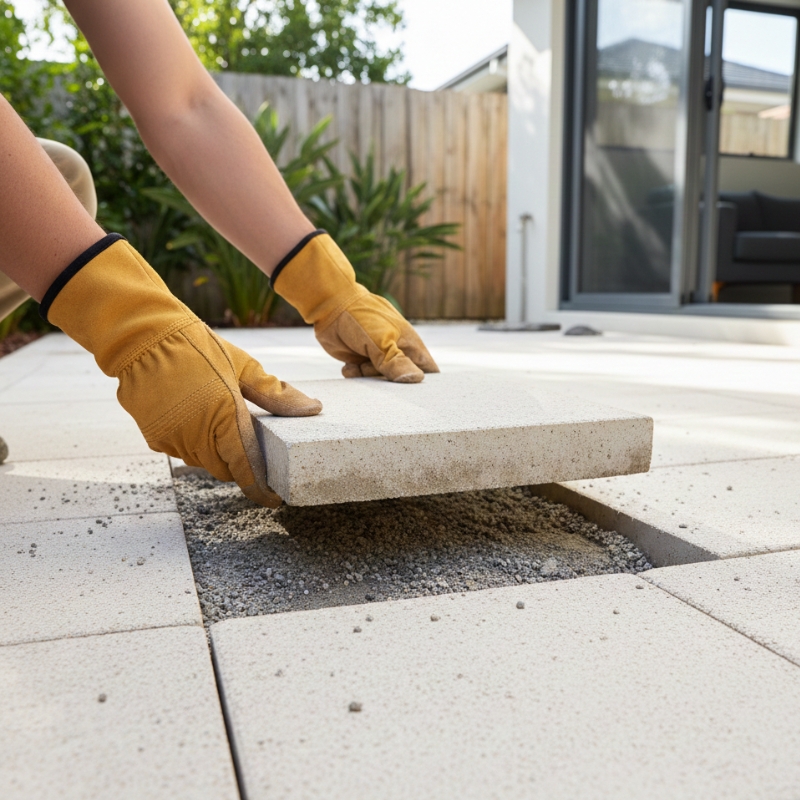
Sunken, uneven, or rocking pavers aren’t just annoying to look at. They can turn into a trip hazard, create puddles, and gradually loosen the surrounding pavers until a small problem becomes a bigger (and more expensive) one.
What most people don’t realise is this: pavers rarely “fail” on their own. When they sink or move, it’s usually because something underneath (or around) them isn’t doing its job—most commonly the base, drainage, edge restraints, or the soil itself.
This guide is written for Sydney homeowners and breaks down:
• The most common causes of sinking and shifting pavers
• How to diagnose what’s really happening before you lift anything
• Prevention steps that stop the same problem from returning
What “sinking” and “moving” actually mean
Different symptoms often point to different causes.
Sinking
A section drops lower than the surrounding surface (often a dip or depression).
Shifting
Pavers slide sideways over time, opening gaps and disrupting the pattern.
Rocking
A paver wobbles when stepped on, usually because there’s a void in the bedding sand beneath it.
Lifting or heaving
The surface rises in one spot (often roots or soil movement). This is different from sinking, but can happen in the same area.
Why Sydney conditions can make it worse
Sydney’s weather and soil can speed up movement:
• Heavy downpours can wash out jointing sand and undermine edges
• Many suburbs have clay-heavy or reactive soils that expand when wet and shrink when dry
• Landscaping changes (new garden beds, irrigation, redirected downpipes) can alter water flow after paving is installed
• Mature gardens mean tree roots are a frequent factor near paths and courtyards
Diagnose first: a 5-minute check that saves hours later
Before you lift any pavers, do a quick scan. You’re trying to separate a “localised” issue from a “system” issue.
1) Map the problem
• Is it one spot or a whole section?
• Does it follow a straight line (often trench settlement) or form a low bowl (often drainage)?
• Is it near a downpipe, tap, garden bed, or stormwater point?
2) Link it to timing
• Did it worsen after heavy rain?
• Did it start after garden or irrigation work?
• Is it gradually getting worse over months?
3) Watch water behaviour
• Any pooling after rain?
• Fine sand washed onto the surface?
• Muddy water coming up through joints?
4) Check the edges
• Are edge restraints loose, cracked, or missing?
• Are pavers “spreading” outward at corners or on slopes?
5) Look for biological or underground clues
• Ant activity, small holes, or sand mounds?
• Nearby tree roots?
• Persistently damp soil that doesn’t dry out (possible leak)?
If you want a trustworthy benchmark for what stable segmental paving construction typically includes (base layers, bedding, and general principles), see Australian guidance on segmental paving installation.
The most common causes of sinking or shifting pavers
1) Base preparation and compaction problems
This is the #1 culprit. Pavers depend on a stable, compacted sub-base that spreads loads and resists settlement. If the base is too thin, uneven, or not compacted properly (especially if it wasn’t compacted in layers), the surface can slowly drop or deform.
Typical signs:
• A broad area gradually sinking rather than one sharp dip
• “Wheel paths” or worn walk lines appearing as low channels
• Settlement that continues over time, not just once
Why does it happen:
• Base depth wasn’t matched to use (foot traffic vs vehicles)
• Poor compaction or rushed installation
• The surface was laid over soft soil or fill
Prevention:
• Base depth and compaction must match how the area is used
• Avoid “thick sand fixes” that hide problems without strengthening support
2) Drainage issues and washout
Water is the silent mover of paving. It can wash fine bedding sand out from underneath, erode the sub-base, and create voids that lead to rocking and dips—often right after a storm.
Typical signs:
• The problem gets noticeably worse after heavy rain
• Jointing sand disappears quickly
• Rocking pavers develop (voids underneath)
• Pooling forms where it wasn’t used to
Common Sydney triggers:
• Downpipes discharging onto paving
• Garden beds sending runoff onto paved areas
• Falls that are too flat, or falls that run toward a wall/threshold
• Irrigation overspray soaking one edge repeatedly
Prevention:
• Control where roof and surface water goes
• Keep falls consistent so water moves away rather than sitting and seeping in
3) Soil movement (reactive clays and moisture swings)
In many Sydney areas, soils can shift with changing moisture levels. If one side of your paving stays wetter (garden edge, leaking irrigation, poor drainage) while another side dries, you can get uneven support.
Typical signs:
• Subtle height differences (“lipping”) that change over seasons
• Movement near lawn/garden edges where watering is frequent
• A recurring problem that returns after “fixing” the surface
Prevention:
• Keep moisture conditions consistent around the perimeter
• Fix leaks quickly and avoid overwatering hard-surface edges
4) Edge restraint failure or missing restraints
Edge restraints stop pavers from spreading sideways. Without them, movement can “unlock” the pattern and allow pavers to creep, especially on slopes or where vehicles turn.
Typical signs:
• Gaps opening across the surface
• A pattern drifting out of alignment
• Border pavers tilting first
• Corners are spreading and losing the neat lines
Prevention:
• Continuous, properly anchored edge restraints
• Early repair of loose edges before the movement spreads
5) Joint sand loss and bedding layer issues
Jointing sand helps lock pavers together. When it washes out, pavers lose lateral support and start to wobble, shift, and open gaps. Bedding sand issues can also cause compression and voids.
Typical signs:
• Rocking pavers
• Widening joints and faster weed growth
• Repeated sand loss after storms or pressure washing
Prevention:
• Maintain joint sand, especially after heavy rain or cleaning
• Be cautious with high-pressure cleaning and restore the jointing sand after
6) Roots, pests, and disturbed ground
Sometimes the paving is fine, but something changes beneath it later.
Typical triggers:
• Tree roots lifting or distorting a section
• Ants excavating sand under joints
• Underground works (plumbing, electrical, drainage trenches) that disturbed the base
• Leaks softening the soil below
Typical signs:
• Lifting near trees, or a ridge forming
• Movement that follows a straight line where a trench likely was
• Damp patches that never fully dry
Prevention:
• Design and landscaping choices matter near trees and gardens
• Investigate ongoing moisture or pest activity rather than repeatedly re-laying
Q&A: Why did my pavers sink in just one spot?
A single low spot is often a local issue, like:
• Washout near a downpipe or tap
• A soft patch of soil (old stump, filled hole, poorly compacted fill)
• A leak from irrigation
• Ant activity undermining the bedding sand
If the dip is close to a water source, check the water flow during rain (or when the irrigation runs). If it stays damp longer than everywhere else, suspect an ongoing water issue.
Prevention that actually works (without overcomplicating it)
Think of paving stability as two goals: stable support and predictable water flow.
Keep water from getting under the surface
• Ensure downpipes discharge to appropriate drainage (not onto paving)
• Avoid creating low points that hold water
• Keep garden beds from spilling runoff onto paved areas
• Fix irrigation leaks and adjust sprinklers so one edge isn’t constantly soaked
Lock the edges
• Make sure edge restraints are continuous and firmly anchored
• Treat corners and curves as priority areas (they’re where movement starts)
Maintain the joints
• Top up jointing sand when you notice gaps or washout
• After cleaning, check joints—loss of sand often shows up weeks later
• Treat persistent weeds as a symptom of opening joints and trapped moisture
If you’re planning a new outdoor layout and want ideas that balance looks with practical performance, you can explore modern paving designs for outdoor spaces and choose options that suit how the area will be used (and how water moves through it).
Q&A: Can I just add sand on top to fix sunken pavers?
Sometimes topping up jointing sand helps if the issue is minor joint loss. But if the base has settled or washed out underneath, sand on top won’t lift the pavers back to level, and it won’t stop further sinking.
A more reliable approach for a local dip is:
• Lift the affected pavers
• Re-level the bedding layer (and repair the base if it’s soft or eroded)
• Re-lay and restore joints
• Address nearby drainage so it doesn’t recur
If the same spot keeps sinking, assume there’s an underlying cause (water, soft ground, leak, or edging failure).
When to treat it as urgent
Uneven pavers aren’t always an emergency, but they should move up your priority list if:
• There’s a clear trip edge, wobble, or slip risk
• It’s near steps, pool surrounds, entry paths, or thresholds
• Water is pooling or flowing toward the house
• A large area is settling (not just one paver)
• You suspect a leak (persistent dampness, soft ground, unexplained water use)
If the movement is widespread or keeps returning, it may help to speak with a local team experienced in paving in Sydney to identify whether drainage, base depth, or edge restraints are the real cause.
Driveways also demand a higher standard because of the load. If you’re seeing movement where vehicles travel, it’s worth understanding the difference in structural needs highlighted in driveway paving for your property.
Quick symptom guide: match what you see to what to check
Sinking that worsens after rain
Most likely: drainage/washout
Check: downpipes, low points, missing joint sand, water pathways
Rocking pavers
Most likely: voids under bedding/sand loss
Check: joint sand, ants, edge washout, persistent moisture
Gaps opening and pattern drifting
Most likely: edge restraint failure
Check: perimeter edging, corners, bottom of slopes, turning zones
Lifting near trees
Most likely: roots
Check: distance to trunk, root direction, whether the lift is increasing
Q&A: How do I know if it’s a base problem or a drainage problem?
Use this rule of thumb:
• If it changes quickly after rain, and you see pooling or sand loss, drainage is likely involved.
• If it changes slowly across a wider area, base depth/compaction is a common cause.
• If it’s always the same spot, look for an ongoing trigger (leak, runoff path, soft soil, pests).
Often, it’s a combination: water movement reveals weak base support faster.
Final FAQ
Why do pavers sink even if they looked perfect at first?
Initial settlement can happen as layers consolidate, but ongoing sinking usually points to insufficient compaction, inadequate base depth, or water undermining the support.
Why are my pavers moving sideways?
Sideways movement often means the surface has “unlocked” due to missing/failed edge restraints or joint sand loss.
Does pressure cleaning cause pavers to move?
It can if it strips jointing sand, and you don’t replace it. It can also force water into joints and worsen washout in vulnerable areas.
What’s the best prevention plan for Sydney’s weather?
Prioritise drainage control, stable base preparation, strong edge restraints, and joint sand maintenance—especially after heavy rain.
When should I get professional help?
If there’s a trip hazard, widespread settlement, water running toward the home, suspected leaks, or repeated movement after re-laying attempts.