
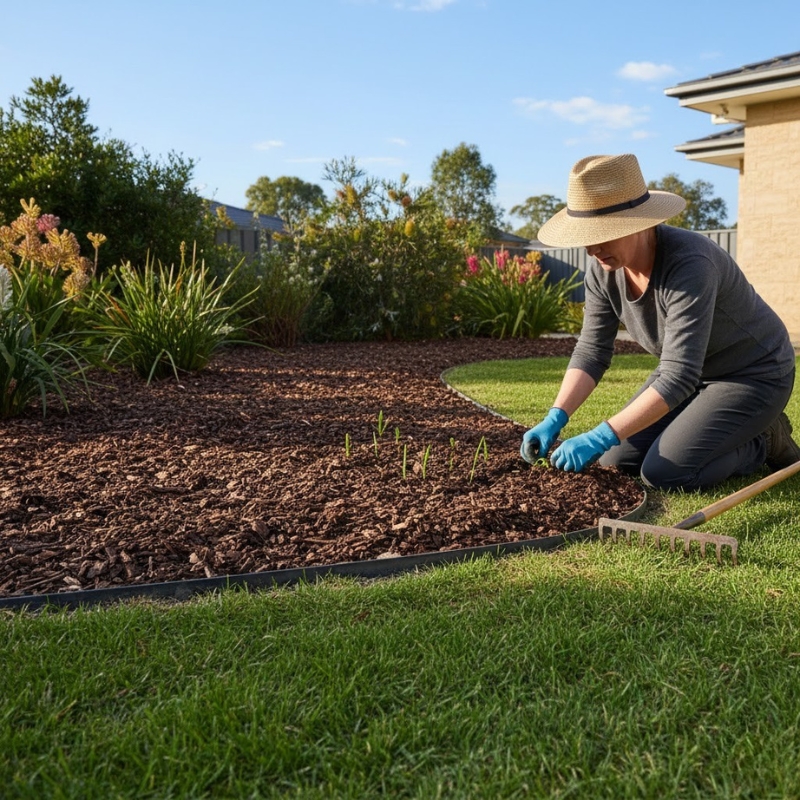
You mulch, you feel proud, you expect a calmer garden… and then weeds show up anyway.
It’s frustrating, but it’s also normal. Mulch reduces weeds; it doesn’t erase the conditions that create weeds. In Sydney, those conditions can include warm soil, bursts of rain, windblown seed, and garden edges that behave like weed highways.
This guide is designed like a diagnostic flow. You’ll identify what type of weed problem you have, then apply the fix that matches it, without piling mulch higher and accidentally causing plant health issues.
Start here: what kind of “weeds through mulch” are you seeing?
Before you do anything, observe where the weeds are coming from. Different patterns point to different causes.
Pattern A: Weeds mostly around edges
Common in Sydney beds bordering:
• Lawns
• Paths
• Driveways
• Fencelines
• Side access strips
This usually means weed seeds and runners are entering from outside the mulched zone.
Pattern B: Weeds across the whole bed
This usually points to:
• Mulch layer too thin
• Weeds not removed properly before mulching
• Mulch breaking down and leaving bare soil
• Lots of windblown seed landing on top and germinating
Pattern C: Weeds growing from under the mulch
This is often:
• Existing weeds that weren’t fully removed
• Underground runners (like couch grass)
• Tough root crowns that reshoot
• Bulbs or tubers (not always “weeds”, but they act like it)
Pattern D: Weeds sprouting from within the mulch itself
Less common, but possible if:
• Mulch is contaminated with seed
• Mulch contains un-composted green waste or soil fragments
If you’re unsure which pattern you’ve got, take five minutes and map it. A simple sketch of where weeds appear will save you hours of repeating the wrong fix.
The reality check: mulch works best when it’s part of a system
According to NSW EPA guidance, mulch supplied and applied as a soil amendment is subject to specific definitions and requirements in some contexts and contamination control matters. You don’t need to become a legal expert to benefit from the practical lesson: mulch quality and source can affect what ends up in your garden. (NSW EPA guidance on mulch orders and exemptions)
Fix 1: If weeds are mainly on the edges, your edges aren’t sealed
Edges are where mulch thins first. Water, wind, foot traffic, and lawn growth all conspire to open gaps.
What to do
• Pull edge weeds early (before seeding)
• Rebuild the mulch edge so it’s continuous and thicker than the centre
• Consider a defined physical edge (a clean line where mulch meets lawn/path)
• Watch for lawn runners creeping under the mulch and remove them fully
What not to do
• Keep adding mulch only to the middle of the bed and ignoring the edges
• Let mulch spill onto lawn or paths (it becomes a mess and thins the bed)
Q&A: Do I need a weed mat under mulch to stop edge weeds?
Usually, no. Weed mat can create its own issues (matting, poor water movement, and weeds growing in the mulch layer above it). Most edge weeds are solved by:
• Better edge control
• Correct thickness
• Fast removal before seeding
Fix 2: If weeds are everywhere, your bed prep was incomplete (or the layer is too thin)
The most common cause of “mulch doesn’t work” is mulching over weeds that are still alive.
The reset approach (without starting from scratch)
- Remove visible weeds
- Target the tough ones: runners, root crowns, rhizomes
- Water the bed (so you can lift roots more effectively)
- Patch bare soil immediately with mulch
If you leave gaps after pulling weeds, you’re giving the next flush a perfect runway.
Thickness matters, but so does consistency
A thin layer in one area becomes the weed nursery that seeds the rest of the bed.
If you want to keep this practical and avoid overthinking it, a simple check-and-top-up plan is often the fastest path forward. That’s where mulching help for Sydney gardens can be useful as a reference point for doing it once, properly.
Q&A: Should I spray weeds and then mulch?
If you use herbicide, follow label directions carefully and consider safety around pets, kids, and nearby plants. In many cases, hand removal of seedlings and targeted removal of runners is enough when you’re maintaining a good mulch layer. For persistent invasives, you may need a more structured approach.
Fix 3: If weeds are coming from under the mulch, you’re dealing with runners or resprouters
Some “weeds” don’t care about mulch because they’re already established underground.
Common offenders:
• Couch-like runners from lawns
• Oxalis and similar bulbs
• Established root crowns that reshoot
• Vines creeping under the surface
What to do
• Follow the weed back to its source and remove the runner fully
• Lift the root crown (don’t just snap the top)
• In severe cases, isolate the area and treat it as a containment zone
What not to do
• Just pulling the top and leaving the runner network intact
• Adding more mulch and hoping it “crushes” the problem (it won’t)
Fix 4: If weeds are sprouting in the mulch layer, it’s usually windblown seed on a decomposed surface
Even the best mulch layer will collect organic dust and decomposed material on top over time. That top layer can become a seedbed.
What to do
• Remove seedlings immediately while they’re small
• Rake the top gently to disrupt the seedbed (don’t churn up soil)
• Top up thin areas, especially where the surface has broken down into fine material
Q&A: Can mulch itself contain weed seeds?
It can, depending on the source and processing. That’s one reason NSW EPA guidance exists around what qualifies as mulch and how it should be managed in some contexts. Practically: choose a reputable supply, inspect the mulch, and avoid material that contains lots of green fragments or obvious soil clumps.
Fix 5: If you’re over-mulching, you can create new problems that look like weed issues
A common reaction is to pile mulch higher and higher. Over time, that can:
• Reduce airflow at the soil surface
• Make water run off instead of soaking in
• Encourage fungal growth in humid pockets
• Stress plants, which then become less competitive against weeds
The “plant safety” mulching rule
• Keep mulch away from trunks and stems
• Avoid burying plant crowns
• Don’t create a thick mound against trees (“volcano” shape)
If you’re trying to balance weed control with plant health and water movement, it helps to treat mulching like part of a garden system, not a standalone fix. That mindset is central to garden mulching guidance when you’re aiming for results that last.
A Sydney-specific weed problem: seed sources you don’t notice
Sometimes the bed is fine. The seed source is the problem.
Common Sydney seed sources:
• Neighbouring weedy verges or fencelines
• Unmanaged side access strips
• Lawn seedheads dropping into beds
• Compost piles or green waste areas that aren’t fully processed
• Windblown seed after warm, wet weather
What to do
• Cut off the seed source: mow edges, control fence-line weeds, and stop lawn seedheads
• Add a “buffer zone” (groundcover or denser planting) where seed tends to land
• Keep mulch continuous in these landing zones
Q&A: Why do weeds explode after rain?
Warm soil plus moisture triggers germination. After rain, a thin mulch layer and bare patches become prime real estate. The fix is:
• Top up thin zones
• Remove seedlings early
• Reinforce edges where the seed enters
The 10-minute troubleshooting flow (use this every time)
When weeds appear, do this sequence:
• Identify the pattern (edges, everywhere, from below, in the mulch layer)
• Pull seedlings immediately
• Fix the cause (edge sealing, thickness, runner removal, top-up)
• Patch bare soil so weeds don’t return
Practical “do this, not that” for weed control with mulch
Do:
• Weed first, mulch second
• Keep mulch consistent, especially at edges
• Choose a mulch type that suits your site (chunkier where run-off occurs)
• Treat the top layer as a maintenance surface (rake lightly, top up when thin)
Don’t:
• Mulch over living weeds
• Ignore edges
• Stack mulch against trunks and stems
• Expect mulch to stop established runners without removing the source
If you’re stuck in a loop of “weed, mulch, repeat”, it can help to reset the system properly once, then maintain it lightly. That’s exactly the kind of practical sequencing covered by mulch application support.
Final FAQ
Why are weeds still growing through my mulch?
The usual causes are gaps and thin areas (especially edges), weeds that weren’t removed fully before mulching, or underground runners reshooting through the layer.
How thick should mulch be to help stop weeds?
It depends on mulch type and garden conditions, but the key is consistency: a patchy layer behaves like no mulch at all. Focus on edges and bare soil zones first.
Do I need cardboard or weed mat under mulch?
Often, no. Cardboard can break down unevenly, and weed mat can trap debris and create a new seedbed on top. Most gardens do better with good bed prep and consistent mulch.
Can mulch bring weed seeds into my garden?
It can, depending on the source and processing. Choose reputable supplies and avoid material with lots of green waste fragments and obvious soil contamination.
Why do weeds show up mostly around the borders?
Edges are where mulch thins first and where seeds and runners enter from lawns, paths, and fencelines. Seal edges and maintain a stronger border layer.
What’s the fastest way to get control back?
Pull seedlings early, patch bare soil immediately, then fix the cause (edges, thickness, or runner removal) so you’re not repeating the same cycle.