
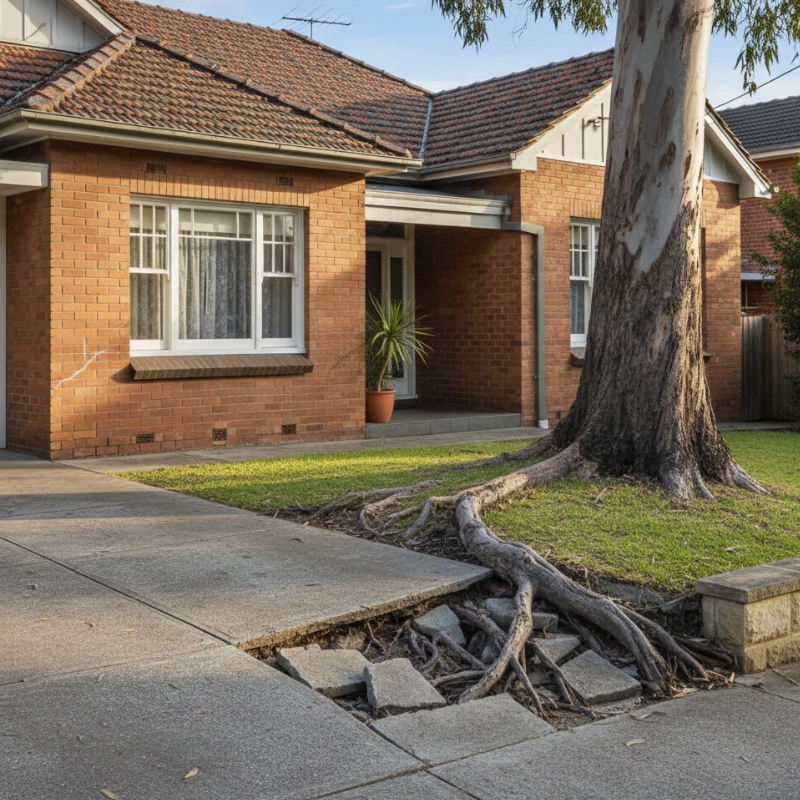
Tree roots are powerful, persistent and often misunderstood. While mature trees add shade, privacy and value to Sydney properties, their underground root systems can sometimes cause structural problems when conditions allow.
In suburbs across Sydney — from the Inner West to the Hills District — homeowners occasionally discover cracked brickwork, lifting driveways or recurring blocked drains that trace back to root intrusion. The tricky part? By the time the signs are visible above ground, the root activity has usually been developing for years.
Understanding the early warning signs of tree root damage can help you act before minor issues become major structural concerns.
Can Tree Roots Really Damage Your Home?
Yes — but not in the way many people assume.
Tree roots don’t typically “attack” solid concrete or chase foundations aggressively. Instead, they exploit weaknesses. Roots grow toward moisture and oxygen. If pipes are leaking, soil is reactive, or foundations already have small fractures, roots can take advantage of those vulnerabilities.
In Sydney, this risk is influenced by:
• Reactive clay soils are common in Western and South-West Sydney
• Periods of heavy rainfall followed by dry spells
• Older terracotta plumbing pipes
• Smaller urban block sizes with mature trees close to structures
When these factors combine, root systems can contribute to soil movement, pipe intrusion and surface displacement.
How Tree Roots Spread in Sydney Soil
Many homeowners underestimate how far roots can extend.
A tree’s root system can spread two to three times wider than its canopy. For example, if a tree’s branches extend five metres from the trunk, roots may extend ten metres or more underground.
In clay-heavy Sydney soils, roots often spread laterally near the surface rather than growing deep. This increases the likelihood of interaction with:
• House slabs
• Driveways
• Boundary fences
• Underground plumbing
• Stormwater lines
Moisture-seeking roots are especially drawn to ageing pipes or areas where water collects.
Early Warning Signs of Tree Root Damage
Spotting early indicators can save thousands in structural repairs.
1. Cracks in Brickwork or Internal Walls
Hairline cracks can be normal in older Sydney homes, particularly with seasonal soil movement. However, warning signs include:
• Cracks that widen over time
• Stair-step cracks in brickwork
• Doors or windows sticking
• Gaps forming around window frames
These can signal soil movement beneath the slab, sometimes influenced by root moisture extraction.
2. Lifting or Uneven Driveways and Paths
If sections of concrete begin lifting, separating or tilting, roots may be pushing upward from beneath.
Common signs include:
• Raised sections near garden beds
• New trip hazards
• Cracking that follows a tree line
Roots often expand in diameter over time, gradually exerting upward pressure.
3. Recurring Blocked Drains
One of the most common signs of tree root intrusion in Sydney is repeated drain blockages.
Watch for:
• Slow-draining sinks or toilets
• Gurgling sounds in pipes
• Sewage odours outdoors
• Water pooling in the yard
Older suburbs with terracotta pipes are particularly vulnerable. Roots can enter through tiny cracks and expand inside the pipe, causing obstructions.
4. Sudden Lawn Depressions or Soil Sinking
If you notice unexplained dips in your lawn, this can indicate underground voids caused by:
• Collapsing pipe sections
• Soil washout
• Decaying roots
In reactive clay areas, moisture changes caused by root systems can also contribute to ground movement.
5. Fence Leaning or Boundary Shifts
Tree roots near property lines can affect fences over time.
Signs include:
• Fence posts tilting
• Boundary panels lifting
• Concrete footings are cracking
When trees sit close to shared boundaries, it’s important to monitor gradual movement early.
Sydney’s Reactive Clay: Why It Matters
Large parts of Western Sydney sit on reactive clay soils. These soils expand when wet and shrink when dry.
Tree roots can intensify this cycle by drawing moisture from the soil during dry periods. This moisture extraction can cause:
• Shrinkage beneath slabs
• Foundation settlement
• Structural cracking
After heavy rain, the soil may re-expand, increasing stress on foundations.
This seasonal movement is why monitoring patterns over time is critical. Not all cracking is root-related — but in some cases, roots amplify existing soil instability.
What Trees Are More Likely to Cause Issues?
Not all species pose the same level of risk.
Larger, fast-growing species with aggressive root systems are more likely to interact with nearby structures. In Sydney, commonly cited species include:
• Liquidambar
• Willow
• Some Eucalyptus varieties
• Poplar
• Ficus
That said, placement and soil conditions often matter more than species alone.
How to Perform a Simple Property Check
Homeowners can carry out a basic visual inspection every six months.
Walk around your property and check for:
• New cracks in brickwork
• Concrete lifting near garden edges
• Soil pulling away from foundations
• Persistent drainage issues
• Changes after heavy rainfall
After major storms — which Sydney regularly experiences — it’s especially important to check trees for structural stability and root disturbance.
If you’re unsure whether movement is normal settlement or something more significant, a professional tree assessment in Sydney can provide clarity on root behaviour and structural risk.
Can You Cut Tree Roots Yourself?
This is where things get complicated.
Cutting roots can:
• Destabilise the tree
• Increase the risk of failure during storms
• Introduce disease
• Accelerate decline
Removing structural roots without understanding load distribution can create more serious hazards than the original issue.
In many Sydney council areas, significant tree work may also require approval depending on species, trunk diameter or heritage overlays. The NSW Planning Portal provides guidance on tree and vegetation regulations across local government areas.
If root pruning is considered, it should be approached carefully and with an understanding of both structural and regulatory implications.
Who Is Responsible for Tree Root Damage in Sydney?
Responsibility depends on ownership and circumstances.
General principles include:
• If the tree is on your property, you are typically responsible for its impact.
• If roots from a neighbour’s tree cross into your land, dispute resolution may be required.
• Council-owned street trees are managed by local government.
The NSW Government outlines neighbour and tree dispute pathways through formal processes when required. However, early communication between neighbours is usually the best first step.
Understanding responsibility early helps avoid costly legal escalation.
When to Monitor — and When to Escalate
Not every crack or uneven surface requires urgent intervention.
Monitor if:
• Cracks are stable and not widening
• No plumbing issues are present
• Movement appears minor and seasonal
Escalate if:
• Cracks widen noticeably
• Drain blockages are recurring
• Doors or windows no longer close properly
• Concrete lifting creates safety risks
• Tree stability appears compromised
In these cases, seeking expert help with tree risk management can determine whether roots are contributing to the issue and what safe next steps look like.
After Storms: Extra Checks for Sydney Homes
Sydney’s storm season can saturate soils quickly. After heavy rain:
• Check for exposed roots
• Look for newly leaning trees
• Inspect soil heaving
• Monitor new cracks indoors
Storm-saturated soil reduces anchoring strength, especially if roots have previously been disturbed or cut.
If you suspect instability, a tree health and structural assessment can evaluate both the tree and the surrounding ground conditions.
Frequently Asked Questions
How far can tree roots travel?
Roots can extend well beyond the canopy — often two to three times the tree’s height. In urban Sydney settings, this can mean interaction with neighbouring properties.
Do all trees damage foundations?
No. Most trees coexist safely with structures. Problems usually arise when trees are planted too close, soil is reactive, or pipes are already compromised.
Are tree roots covered by insurance in NSW?
Coverage varies between policies. Some insurers cover sudden damage but not gradual movement. It’s important to review your policy wording carefully.
Can removing a tree fix foundation movement?
Not always. If soil shrinkage has already occurred, removing the tree may not reverse the movement. In reactive clay areas, removal can sometimes cause rehydration and soil expansion.
What is the first sign of root damage?
Recurring blocked drains are often the earliest practical sign in Sydney homes, particularly in older suburbs.
Can I legally cut roots that cross into my property?
In NSW, property owners may trim encroaching roots from a neighbour’s tree, but they must not damage or destabilise the tree. Legal advice may be appropriate in disputes.
Preventing Future Root Problems
Prevention is far easier than remediation.
Consider:
• Strategic tree placement away from slabs
• Installing root barriers during landscaping
• Replacing ageing pipes
• Routine inspections in high-risk areas
• Monitoring moisture levels in reactive soils
Early awareness reduces structural risk and preserves the long-term health of both your property and your trees.
Final Thoughts
Tree root damage is rarely sudden. It develops gradually — influenced by soil, moisture, tree species and infrastructure age.
For Sydney homeowners, the key is early detection. Understanding how roots behave in NSW conditions allows you to distinguish between normal settlement and emerging structural concerns.
If warning signs appear, a measured, informed approach is essential. Monitoring minor issues, understanding local regulations and obtaining professional insight when necessary can prevent costly outcomes.
Trees add immense value to Sydney homes — but like any natural system, they require awareness and responsible management.