
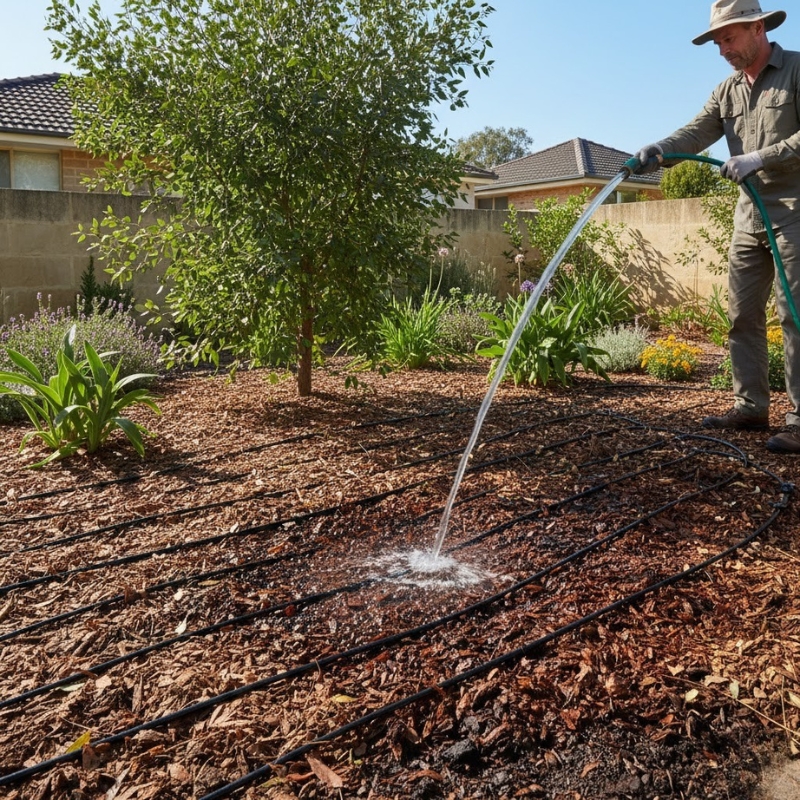
Sydney summers can be a pressure test for any garden. You might have:
• Hot, dry stretches that bake the surface
• Windy days that strip moisture fast
• Sudden storms that dump rain, then disappear
• Reflected heat from walls and paving
Mulch is one of the best tools you have, but it’s not a magic blanket. The real wins come from pairing mulch with smart watering, soil prep, and planting decisions so water goes into the soil profile and stays there longer.
This guide is a practical, Sydney-specific system for doing exactly that.
The moisture triangle: mulch, watering, and soil structure
If you only change one thing, change this: don’t treat mulching as a surface job. Treat it as part of a moisture system.
You need:
• Water entering the soil properly
• Soil capable of holding and distributing that water
• Mulch reduces surface evaporation and buffers temperature
All Green Gardening & Landscaping summarises the core benefits clearly: mulch reduces moisture loss and helps reduce watering needs, among other benefits.
Step 1: Water first, mulch second (especially in heat)
A common Sydney summer mistake is applying mulch onto dry soil and hoping it “creates moisture”. It can’t. It can only help preserve what’s already there.
The water-smart sequence
- Deep water (not a quick sprinkle)
- Wait until the surface is damp but not muddy
- Apply mulch evenly
- Water lightly again if needed to settle the layer
This sequence is strongly aligned with waterwise gardening principles that mulch reduces evaporation and run-off.
Q&A: How do I know if I’m watering deeply enough?
If the soil is only wet on top, it dries quickly, and roots stay shallow. A deeper soak encourages roots to move down, where moisture is more stable. Signs you’re not deep-watering:
• Plants wilt fast the next day
• The soil is dry a few centimetres down
• Water runs off the surface instead of soaking in
If you need help turning this into a simple routine that matches your beds, exposure, and plant types, mulching help for Sydney gardens is a useful reference point for getting the system right from the start.
Step 2: Fix the top layer so water actually soaks in
Sydney soils vary, but many gardens struggle with one of these:
• Compaction (water runs off)
• Hydrophobic dry patches (water beads and won’t soak)
• A crusted mulch surface (water flows sideways)
What to do before mulching in summer
• Loosen the surface gently (avoid damaging roots)
• Remove old crusted mulch where it’s repelling water
• Add organic matter where the soil is tired or sandy (as appropriate)
• Water to re-wet the soil profile, then mulch
Q&A: My mulch looks dry, and water just runs off it. What now?
That often means the surface has become hydrophobic or compacted. Try:
• Gentle raking to break the crust
• Water slowly so it has time to penetrate
• Top up with a chunkier layer that allows water through more easily
If the issue persists, the soil below may also be very dry and needs slow, repeated re-wetting over a week.
Step 3: Choose mulch type for Sydney summer behaviour, not just appearance
Different mulches behave differently in heat and storms.
In exposed, hot areas
Chunkier organic mulch often performs well because it:
• Reduces evaporation
• Buffers temperature swings
• Resists being blown away compared to very fine mulch
In storm-prone run-off zones
Avoid very fine mulch that floats easily. Strong edges and chunkier material help reduce wash-out.
In veggie beds or high-turnover planting
You may prefer lighter mulches that are easier to move aside, but watch for:
• Faster breakdown
• More frequent top-ups
• Greater risk of weeds if the layer thins
All Green Gardening & Landscaping guide helps you understand the purpose and match choices to your goals.
If you want a practical, non-overwhelming way to choose and apply mulch across different zones (beds, trees, narrow strips), garden mulching guidance can help you align the method with your garden layout.
To ensure recycled mulch is safe for gardens and the environment, NSW regulations require compliance with the EPA’s Resource Recovery Order and Mulch Exemption.
Step 4: Build “shade and shelter” into your mulching strategy
Mulch reduces evaporation, but Sydney summer sun and wind can still dry out beds quickly.
Quick wins that multiply mulch performance
• Use plants as shade: groundcovers and layered planting reduce exposed soil
• Add temporary shade to vulnerable new plantings during heatwaves
• Reduce wind tunnels: dense planting in side access strips can slow drying winds
Q&A: Does mulching replace shade?
No. Mulch helps, but direct sun on exposed soil still drives moisture loss. The best moisture systems combine:
• Shade (plants, structures, or positioning)
• Good watering rhythm
• Mulch as the protective layer
Step 5: Master the watering rhythm (mulch changes how you should water)
When you mulch properly, the surface stays cooler and drier longer. That changes your watering needs.
Watering principles in Sydney’s summer
• Water less often, but more deeply
• Water in the morning, where possible
• Avoid frequent light watering that keeps roots shallow
• Pay attention to microclimates: west-facing beds may need different treatment than shaded beds
Mulch can reduce run-off and help keep soil moisture stable, which supports more efficient watering.
Q&A: If mulch keeps soil moist, can I stop watering?
Not in Sydney summer. Mulch reduces how quickly moisture is lost, but plants still transpire, and the soil still dries over time. The win is that you can often:
• Reduce watering frequency
• Improve plant resilience through heat
• Avoid the “daily top-up” cycle
Step 6: Don’t let mulch trap moisture where it shouldn’t (plant health matters)
In humid corners or tightly planted beds, mulch can hold moisture in ways that encourage fungal problems, especially if piled against stems.
Summer-safe mulching rules
• Keep mulch clear of stems and trunks
• Avoid burying crowns of strappy plants and perennials
• Don’t create thick mounds that block airflow
• Watch shaded corners for persistent dampness and adjust thickness if needed
If you’re balancing moisture retention with plant health (especially around trees and shrubs), mulch application support is a practical way to keep the system safe and consistent.
Step 7: Use mulch to stabilise soil temperature (your hidden summer advantage)
People focus on water, but soil temperature is just as important. Hot soil stresses roots, reduces uptake efficiency, and increases water demand.
A good mulch layer:
• Keeps soil cooler on extreme heat days
• Protects fine feeder roots near the surface
• Helps plants recover faster after hot spells
All Green Gardening & Landscaping highlights temperature buffering and moisture conservation as key benefits of mulching.
Step 8: Plan for storm events (mulch + storms can be friends or enemies)
Sydney summer storms can wash mulch into paths, pile it against fences, or expose soil in minutes.
Storm-proofing your mulch
• Reinforce edges before storm season
• Use chunkier mulch in high-flow areas
• Create “buffers” with groundcovers that slow water
• Keep mulch away from drains and hard-surface runoff channels
Q&A: What should I do immediately after a storm?
• Walk the garden and look for exposed soil
• Rake mulch back into place where possible
• Patch the “wash-out lanes” first (they’ll keep failing if ignored)
• Consider whether water is accelerating through a certain path (a garden layout issue, not a mulch issue)
Final FAQ
Should I water before putting mulch down?
Yes. For the Sydney summer, watering first is one of the most effective ways to make mulch work. Apply mulch to moist soil so it locks in water rather than sitting on a dry surface.
Which mulch holds moisture best in summer?
It depends on your site, but organic mulches that create a stable, breathable layer often perform well in heat. Matching mulch type to exposure and runoff risk is more important than chasing one “best” option.
Why does my mulch dry out and repel water?
The surface can become hydrophobic or crusted, especially in prolonged heat. Gently break the crust, water slowly, and consider topping up with a chunkier layer that lets water through.
Can mulch reduce how often I water in Sydney?
Often, yes. Mulch reduces evaporation and run-off, which can improve soil moisture stability. The goal is usually fewer, deeper watering sessions rather than frequent light watering.
Is it okay to mulch right up to plant stems?
No. Keep mulch clear of stems and trunks to reduce rot and pest risk and to maintain airflow around the plant base.
What’s the biggest mistake people make with summer mulching?
Applying mulch to dry soil and assuming it will fix the dryness. The best results come from the system: deep watering, soil prep, then mulch as the protective layer.