
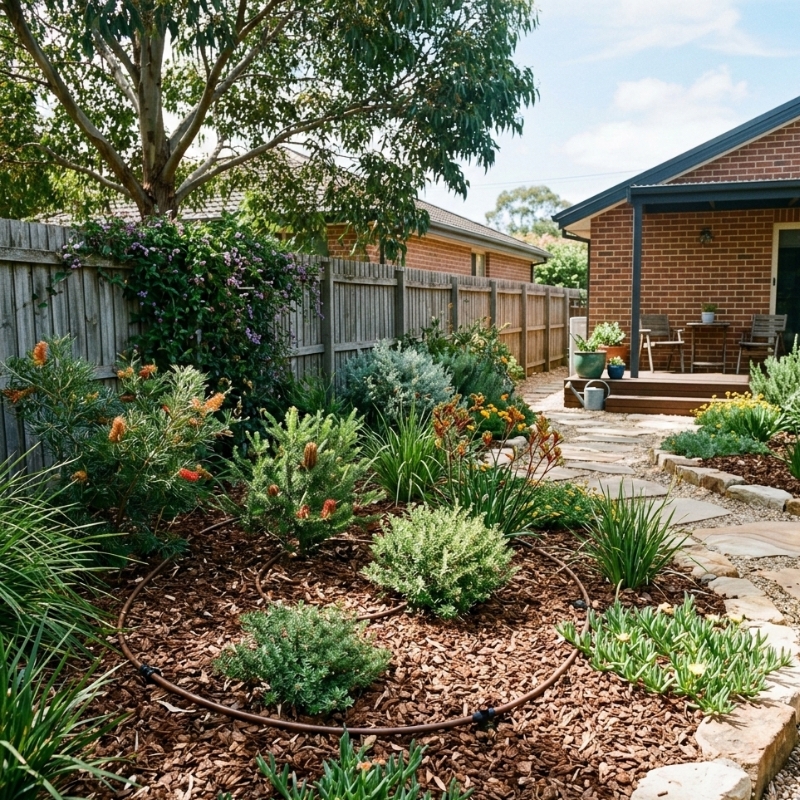
Sydney gardens cop a unique mix: blazing summer days, hot north-westerlies, sudden humid spikes, salty coastal air in some suburbs, and those “it hasn’t rained properly in weeks” stretches that sneak up on you. The good news is you don’t need a cactus-only yard to use less water. Most of the wins come from a few practical habits that stop water from evaporating, running off, or soaking the wrong place.
This guide is built for real Sydney homes: front verges, side paths, courtyards, townhouses, rental gardens, and family backyards with a bit of lawn.
Start with the rules so your effort isn’t wasted
Sydney gardens do best when you keep both water use and plant health in mind, including basic hygiene that helps prevent pests and diseases spreading between plants, tools, soil and mulch. Here are simple ways to reduce biosecurity risks in your garden
Q: What’s the simplest way to stay compliant and still keep plants alive?
Use this trio:
• Water early (before 10 am) whenever you can
• Aim water at the soil, not leaves
• Use a trigger nozzle or drip-style delivery so you can stop instantly and avoid run-off
If you only take one thing from the rules, watering at the right time with the right method saves water and reduces plant stress at the same time.
The core principle: water less often, but more effectively
Frequent “little splashes” train roots to sit near the surface, where Sydney’s heat and wind dry soil fast. Low-water gardens aren’t about never watering. They’re about encouraging deeper roots and reducing the need for constant top-ups.
What “effective watering” looks like
• Water reaches the root zone (not just the top 1–2 cm)
• The soil is moist, not muddy
• Watering is followed by protection (mulch, shade, wind buffering)
• You water when the plant needs it, not on autopilot
Prioritise the plants that matter most
When water is tight, don’t spread it thinly across everything. You’ll get better outcomes by protecting high-value, slow-to-replace plants first.
A sensible Sydney priority list
• Established trees and large shrubs (shade, structure, expensive to replace)
• Fruit trees and productive plants
• Perennials you want to keep long-term
• New plantings still establishing
• Everything else (annual colour, some groundcovers, parts of the lawn)
Hydrozoning: the “secret weapon” for low-water gardens
Hydrozoning is simply grouping plants with similar water needs together. Most Sydney gardens waste water because thirsty plants sit next to tough, drought-tolerant ones—and the whole area gets watered to suit the thirstiest.
How to hydrozone your yard in 30 minutes
Walk your garden and split it into 3 zones:
• Dry zone: hardy plants that cope with infrequent watering
• Moderate zone: plants that like consistent moisture while growing, then taper off
• High-care zone: pots, edible beds, new plants, and anything that wilts easily
Then match your watering to the zone instead of treating the whole yard the same.
Examples that suit Sydney homes
• Dry zone: hot, reflected areas along fences, driveways, letterbox beds
• Moderate zone: mixed borders that get partial shade
• High-care zone: veggie patch, herb pots, hanging baskets, new turf edges
Soil is your water tank (and most Sydney soil needs help)
If water runs off quickly, drains straight through, or forms a crust, the garden will always feel thirsty. Improving soil is one of the biggest long-term water savers.
What Sydney soils commonly do
• Sandy coastal soils drain fast and dry quickly (think Eastern Suburbs, Northern Beaches pockets)
• Heavy clay holds water but can repel it when dry, causing run-off (common across many Sydney suburbs)
• Compacted “builder’s soil” in newer areas can be the worst of both: hard crust + poor absorption
Simple, low-fuss soil upgrades
• Add compost or well-rotted organic matter to increase water-holding
• Avoid constant cultivation (it breaks soil structure and dries it out)
• Top up beds with an organic topdressing rather than digging everything over
• Reduce compaction: keep foot traffic off garden beds
Mulch: the fastest way to save water (when it’s done properly)
Mulch is basically sunscreen for your soil. It reduces evaporation, smooths out temperature swings, and helps water soak in rather than flash off.
A practical mulching guide for Sydney
• Aim for a layer thick enough to cover bare soil well (but not piled against stems)
• Keep mulch a few centimetres back from plant trunks and crowns
• Refresh top layers before summer heat ramps up
• Choose a mulch that suits the bed: chunkier for slopes, finer for small beds, leaf litter for natives if you like that look
Mulch mistakes that waste water
• Mulch “volcanoes” around trunks (encourages rot and pests)
• Super-thick layers that shed light rain before it reaches the soil
• Leaving soil bare between plants (evaporation skyrockets)
Q: Why does my mulch seem to repel water?
Some mulches and dried-out soils become water-repellent after long dry periods. Fix it by watering more slowly at first:
• Use a gentle flow or drip so water has time to penetrate
• Break the surface crust lightly (without digging deep)
• Water in two passes: a short wetting pass, then the deeper soak
Timing matters in Sydney: avoid watering during the worst heat
Even if you’re watering the right amount, doing it at the wrong time can turn most of it into evaporation—especially in open, north-facing yards.
Better watering habits (that feel almost too simple)
• Water in the morning when possible
• Water the soil, not the leaves
• Shield soil with mulch and groundcovers
• Use windbreak planting where you can (wind dries faster than heat alone)
Choose plants like a Sydney local (not like a catalogue)
Plant choice is a huge part of low-water gardening, but you don’t need a strict plant list to get it right. Use a selection framework so your garden stays resilient even when seasons shift.
A simple plant-selection framework
Look for plants that:
• handle heat and reflected light
• tolerate periods between deep waterings
• suit your soil type (sand vs clay)
• suit your microclimate (coastal wind, shade, courtyard heat)
• have leaves that resist moisture loss (thicker, smaller, or silver/grey foliage often helps)
Where Sydney gardens go wrong
• Planting thirstier ornamentals in blazing western sun
• Putting “needs regular water” plants in a bed that drains fast
• Overplanting dense, fast-growing species that compete for moisture
Pots and courtyards: the high-risk zone in Sydney heat
Containers heat up quickly and dry out far faster than garden beds. If you want low-water gardening, you don’t have to give up pots—but you do need a smarter setup.
Pot habits that reduce watering
• Use larger pots (more soil volume holds moisture longer)
• Upgrade potting mix (cheap mixes dry out fast)
• Add a top layer of mulch even in pots
• Group pots together so they shade each other
• Move sensitive pots out of reflected heat (near glass, pale walls, or paving)
Microclimates: your yard has “hot spots” and “cool spots”
Sydney properties often have dramatic microclimates:
• North-facing walls that radiate heat
• Western exposure that bakes beds late in the day
• Coastal wind corridors that dry foliage
• Shady pockets that stay damp longer
A quick microclimate map you can do today
Stand in each part of your garden at:
• early morning
• mid-afternoon
• late afternoon
Notice:
• where the sun hits hardest
• where wind funnels through
• where shade holds longest
Then place plants accordingly. The easiest water-saving move is simply putting the right plant in the right spot.
Small upgrades that save water without a full redesign
You don’t need to rip everything out. Low-water results usually come from small, targeted upgrades that compound over time.
Easy upgrades with outsized payoff
• Install a trigger nozzle so you can stop water instantly
• Fix leaks (taps, hoses, connectors)
• Add a soaker hose or drip line to the high-care zone
• Reduce lawn footprint in the hottest areas (even a narrow strip can be a water sink)
• Capture roof runoff where possible (simple diverters or rainwater tanks if appropriate for your setup)
Q: What if I only have 10 minutes a week?
Focus on prevention:
• keep soil covered (mulch)
• Do quick soil checks before watering
• spot-water priority plants only
• remove thirsty weeds before they steal moisture
If you want a tidy, sustainable routine that supports a healthy garden over time, you can also explore practical, seasonal garden upkeep tips that align well with water-wise habits.
Establishment vs established: the part people miss
A “low-water” plant still needs regular watering while it establishes. Many Sydney gardens fail because watering stops too early, roots stay shallow, and plants never become resilient.
A realistic establishment approach
• Water new plants more consistently at first
• Encourage roots to grow down by deep watering (not surface splashing)
• Gradually increase the time between waterings once the plant is settled
• Mulch immediately to protect that investment
Q: How long until a plant becomes truly low-water?
It depends on plant type, weather, and soil, but think in terms of months, not days. The goal is a root system that can access deeper moisture. If you stop too early, you lock the plant into a constant dependence on you.
For households that want a steady approach through Sydney’s changing seasons, getting help with ongoing garden care can also make the establishment-to-low-water transition much smoother (especially after new planting or a garden refresh).
Signs you’re overwatering (yes, it happens in Sydney)
Overwatering can look like “thirst” because stressed roots don’t function properly. The trick is to separate heat stress from root stress.
Overwatering clues
• yellowing leaves with soft growth
• fungus or persistent gnats in pots
• constantly soggy soil
• wilting that doesn’t improve after watering
Q: What’s the best response if I think I’ve overwatered?
Pause and reassess:
• check drainage and soil structure
• let the top few centimetres dry out
• water slower and less frequently, only when the soil check says it’s needed
• improve aeration in pots (better mix, correct drainage holes)
When to get expert eyes on it
Low-water gardening is straightforward most of the time, but a few scenarios can keep wasting water until someone diagnoses the real cause.
Consider getting professional input if:
• One bed repeatedly fails, no matter what you do
• water always runs off (even with slow watering)
• you suspect serious drainage problems or compacted subsoil
• trees show ongoing dieback or canopy thinning
• irrigation systems are inconsistent or leaking
If your goal is keeping your garden healthy year-round while still being water-wise, these are the moments where a targeted fix can save months of frustration (and a lot of water).
FAQ: Low-water gardening in Sydney
Q: What’s the best time of day to water in Sydney?
Early morning is ideal because evaporation is lower and plants can use the moisture throughout the day. Also, make sure you’re watering in line with current Greater Sydney guidelines.
Q: Is it better to water every day for a short time or less often for longer?
Usually, less often for longer is better because it encourages deeper roots. Always confirm with a quick soil check—deep watering only helps if it reaches the root zone.
Q: Should I water leaves or just the base of plants?
Aim for the soil at the base. Watering leaves wastes water and can encourage some plant diseases, especially in humid spells.
Q: Does mulch really make that much difference?
Yes. Mulch reduces evaporation and protects soil structure. It’s one of the quickest ways to make your watering more effective.
Q: How can I reduce watering for pots?
Use bigger pots, improve potting mix quality, mulch the surface, cluster pots together, and move sensitive plants away from reflected heat.
Q: My soil is clay—why does water still run off?
Clay can become hard and water-repellent when dry. Slow watering, organic matter, and keeping soil covered (mulch and groundcovers) helps water soak in instead of sliding away.
Q: Are drought-tolerant plants “set and forget”?
Not at first. Most need consistent watering while they establish, then you can taper watering as roots develop.
Q: What should I prioritise during a hot, dry stretch?
Protect established trees/shrubs and any new plantings first, then productive plants (like fruit), then everything else.