If you’re cleaning up your backyard, preparing a vacant block, or dealing with storm debris, understanding rubbish and land removal requirements often starts with one simple question: is this green waste or general waste?
In Sydney, the difference matters. Placing the wrong materials in the wrong bin can lead to rejected collections, contamination fees, or even fines. For larger properties or overgrown land, misclassification can also create delays and additional disposal costs.
This guide explains:
• What counts as green waste in NSW
• What falls under general waste
• Items that sit in a grey area
• Council collection limits in Sydney
• When DIY removal becomes impractical
• When larger-scale clean-ups require structured removal
Whether you’re a homeowner, landlord, or preparing land for development, understanding the rules can save time, money and frustration.
What Is Green Waste in Sydney?
Green waste refers to organic, biodegradable vegetation materials that can be composted or processed into mulch.
Under NSW waste guidelines, green waste generally includes:
• Grass clippings
• Leaves
• Small branches and twigs
• Prunings
• Shrubs
• Weeds (non-invasive species)
• Untreated timber offcuts (small, raw, unpainted)
Sydney councils typically collect green waste through:
• Dedicated green-lidded bins
• Scheduled kerbside clean-ups
• Pre-booked garden organics collections
The material must be free from contamination. Once mixed with plastics, soil, rubble or treated timber, it no longer qualifies as clean green waste.
For official classification standards, property owners can refer to the NSW Environment Protection Authority (EPA) guidelines on waste categorisation and disposal requirements.
Quick Clarification
Green waste is organic plant matter only.
If it cannot break down naturally into compost or mulch, it likely does not belong in green waste.
What Is General Waste?
General waste includes materials that cannot be composted or recycled through green organics programs.
In residential settings across Sydney, this usually includes:
• Plastic items
• Food packaging
• Broken household goods
• Contaminated paper products
• Treated or painted timber
• Synthetic materials
• Rubber
• Textiles
• Mixed debris
General waste goes to a landfill unless separated for recycling.
On larger properties or blocks of land, general waste can also include:
• Fencing materials
• Old sheds
• Non-structural construction debris
• Rubbish left by previous occupants
• Illegal dumping of materials
Unlike green waste, general waste cannot be processed into compost and must be handled differently.
What About Soil? Is It Green Waste?
This is one of the most common areas of confusion.
Soil is not considered green waste.
Even though it is natural, soil is classified separately because:
• It may be contaminated
• It can contain rocks or rubble
• It affects compost processing systems
Clean excavated soil may fall under a different waste category, depending on its origin and testing status. Contaminated soil must follow strict NSW disposal guidelines.
If you mix soil into green waste loads, the entire batch may be rejected.
Treated Timber vs Untreated Timber
Another common grey area involves timber.
Untreated, raw timber in small quantities may sometimes be accepted as green waste if it is clean and unpainted.
However, the following are not green waste:
• Treated pine
• Painted timber
• Laminated wood
• Engineered wood products
• Structural framing
These are classified as general or construction waste and require appropriate disposal.
When clearing older fencing or garden edging, it’s important to check whether materials have been chemically treated.
Can You Mix Green Waste and General Waste?
Short answer: no.
Mixing waste types contaminates the load.
For example:
• Branches mixed with plastic bags
• Leaves mixed with rubble
• Tree cuttings tied with synthetic rope
• Timber mixed with metal hardware
Once contamination occurs, councils or waste facilities may:
• Reject the collection
• Reclassify the load as general waste
• Apply additional charges
For small residential clean-ups, separation is manageable. For larger properties or vacant blocks, sorting mixed debris becomes more complex.
Council Collection Limits in Sydney
While council services are helpful, they are limited in scope.
Most Sydney councils restrict:
• Volume per collection
• Branch length and thickness
• Number of bookings per year
• Weight limits
• Type of accepted materials
For example:
• Branches may need to be under 1.5 metres
• Bundles must be tied with natural twine
• Certain invasive weeds may not be accepted
If your clean-up exceeds these limits, you may need alternative disposal arrangements.
This often becomes relevant when:
• Clearing overgrown land
• Preparing for renovations
• Cleaning up after storms
• Managing neglected rental properties
• Clearing vacant development blocks
Illegal Dumping on Private Land
In NSW, property owners are generally responsible for waste on their land — even if they did not dump it.
Illegal dumping can include:
• Household rubbish
• Construction debris
• Mattresses and furniture
• Garden waste
• Mixed building materials
Failure to remove dumped materials can:
• Attract further dumping
• Create environmental hazards
• Lead to compliance notices
The NSW EPA outlines penalties and enforcement mechanisms related to unlawful disposal, and councils may require landowners to rectify issues promptly.
For large-scale removal of mixed debris on private property, structured rubbish and land removal solutions may be required to restore the site safely.
Storm Debris in Sydney
Sydney’s storms can generate significant vegetation debris, including:
• Fallen branches
• Uprooted shrubs
• Broken fencing
• Leaf accumulation
While small amounts can go into green bins, storm events often create volumes beyond council limits.
Additionally:
• Branches may exceed size restrictions
• Debris may be mixed with roofing materials
• Soil and rubble may be present
In these cases, separating waste manually becomes time-consuming and physically demanding.
Vacant Blocks and Overgrown Properties
Vacant land presents a different waste challenge altogether.
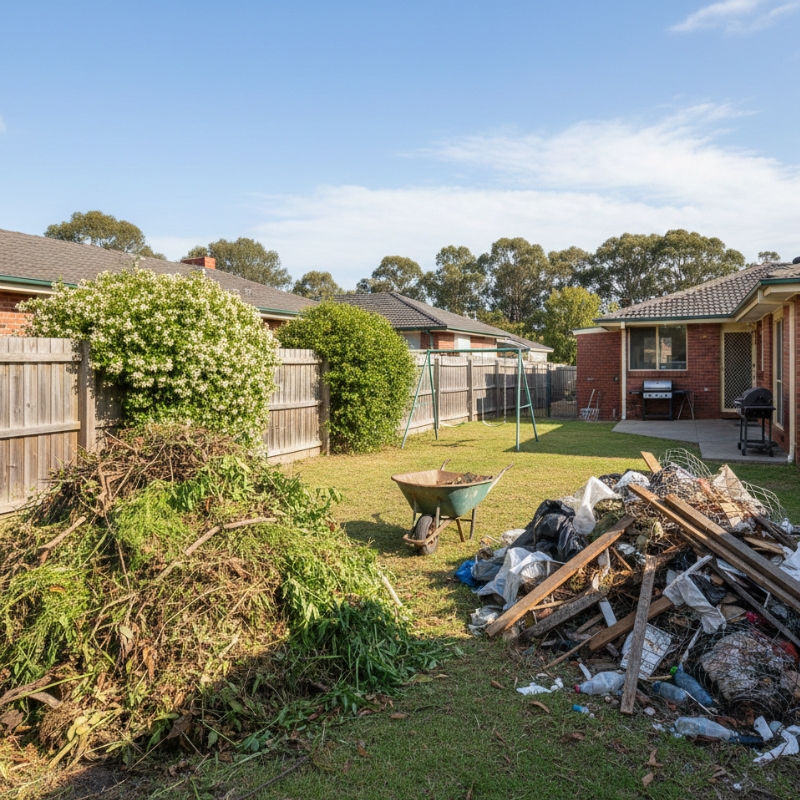
Over time, properties can accumulate:
• Dense vegetation
• Fallen trees
• Dumped rubbish
• Mixed organic and synthetic debris
• Hidden hazards under overgrowth
While much of the vegetation qualifies as green waste, the presence of:
• Old fencing
• Concrete fragments
• Metal scraps
• Treated timber
means the overall clean-up is rarely “green waste only”.
This is where property owners often require structured land clearing services in Sydney — not for landscaping, but to safely classify, separate and dispose of materials lawfully.
Bushfire Zones and Vegetation Management
Many Sydney properties fall within bushfire-prone areas.
In these zones:
• Vegetation management is regulated
• Certain native species may be protected
• Clearing may require compliance with local planning controls
Removing vegetation incorrectly can create legal risks.
Property owners should check:
• Local council vegetation clearing rules
• NSW Rural Fire Service guidelines
• Environmental protection overlays
Waste classification becomes particularly important in bushfire mitigation projects, where large volumes of organic debris are removed quickly.
What Happens If You Use the Wrong Waste Category?
Using the wrong disposal method can result in:
• Collection refusal
• Contamination notices
• Additional waste fees
• Delays in development approvals
• Potential penalties
For example:
If you place treated timber in green waste, waste facilities may reject and reclassify the load. If you dispose of contaminated soil incorrectly, regulators can initiate an investigation.
Understanding classification upfront prevents downstream issues.
When DIY Waste Removal Stops Making Sense
Small clean-ups are manageable.
However, DIY removal becomes impractical when:
• Waste exceeds several cubic metres
• Debris is mixed and unsorted
• Access is limited
• Heavy machinery is required
• There are safety risks (sharp metal, unstable timber, hidden rubble)
• Time constraints apply (pre-sale, pre-build deadlines)
At this stage, many property owners consider professional land clearing support to ensure:
• Proper separation
• Lawful disposal
• Efficient site restoration
The goal is not simply removal — it is compliant, structured removal.
Common Questions Sydney Property Owners Ask
Does Sydney Council Collect Large Tree Branches?
Most councils impose size limits. Oversized branches may need to be cut down to meet requirements. Large trunk sections are typically excluded from standard green waste collections.
Can You Put Tree Stumps in Green Waste?
Generally, no. Stumps are heavy, contain soil, and may not be accepted in kerbside green waste services.
Is Bamboo Green Waste?
Bamboo can be accepted as green waste, but some invasive species may require specific disposal methods. Check local council guidelines.
What About Building Debris From Minor Renovations?
Construction materials — including plasterboard, bricks and treated timber — are not green waste. They fall under general or construction waste categories.
Are There Fines for Illegal Dumping in NSW?
Yes. Penalties can apply for unlawful disposal. The NSW EPA outlines enforcement powers and fines depending on severity.
Practical Checklist Before Removing Waste
Before starting a property clean-up in Sydney, consider:
•Is the material organic and biodegradable?
•Does soil contain rubble or debris?
•Is it contaminated with plastics or synthetic materials?
•Are you within council collection limits?
•Is the volume manageable without machinery?
•Is any timber treated or painted?
If the answer to multiple questions raises concerns, a more structured approach may be necessary.
Pre-Development Land Preparation
Preparing land for building introduces additional considerations.
Developers and property owners often need to remove:
• Vegetation
• Dumped rubbish
• Old fencing
• Surface debris
• Shrub overgrowth
You must separate waste properly to avoid project delays.
In these scenarios, land clearing services in Sydney focus on restoring the block to a safe, workable condition without crossing into construction waste mismanagement.
Environmental Responsibility in NSW
NSW places increasing emphasis on waste reduction and environmental compliance.
Proper classification:
• Reduces landfill contamination
• Supports composting programs
• Minimises illegal dumping
• Protects waterways from debris runoff
For property owners, responsible disposal is not just about convenience — it supports broader environmental goals.
Final Thoughts
Understanding the difference between green waste and general waste in Sydney is essential for compliant, efficient property maintenance.
Green waste includes biodegradable plant matter.
General waste includes everything else that you cannot compost.
Grey areas — like soil, treated timber and mixed debris — require careful classification.
For small clean-ups, council services may be enough.
For larger blocks, storm damage, illegal dumping or development preparation, professionals use structured rubbish and land removal solutions to clear the site safely and in line with NSW requirements.
If waste volumes exceed kerbside limits or involve mixed debris, seeking professional land clearing support helps avoid rejected loads, delays and compliance risks.
The key is not just removing waste — but removing it correctly.