Retaining walls don’t usually fail overnight. More often, your retaining wall “talks” first: a hairline crack that wasn’t there last season, pavers that suddenly feel uneven underfoot, a fence that starts leaning after a week of heavy rain, or muddy water carving little channels through your garden beds.
In Sydney, those clues matter. Between clay-heavy soils in many suburbs, sloped blocks, and intense downpours that can dump a month’s worth of rain in a day, small issues can accelerate quickly if water isn’t being managed properly.
This guide is for homeowners who want to spot early trouble, understand what it can mean, and take sensible next steps before the damage spreads. If you want a broader overview of how different wall types work, what affects longevity, and what to consider before making changes, you can start with this retaining wall guide for homeowners.
What a retaining wall is actually doing (and why problems show up)
A retaining wall’s job sounds simple: hold back soil. In practice, it’s managing three forces at once:
• The weight of the soil behind it
• Extra load from water in the soil (often the biggest accelerant)
• Any added loads above (vehicles, sheds, pools, stockpiled materials, even dense planting and saturated garden beds)
When water builds up behind a wall, pressure increases dramatically. That pressure can push a wall forward, open cracks, and create voids that lead to movement in paths and paving. That’s why drainage is such a recurring theme in every “warning signs” list.
Because water pressure is one of the fastest ways problems escalate, it’s worth understanding the retaining wall drainage essentials before you decide what to do next.
The 10 early warning signs to take seriously
Not every crack or tilt means imminent collapse. But these are the common red flags that deserve a closer look.
1) New or widening cracks in the wall
Hairline cracks in finishes can be cosmetic. What you don’t want is change.
Watch for:
• Cracks that weren’t there before
• Cracks that widen over weeks/months
• Stair-step cracking in masonry
• Cracks that appear alongside a bulge or lean
A quick homeowner check:
• Take a clear photo straight-on with a coin for scale
• Re-take the same photo from the same spot in 2–4 weeks
• If it’s changing, treat it as a live issue
2) Bulging through the middle
A wall that bows outward (often mid-span) is a classic sign of pressure building behind it.
Common causes:
• Poor drainage (water loading up the soil)
• Inadequate reinforcement or footing depth
• Soil type and saturation (clays swell when wet)
• Extra loads near the top of the wall
Bulging is one of the most important signs because it often indicates the wall is already moving.
3) The wall is leaning or rotating forward
Some walls “tip” as a unit (rotation), rather than bowing. You might notice the top edge no longer looks straight relative to nearby fences or buildings.
A quick homeowner check:
• Hold a level vertically against the wall face
• Or hang a string line with a weight (a simple plumb line) from the top edge and measure the gap at top vs bottom
If the lean is obvious to the eye, don’t ignore it.
4) Water weeping, staining, or algae where it shouldn’t be
A little dampness after rain can be normal, but persistent wet areas can indicate trapped water.
Look for:
• Constant damp patches days after rain
• Dark staining lines
• Moss/algae streaks that keep returning
• Muddy seepage (a sign fines are being washed out)
5) Soil washing out or “piping” behind/under the wall
If you see small sinkholes, voids, or “tunnels” where water has carried soil away, that’s a sign the structure is losing support.
Clues include:
• Depressions forming behind the wall
• Gaps opening under the bottom edge
• Gravel/soil appearing where it shouldn’t (often after storms)
6) Pavers, paths, or steps nearby are sinking or lifting
Movement near a retaining wall can be an early indicator of changes underground:
• Voids forming from washout
• Soil consolidating after saturation
• Drainage concentrating in one spot
Pay attention if:
• Pavers rock underfoot
• A step suddenly becomes a trip hazard
• The problem worsens after rainfall
7) A fence above the wall starts leaning or posts loosen
Fences are surprisingly good “movement detectors.” If posts are shifting, the ground they’re anchored into may be moving as well.
If a fence lean coincides with:
• wall bulging
• new cracking
• pooling water behind the wall
…assume it’s connected until proven otherwise.
8) Pooling water at the top of the wall or in garden beds above
Standing water behind a wall is not your friend. It often means one (or more) of these:
• Surface water isn’t being directed away
• Subsurface drainage isn’t working
• Soil is too compacted or clay-heavy to infiltrate quickly
• Downpipes or overflow are dumping water into the zone
If you only take one action after reading this blog: map where water goes during the next heavy rain.
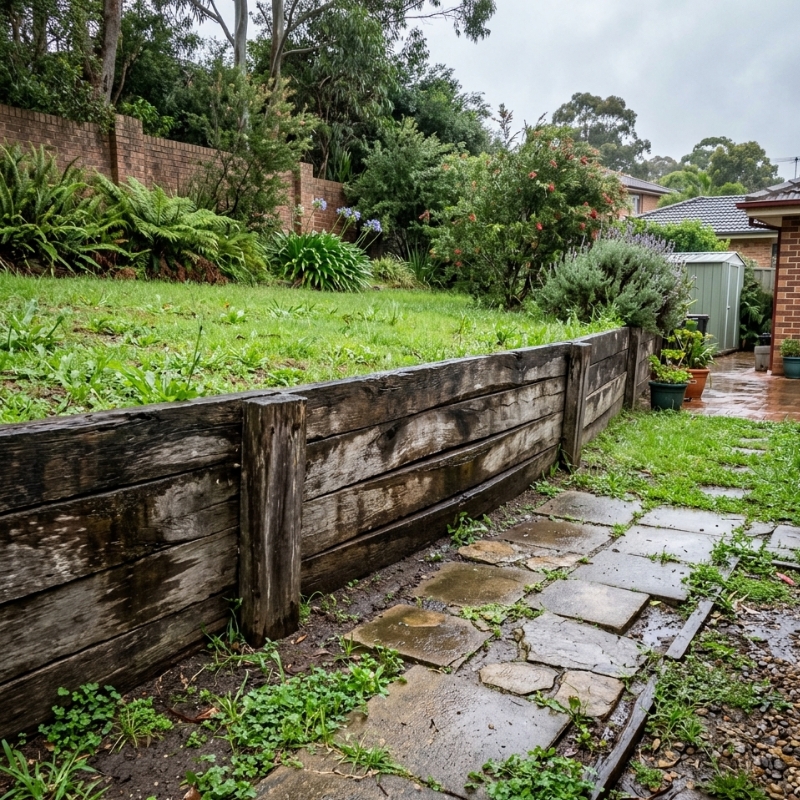
9) Timber sleepers rotting, splitting, or fasteners pulling out
For sleeper-style walls, warning signs can be more visible:
• Soft timber you can dent with a screwdriver
• Splitting around bolts/rods
• Sleeper ends deteriorating
• Rust stains around connections
Rot reduces strength over time. Combine rot + wet clay + stormwater and you can see rapid decline.
10) You’re seeing the same “small fix” repeatedly
If you keep topping up soil, re-leveling pavers, re-pegging edging, or re-setting fence posts, the underlying forces are still active. Repeating the symptom fix is a strong sign it’s time to address the cause.
A simple triage: cosmetic, concerning, urgent
Here’s a practical way to think about severity without panicking.
Cosmetic (monitor closely)
• Small hairline cracks that don’t change
• Minor staining that only appears immediately after rain
• Slight unevenness in nearby paving that stays stable
What to do:
• Photograph and measure
• Check again after the next big rainfall event
Concerning (plan a professional check)
• Cracks that widen or multiply
• Localised bulging
• Persistent wet patches and staining
• Noticeable paver sinking that worsens after rain
What to do:
• Reduce water loading (temporary controls below)
• Arrange a proper assessment before the next wet season
Urgent (don’t delay)
• Obvious lean/rotation
• Rapid movement over days/weeks
• Soil voids/sinkholes forming behind the wall
• Sections separating or opening gaps
• Any movement near structures, driveways, or areas where people walk daily
What to do:
• Keep people off/away from the area
• Don’t add loads near the top of the wall
• Get qualified help promptly
Q: How do I know if a crack is “active”?
If it changes. Take a photo today, mark the ends of the crack lightly in pencil/chalk, and compare after rain and again in 2–4 weeks. If it’s longer, wider, or branching, treat it as active movement.
Why Sydney conditions can make wall issues worse
Sydney homes often deal with a few local realities:
• Sloped blocks are common, especially as you move away from flatter coastal pockets
• Clay soils in many areas swell when wet and shrink when dry, which can drive seasonal movement
• Intense rainfall events can overwhelm older drainage setups
• Renovations (paving, new beds, new downpipes) can unintentionally redirect water toward a wall
You don’t need to be a soil engineer to use this to your advantage. You just need to stop guessing where water goes.
The “next storm” test: map your water pathways
During (or immediately after) heavy rain, do a quick walkthrough:
• Where does roof water discharge? (Downpipes, overflows, sump outlets)
• Where does water concentrate on paving?
• Where does it run along the top of the wall line?
• Are there points where water dives straight into garden beds behind the wall?
• Is runoff exiting onto a neighbour’s property?
This last one matters more than most people realise. NSW rules around exempt works also emphasise not redirecting surface or groundwater in a way that causes impacts on adjoining properties. If you want the official NSW overview for earthworks/retaining walls and structural supports, refer to the NSW Planning Portal guidance.
Q: Should water ever be “coming out” through the wall?
Some designs allow controlled drainage release (for example, through drainage outlets). The problem is uncontrolled seepage, muddy leaks, constant damp patches, or water that appears to be bringing soil with it.
Safe, sensible actions you can take right now (without making it worse)
When homeowners notice movement, the instinct is often to dig, patch, or “push it back.” Be careful: the wrong DIY can add load, weaken support, or concentrate water.
Here are low-risk steps that help in many scenarios:
Reduce water loading
• Clear leaves and debris so surface water can flow to the right places
• Make sure downpipes aren’t discharging into the soil zone behind the wall
• Temporarily extend downpipes with flexible pipe to direct water away (where appropriate)
• Avoid heavy watering near the top of the wall until the issue is assessed
Remove extra weight near the top (even temporarily)
• Don’t stockpile soil, mulch, pavers, or sleepers behind the wall
• Move pot plants and heavy features away from the edge
• Avoid parking vehicles or placing sheds/structures near the top line
Stop erosion
• Patch scoured channels with suitable ground cover (not just loose soil that will wash again)
• Add temporary sediment control (like straw wattles) if runoff is carving paths
Monitor properly
• Set 2–3 fixed photo points (same position each time)
• Measure gaps or offsets (even a simple ruler measurement can show change)
• Track changes after rain events
Q: Is it okay to backfill behind a wall that’s already bulging?
Generally, adding soil adds load. If the wall is already showing movement, adding backfill can worsen the forces pushing it forward. Prioritise drainage and assessment first.
The most common underlying causes (in plain English)
Poor drainage behind the wall
This is the big one. Water adds weight and pressure, and it can wash out the material that supports the wall.
Inadequate footing or base support
If the foundation isn’t deep/wide/strong enough for the site conditions and wall height, settlement and rotation can occur.
Inappropriate wall type for the job
Some wall styles suit low heights and light loads; others are designed for more demanding conditions. Problems appear when the design doesn’t match:
• wall height
• slope angle
• soil type
• water conditions
• loads above
Added loads after construction
A wall that was fine for years can start moving after:
• a new driveway or paved area changes runoff
• a garden bed is raised and kept consistently wet
• a spa/pool or heavy feature is added near the top
• a neighbour changes levels or drainage near the boundary
When you should involve a professional
You don’t need to call someone for every tiny crack. But you should get advice when the risk is real or the consequences are high.
Consider professional assessment if:
• You can see bulging or a noticeable lean
• Cracks are widening or multiplying
• There’s persistent water or muddy seepage
• Pavers/paths are moving near the wall
• The wall is near a structure, driveway, or high-use walkway
• The wall affects a boundary or could impact a neighbour
• You’re unsure when a retaining wall needs attention and want to avoid guesswork before the next big rain
If you’re unsure whether you’re in the “monitor” category or the “act” category, this is a helpful litmus test: are the signs changing after rain? If yes, treat it as an active issue.
Q: What information should I have ready before I call someone?
• Wall height (rough is fine) and approximate length
• Photos from straight-on and along the wall line
• Photos showing water sources (downpipes, runoff paths)
• When you first noticed the issue, and whether it changes after rain
• Any recent changes (new paving, new beds, excavation, landscaping)
Mistakes that often make things worse
Even well-meaning fixes can accelerate failure.
Avoid:
• Digging out soil behind the wall without understanding what it’s supporting
• Adding more soil/mulch behind a wall that’s already bulging
• “Sealing up” drainage outlets because water looks messy
• Re-directing water to a new spot that simply moves the problem along
• Planting thirsty, high-load plantings right at the top edge (without a plan for water and root behaviour)
FAQs
What are the most common early signs that a retaining wall is failing?
Cracks that change over time, bulging, leaning, persistent wet patches, muddy seepage, soil washout behind the wall, and movement in nearby paving or fences are the big ones.
Is a leaning wall always dangerous?
Not always, but a visible lean suggests movement has already occurred. The key is whether it’s progressing, whether there are other red flags (bulging, washout, cracking), and whether it’s near people, structures, or boundaries.
Can heavy rain really cause retaining wall problems that quickly?
Yes. Heavy rain can saturate soil, increase pressure, and expose drainage weaknesses in days. If a wall is already borderline, one intense event can accelerate movement.
Why do pavers sink near a retaining wall?
Often because water is washing fines away, creating voids, or because the soil beneath has softened and consolidated. It’s a strong reason to check drainage pathways.
Should I patch cracks with mortar or concrete?
Patching can hide a symptom without addressing the cause. If the wall is still moving, cracks often return. Monitoring the crack first (and assessing drainage and structure) is usually the smarter first step.
Do I need council approval in Sydney if I repair or replace a wall?
Rules depend on site specifics (height, location, proximity to boundaries, drainage impacts and more). For the NSW overview of exempt standards relating to earthworks and retaining walls, use the NSW Planning Portal guidance and check your local council requirements for your property.
What’s the quickest “first check” I can do at home?
Map where water goes during the next heavy rain. If water is pooling behind the wall, dumping from downpipes, or cutting channels through soil, it’s a strong clue that drainage is a key driver—and it’s worth revisiting the fundamentals of retaining wall drainage essentials.