
Retaining Wall Builders & Construction
Retaining Walls in Sydney
Drainage-first walls that hold the slope and lift the whole yard.
All Green Gardening & Landscaping designs and builds retaining walls Sydney homes and businesses actually need, to hold back a sloping block, stop soil movement and turn dead ground into usable, level space. We build in concrete sleeper, block, besser and sandstone, drainage-first so the wall lasts, and we finish the garden around it. Fixed quote after a site assessment.

Compare the options
Retaining Wall Materials Compared
A quick side-by-side to help you narrow it down before we visit. Heights below are general guides for residential use only. The final height, footing and engineering are always confirmed for your specific site, because ground conditions in Sydney vary a lot.
Retaining wall materials at a glance. General guidance only, not pricing or engineering advice.
| Material | Typical residential height | Look | Lifespan | Typical use |
|---|---|---|---|---|
| Concrete sleeper | Up to about 1.2m to 1.5m before heavier engineering | Grey, sandstone-look or timber-look | 50 years plus | Boundary walls, level changes, most backyards |
| Block and besser | Higher with engineering, 2m and beyond | Rendered, capped, clean and modern | Decades, very durable | Taller structural walls, front yards, modern builds |
| Sandstone | Lower dry-stacked, higher mortared and engineered | Premium, natural Sydney character | Often a lifetime | Feature and boundary walls, character homes |
| Timber sleeper | Lower, up to about 1m | Warm, natural, rustic | 15 to 25 years by timber grade | Garden beds, low terraces, natural or budget builds |
Approval and engineering
Do You Need Council Approval Or Engineering In NSW?
This is the question that trips people up, so here is the plain version. Retaining wall regulations in NSW hang mainly on the height of the wall, how close it sits to a boundary or service, and whether it carries a load. Use the three tiers below as a guide, then let us confirm the pathway for your site.
Usually no approval
Under 600mm
A wall under 600mm, built entirely on your own land, set back from boundaries, easements, sewers and other walls, and not affecting heritage or sensitive areas, often qualifies as exempt development. No load on top.
Approval likely
Over 600mm
Once a wall goes over 600mm, sits near a boundary, or supports something like a driveway or slab, you usually need approval, either a Complying Development Certificate or a Development Application through council.
Engineering required
Over about 1m or load-bearing
Taller or load-bearing walls generally need a structural engineer’s design and certification, built to the Australian Standard for earth retaining structures, AS 4678. This is not DIY territory.
Where All Green fits in
We build every wall to these rules, and we coordinate structural engineering certification when your wall requires it, so the job is compliant, not just quick. Thresholds and controls differ between councils, so always check with your local council before you start. We help you work out the likely pathway during the site assessment, before anyone commits to a build.
Why people call us
The Problems A Retaining Wall Actually Fixes
Most people do not want a wall for its own sake. They want the problem gone. Here is what a well-built retaining wall does for a Sydney property, and the reasons the phone rings.
Tame a sloping block
A sloping or uneven yard is hard to use for anything. Tiered retaining walls cut the slope into flat, usable levels for turf, entertaining, planting or a path, so you get real space back instead of a hill you mow sideways.
Stop soil movement and erosion
Soil erosion shifts garden beds, undercuts lawns and washes ground away every time it rains hard. A retaining wall holds the ground where it belongs, and erosion control built into the design keeps it there.
Replace a failing wall
Leaning, cracking, bulging or rotting? We handle retaining wall repairs and full rebuilds, and we tell you straight whether a repair holds up or whether the wall has had it. Nine times out of ten the root cause is water behind the wall.
How we build it to last
Drainage First, Then A Wall That Fits The Whole Design
Two things separate a wall that stands for decades from one that leans in three years: what happens behind it, and whether it was built as part of the landscape or bolted on as an afterthought.
Retaining wall drainage done properly
Water is what kills retaining walls. When it has nowhere to go, pressure builds behind the wall and pushes it out. Every wall we build gets proper retaining wall drainage: aggregate backfill and an ag pipe behind the wall to relieve that pressure, plus the right footing for the load. It is the least visible part of the job and the part that decides how long the wall lasts.
One team for the wall and the garden
Because All Green is a full landscaping business, your wall does not arrive as a standalone slab of concrete. We handle the excavation, levelling, the retaining wall design and the garden finishing together, so landscaping retaining walls read as part of the yard. Turf, paving, garden beds and mulch all get finished off by the same crew, on one fixed quote.
The wall is one part of the outdoor job
Once the levels are set, the same team can finish the yard around your new wall. Lay fresh turf on the new level, run paving for a patio or path, top up the beds with mulching, plan the whole space with our landscape design team, or clear a heavier site first with land clearing. One reliable team, one fixed quote.
Proof
From Sloping And Unstable To Level And Usable
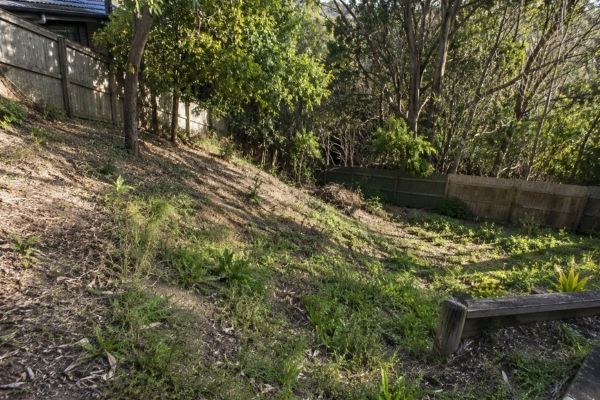
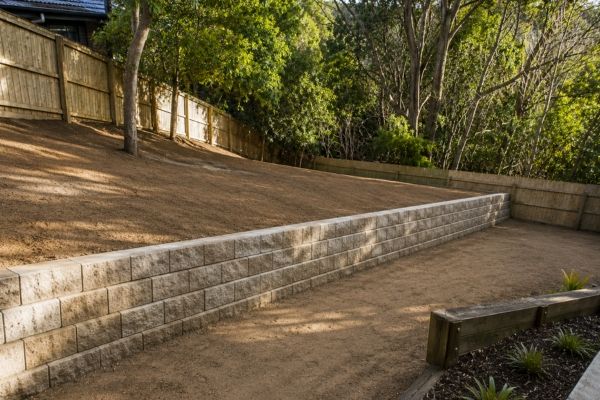
Retaining walls are a highly visual job. Before-and-after shots show the change better than any description: a slope that could not be used becomes a flat, held, usable level.
BEFORE
AFTER
Who we build for
Retaining Walls For Homes, Rentals, Strata And Commercial Sites
The same drainage-first build and honest advice across every kind of property, from a single garden retaining wall to large residential retaining walls and commercial retaining walls with real structural loads.
Homeowners
For anyone with a sloping block, a failing wall or dead space they want to reclaim as level, usable yard.
Rentals & strata
Safe, compliant, tidy walls for landlords, tenants and property managers who need the job done right the first time.
Commercial
Structural walls and boundary retaining for grounds, car parks and access areas, built to engineering where required.
New landscapes
Walls built into a full landscape design, so the level changes, planting and paving all work together from day one.
How it works
How Our Retaining Wall Construction Works
A clear, no-surprises run from your first message to a finished retaining wall installation that holds. Photos help a lot up front, they show the slope, the access and the rough height, which is most of what we need to point you the right way.
01
Send photos or book a site assessment
Upload a few photos of the slope, the boundary or the old wall, or ask us to come out and assess it on site.
02
We check height, load and ground
We look at wall height, what it needs to hold, access for machinery, drainage and the ground conditions on your block.
03
We confirm material and approvals
We recommend the material that suits the site, and confirm whether the wall needs council approval or engineering certification.
04
You get a fixed quote
A fixed price for the agreed scope: excavation, materials, drainage, the wall itself and the garden finishing. No surprise add-ons.
05
We build it drainage-first
Footings, posts or courses, aggregate and ag pipe behind the wall, then backfill and compaction, all built to last.
06
We finish the surrounds
Levels made good, turf, paving or beds finished off, the site cleared and the spoil taken away with us.
Service area
Your Local Retaining Wall Builders In Sydney
Searching for retaining wall builders near me and want a team that actually turns up and builds it properly? All Green is a local team covering Sydney. Send your address and a few photos when you get in touch, and we will confirm what is involved, the likely approval pathway and the next available day.
More than just the wall
A retaining wall is one part of what All Green does. If the yard needs more than a wall, the same team can handle garden maintenance, turf laying, paving and full landscaping, all under one fixed quote.
Why us
Why Sydney Property Owners Choose All Green
For retaining wall builders Sydney property owners can trust, we come at the job with the whole yard in view, not just the wall. That means the right material, drainage built in, engineering arranged when it is needed, and a finished landscape at the end, not a bare slab of concrete.
Want the backstory on the team? Learn about All Green or browse recent projects.




Answers
Retaining Walls Sydney FAQs
Build Your Retaining Wall In Sydney
If your yard is on a slope, the ground is moving, or the old wall is on its way out, All Green can design and build a wall that holds, then finish the garden around it. Call for a free, fixed quote, or send photos to book a site assessment.